
Rare Earth Permanent Magnet (REPM) Scheme
Context
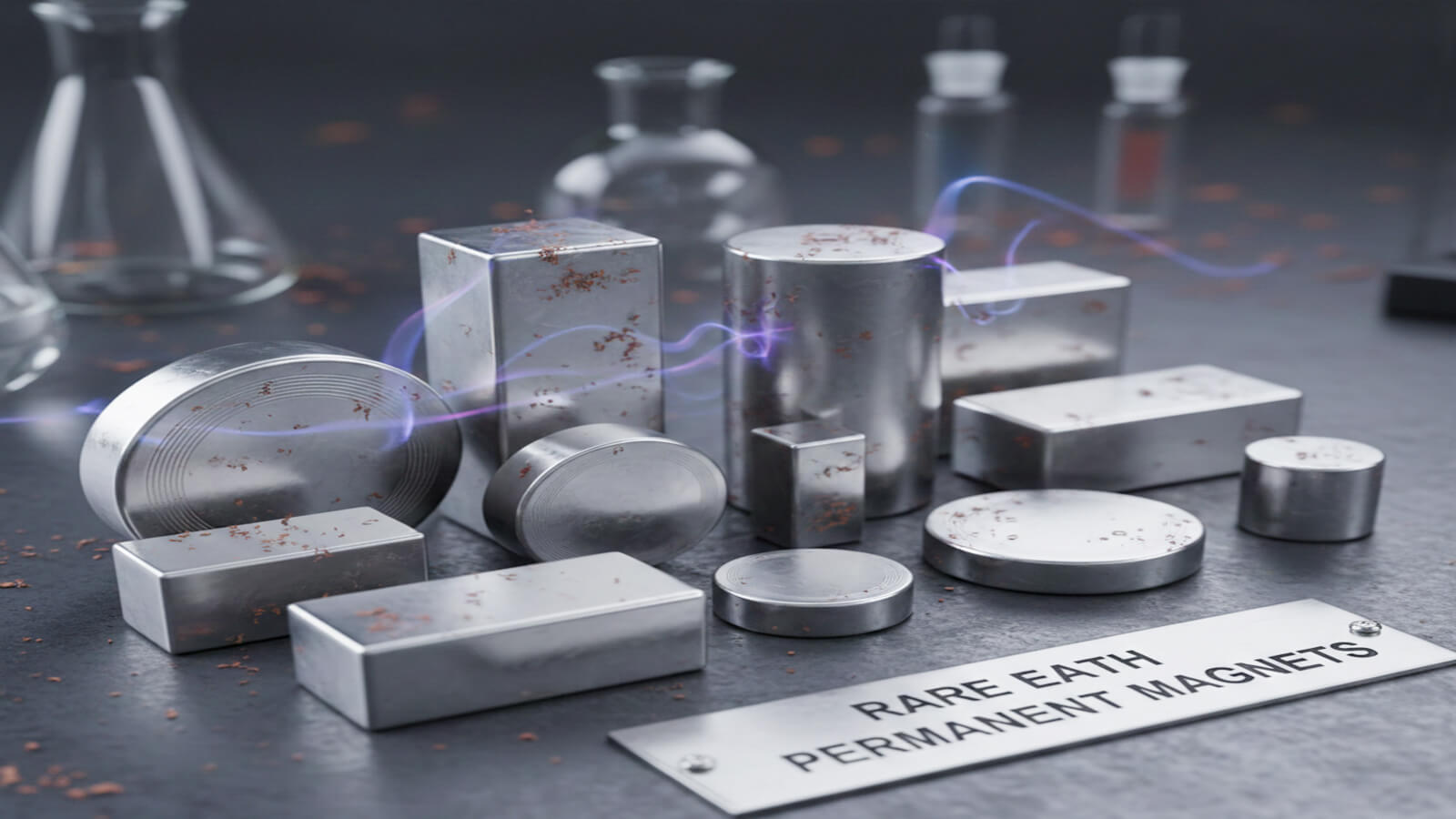
India has approved a Rs 7,280-crore scheme to promote domestic manufacturing of rare earth permanent magnets (REPM).
Comes amid China’s overwhelming dominance in REPM processing and manufacturing.
Aim: enhance self-reliance, reduce import dependence, strengthen supply-chain resilience, and support strategic sectors like EVs, renewable energy, aerospace and defence.
India’s Import Dependence
During 2024–25, India imported 53,000+ tonnes of rare earth magnets.
Over 90% of imports came from China.
India currently has no commercial-scale REPM manufacturing.
Why REPMs Matter
Key to:
Electric vehicles
Wind turbines
Electronics
Aerospace and defence
Robotics and advanced manufacturing
China controls:
90% of global manufacturing and processing
Strong leverage in geopolitical trade tensions
Recently imposed export controls (April 2025)
Features of India’s REPM Scheme
1. Capacity creation
Target: 6,000 MTPA integrated REPM manufacturing capacity.
5 beneficiaries; 1,200 MTPA per applicant.
2. Incentives
Sales-linked incentives: Rs 6,450 crore over 5 years.
Capital subsidy: Rs 750 crore for facility setup.
3. Scope
Focus on sintered REPMs, especially:
NdFeB (Neodymium–Iron–Boron) magnets.
Supported stages of value chain:
Rare earth oxide → metal
Metal → alloy
Alloy → magnet manufacturing
4. Rare earth composition
Light rare earths: Neodymium (Nd), Praseodymium (Pr)
Heavy rare earths (for high-temperature performance): Dysprosium (Dy), Terbium (Tb)
India’s Current Position in the Global Supply Chain
Manufacturing gap
China’s annual REPM capacity: ~2,40,000 tonnes
India’s scheme target: 6,000 tonnes → extremely modest in comparison.
Raw material constraint
India produces some light rare earth oxides (NdPr) via IREL.
India produces zero heavy rare earth oxides → must import Dy and Tb.
IREL’s current output cannot support large-scale REPM manufacturing.
Cost challenge
China’s:
Scale
Value chain integration
Subsidies
Environmental externalisation
→ makes its magnets cost-competitive; others struggle to match prices.
Global Efforts to Reduce China Dependence
Japan & Vietnam produce REPMs but in small share.
Quad Initiative (2024): India–US–Japan–Australia collaboration on securing critical mineral supply chains.
G7 Critical Minerals Action Plan (2024) endorsed by India.
India’s Initiatives for Critical Mineral Security
1. National Critical Mineral Mission (NCMM) – 2024–25 to 2030–31
Outlay: Rs 16,300 crore.
Goals:
Secure critical mineral supply chains
Strengthen exploration, mining, processing and recycling
2. Critical Mineral List (2023)
India identified 30 critical minerals.
3. MMDR Amendment Act, 2023
Gave Centre exclusive power to auction critical and strategic minerals, incl. lithium, cobalt and rare earth elements.
4. Overseas asset acquisition – KABIL
Khanij Bidesh India Limited exploring mineral assets abroad.
Signed agreement with Camyen (Argentina) for exploration of five lithium brine blocks.
Can the Scheme Make India Self-Reliant?
Strengths
First major domestic push into REPM manufacturing
Supports local value chain development
Aligns with EV, renewable energy and defence ambitions
Limitations
Target capacity much smaller than China’s
Dependence on imports for heavy rare earths will continue
Higher production costs may weaken competitiveness
Full self-reliance possible only with:
Domestic mining
Heavy rare earth refining
Significant scaling up
Technology partnerships
Prelims Practice MCQs
Q. The newly approved REPM scheme primarily focuses on the production of:
A. Samarium–Cobalt magnets
B. Sintered NdFeB magnets
C. Flexible ferrite magnets
D. Alnico magnets
Correct answer: B
Explanation: The scheme targets sintered rare earth permanent magnets, especially NdFeB type which dominate the global market.
Q. Which of the following heavy rare-earth elements are critical for improving high-temperature performance of REPMs?
A. Cerium and lanthanum
B. Yttrium and scandium
C. Dysprosium and terbium
D. Europium and gadolinium
Correct answer: C
Q. Which Indian entity currently produces some light rare-earth oxides like NdPr?
A. NMDC
B. Hindustan Copper Limited
C. Indian Rare Earths Limited (IREL)
D. NALCO
Correct answer: C
Q. Khanij Bidesh India Limited (KABIL) has recently collaborated with Argentina for exploration of:
A. Rare earth ore mines
B. Graphite deposits
C. Lithium brine blocks
D. Cobalt laterite mines
Correct answer: C