
Rare Earth Mineral Discovery in Rajasthan (Bhati-Khera)
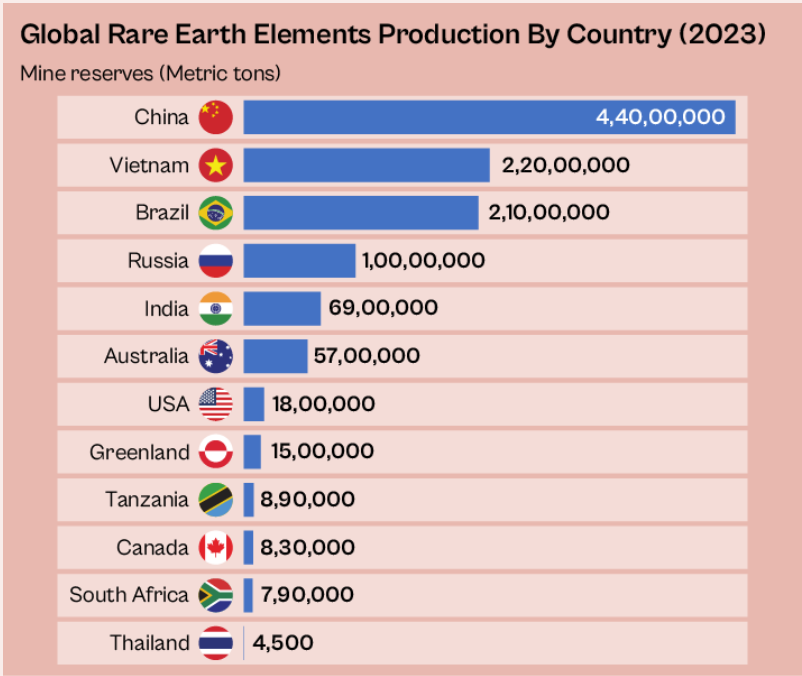
Why in news : India is set to make major strides in rare earth element (REE) production following the discovery of large deposits in Bhati-Khera, Siwana tehsil of Balotra district, Rajasthan. The area is rich in bastnasite, britholite, and xenotime, key minerals found in carbonatite and microgranite rocks that are essential sources of REEs.
Key Points:
-
Global Importance: Rare earth elements (17 in total) are vital for modern technologies like smartphones, electric vehicles, defense systems, and renewable energy.
-
China’s Monopoly: China currently dominates with 90% of global REE production.
-
India’s Potential: Although India holds the third-largest REE reserves (6.9 million tonnes), it contributes less than 1% of global output due to outdated processing and weak infrastructure.
Discovery: The Geological Survey of India (GSI) and Department of Atomic Energy have found promising reserves of rare earth elements (REEs) such as:
- Neodymium (Nd)
- Dysprosium (Dy)
Associated Minerals Found:
Bastnasite
Britholite
Xenotime
These are source minerals that contain REEs like cerium, lanthanum, praseodymium, gadolinium, etc.
-
Policy Support:
-
National Critical Mineral Mission (NCMM) launched in 2025 to boost exploration, mining, and processing.
-
GSI to carry out 1,200 projects from 2024–25 to 2030–31.
-
PLI Scheme worth ₹1,000 crore introduced to promote domestic manufacturing of REE magnets.
-
Challenges in India:
-
Indian ores generally have low metal concentration.
-
IREL India Limited believes Rajasthan’s hard rock reserves can help overcome this issue due to potentially higher concentration.