
Recovery of Critical Minerals from Coal Mine Waste and Coal Ash
Background and Context
-
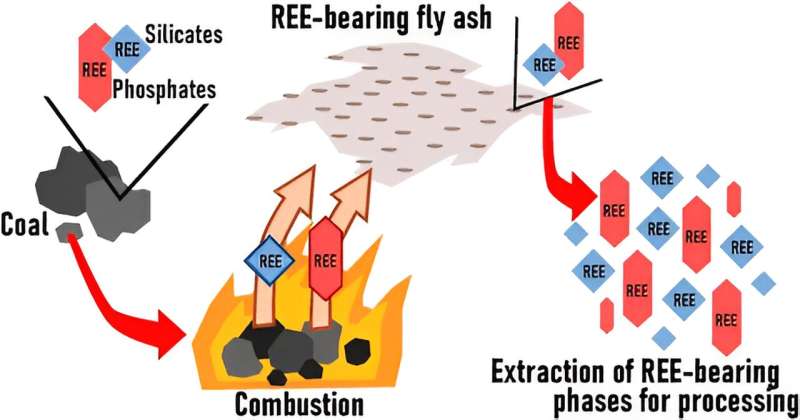
India is exploring coal waste and ash as alternative sources for Critical Minerals, especially Rare Earth Elements (REE).
-
Fly ash, bottom ash, and overburden from coal mining are found to contain significant concentrations of REE and Yttrium.
-
This initiative supports India’s broader self-reliance and clean energy goals, including the National Critical Minerals Mission (NCMM).
Key Findings from Recent Studies
a) Singareni Thermal Power Plant (STPP)
-
Total REE in fly ash and overburden clay: ~400 ppm
b) NLC India Ltd., Neyveli (Tamil Nadu)
-
Fly ash REE concentration: 2100 mg/kg
-
Yttrium content: 300 mg/kg
-
Contains both Light REEs (LREE) and Heavy REEs (HREE)
c) Coal India Ltd. R&D Findings
-
North Eastern Region (NER) Coalfields:
-
Low total REE, but high HREE content
-
-
Gondwana Sediments (Singrauli coalfield):
-
REE enrichment:
-
Coal samples: ~250 ppm
-
Non-coal samples: ~400 ppm
-
-
Extraction viability depends on tech advancement and economic feasibility
-
-
North Eastern Coalfields:
-
Developing indigenous technology for extraction:
-
Enrichment via physical separation
-
Extraction via Ion-Exchange Resin and Acid Mine Drainage treatment
-
-
National Critical Mineral Mission (NCMM)
-
Launched: 29 January 2025
-
Duration: 2024–25 to 2030–31
-
Objective: Secure supply chain of Critical Minerals
-
Allocation: ₹100 crore for pilot projects (e.g., fly ash, overburden, red mud)
-
Centre of Excellence (CoE): Guidelines approved on 6 April 2025
Institutional Collaborations
-
SCCL signed MoUs with:
-
IMMT, Bhubaneswar
-
NFTDC, Hyderabad
-
IIT Hyderabad
-
Significance for UPSC
-
Supports energy security, Atmanirbhar Bharat, and critical mineral diplomacy
-
Aligns with India’s Clean Energy Transition and Rare Earth Security Strategy
-
Offers an eco-friendly solution by utilizing waste for wealth from coal mining