
MiG-21 jets fly into history after 6 decades of service
Context:
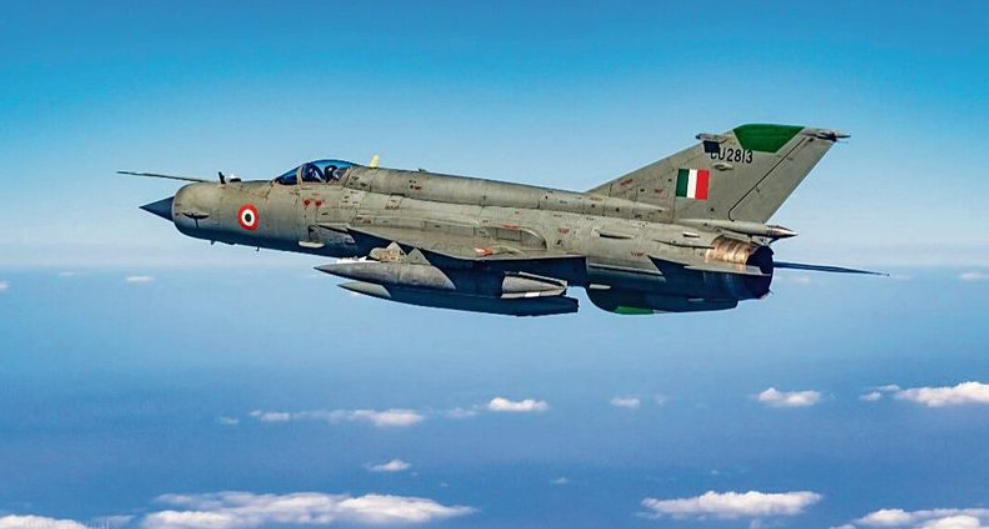
After 60 years of service, the Indian Air Force has officially retired the MiG-21 fighter jets.
The last unit, No. 23 Squadron (Panthers), flew their final mission at a ceremony in Chandigarh.
Why was it important?
Defence Minister Rajnath Singh said the MiG-21 was more than just a plane — it was a symbol of India-Russia friendship and a proud chapter of Indian aviation history.
The aircraft played a key role in major operations:
1971 war (helped India defeat Pakistan)
Kargil conflict (1999)
Balakot air strike (2019)
Operation Sindoor
The farewell ceremony
Air Chief Marshal A.P. Singh flew the last sortie in a MiG-21 Bison (callsign Badal 3).
Six jets were ceremonially switched off in front of dignitaries.
The official aircraft document was handed over, marking the end of service.
What’s next for India’s Air Force?
The retirement of MiG-21 has reduced IAF’s fighter squadron strength to just 29 — its lowest since the 1960s.
The government wants the legacy of MiG-21 to inspire new indigenous aircraft, like:
LCA Tejas (already in service)
Advanced Medium Combat Aircraft (AMCA) (in development)
What is the MiG-21?
The MiG-21 is a supersonic fighter and interceptor jet designed by the Mikoyan-Gurevich bureau in the Soviet Union.
NATO gave it the code name “Fishbed”.
Nicknames around the world
“Balalaika” (Russia) – because the aircraft’s triangular shape looks like the stringed instrument.
“Ołówek” (Poland) – meaning pencil, due to its long, thin fuselage.
“Én Bạc” (Vietnam) – meaning silver swallow, for its sleek silver body and speed.
Global use and records
Used by about 60 countries across four continents.
Still active in some air forces, even 70 years after its first flight.
Holds many aviation records:
Most-produced supersonic jet in history.
Most-produced combat aircraft after the Korean War.
For a long time, had the longest continuous production run of any combat aircraft.