
Why Peace Remains Elusive in Eastern DRC
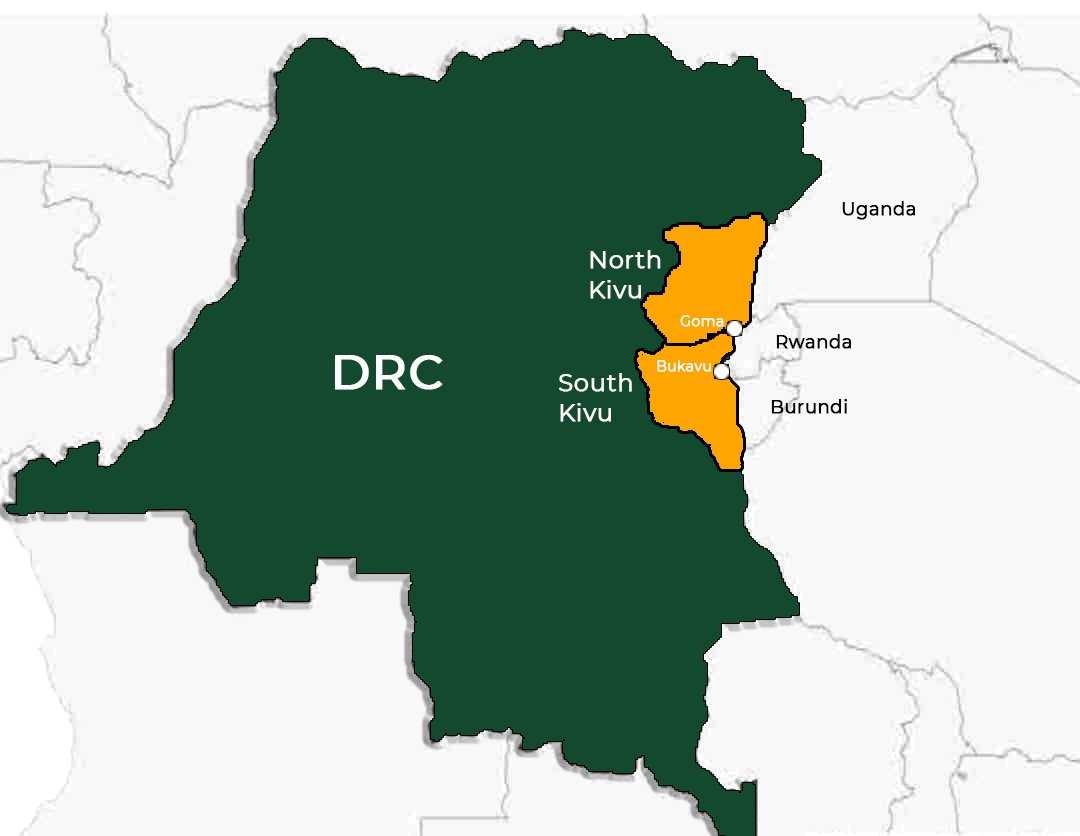
Historical Roots of Conflict
-
Legacy of Rwandan Genocide (1994): Spillover of Hutu militias and subsequent tensions between Rwanda, Uganda, and the DRC.
-
Congo Wars (1996–2003): Involvement of multiple African states created long-lasting instability.
-
Ethnic Fragmentation: More than 100 armed groups operate in eastern DRC, representing unresolved ethnic, political, and economic grievances.
Resource Curse
-
Mineral Wealth: DRC has an estimated $24 trillion worth of critical minerals.
-
Cobalt Reserves: Holds ~70% of global reserves, vital for EV batteries and renewable technologies.
-
Illicit Trade & Armed Groups: Warlords and rebel groups (e.g., M23) exploit mineral trade, fueling cycles of violence.
Recent Peace Initiatives
-
U.S.-Brokered Washington Agreement (June 2025):
-
Between Rwanda & DRC.
-
Commitments: cessation of hostilities, end to armed group support, Joint Security Coordination Mechanism, and Economic Integration Framework.
-
For DRC: U.S. security aid + investment, and promise to end illicit mineral trade.
-
For Rwanda: International legitimacy amid accusations of supporting M23.
-
-
Doha Ceasefire (July 2025, mediated by Qatar):
-
Between DRC & M23 rebels.
-
Commitments: ceasefire, M23 withdrawal from seized areas, DRC to release prisoners.
-
Aim: comprehensive peace agreement by Aug 18, 2025.
-
Why the Ceasefire Failed
-
Non-Compliance:
-
M23 continued offensives in North & South Kivu.
-
DRC did not release M23 prisoners.
-
-
Distrust & Fragmentation: Neither side trusted the other, given past failed peace attempts.
-
Spoilers: Other armed groups and regional actors undermined the fragile truce.
-
Human Rights Violations: Reports of M23 killings (140 deaths in July) eroded confidence in peace.
U.S. Interests in Eastern DRC
-
Critical Minerals Access:
-
Reduce dependency on Chinese firms that dominate DRC’s mining sector.
-
Secure cobalt, coltan, copper, and rare earths essential for green technologies.
-
-
Strategic Geopolitics:
-
Counter Chinese and Russian influence in Africa.
-
Strengthen U.S. presence in the resource-rich Great Lakes region.
-
-
Regional Stability: Peace in DRC would also stabilize Central Africa, reducing refugee flows and extremism risks.
Why Peace is Elusive
-
Deep-Rooted Historical Grievances not addressed.
-
Multiplicity of Actors: Over 100 militias + foreign involvement.
-
Weak Governance: Congolese state unable to project authority in the east.
-
Economic Incentives for War: Rebel groups profit from conflict minerals.
-
Failed Implementation: Peace deals collapse due to lack of enforcement mechanisms.
-
Regional Rivalries: Rwanda, Uganda, and others pursue strategic interests in DRC.
Way Forward
-
Comprehensive Peace Process: Not just elite deals, but inclusion of ethnic groups, civil society, and local leaders.
-
Economic Reforms: Formalize and regulate mineral trade to cut off funding to rebels.
-
Regional Cooperation: Greater role for African Union & regional blocs to mediate.
-
International Guarantees: Strong monitoring & enforcement by UN, U.S., and African partners.
Democratic Republic of the Congo (DRC)
Geographical Profile
-
Location: Central Africa, centered on the Congo Basin.
-
Borders:
-
West – Republic of the Congo, Cabinda exclave of Angola, South Atlantic Ocean
-
North – Central African Republic, South Sudan
-
East – Uganda, Rwanda, Burundi, Tanzania (across Lake Tanganyika)
-
South – Zambia, Angola

-
Terrain:
-
Dense tropical rainforests dominate most of the landscape.
-
Extensive river systems (Congo River basin).
-
Mountainous regions in the east and southeast.
-
-
Area: Second-largest country in Africa (after Algeria), 11th-largest in the world.
Demographic Profile
-
Population: ~112 million (2025 estimate).
-
Second-most populous country in Africa (after Nigeria).
-
Most populous Francophone country in the world.
-
-
Languages:
-
Official – French (widely spoken).
-
Indigenous – Over 200 local languages, including Lingala, Swahili, Kikongo, and Tshiluba as national languages.
-
-
Capital & Largest City: Kinshasa (also the political and economic hub).
Significance
-
Strategic Location: Links Central, Eastern, and Southern Africa.
-
Natural Resources:
-
Rich in cobalt (70% of global reserves), copper, coltan, gold, diamonds, and tin.
-
Estimated mineral wealth: $24 trillion.
-
-
Geopolitical Importance:
-
Resource competition between U.S. and China.
-
Ongoing internal conflicts (M23 rebels, ethnic armed groups).
-