
What are Haboobs?
-
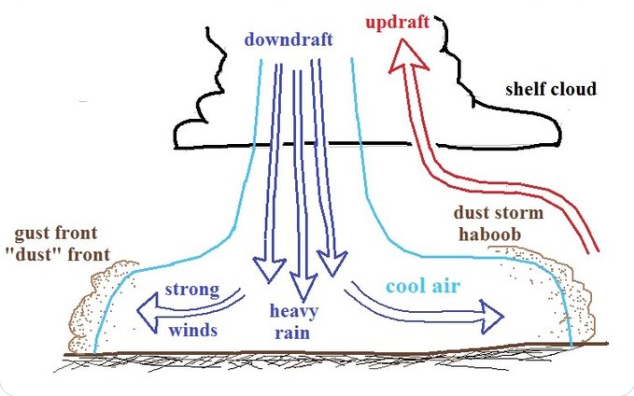
Definition: Massive walls of dust and debris, generated by thunderstorm downdrafts.
The American Meteorology Society specifically defines a haboob as, "An intense sandstorm or dust storm with sand and/or dust often lofted to heights as high as 1500 m (~5000 feet), resulting in a “wall of dust” along the leading edge of the haboob that can be visually stunning."
-
Appearance: Dust walls can be thousands of feet tall, several miles wide, moving at speeds of 60 mph (97 kph) or more.
-
Region: Common in Arizona (Phoenix–Tucson corridor), but also occur in Nevada, New Mexico, Texas.
-
Not all dust storms are haboobs → only those specifically tied to thunderstorm downdrafts qualify.

-
Thunderstorm downdrafts hit the ground at 50–80 mph (80–129 kph).
-
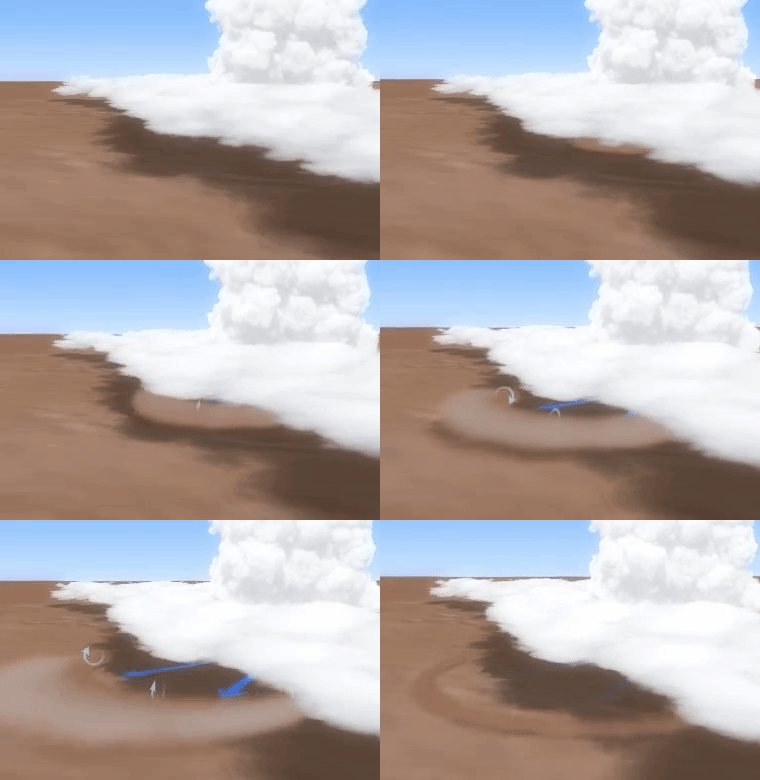
Air spreads in all directions → stirs up dust from arid land & farm fields.
-
Rain-cooled air ahead of storms can trigger new updrafts → keeps the haboob growing.
-
Can travel up to 100 miles if conditions sustain them.
Frequency
-
Phoenix area: Typically 1–3 large haboobs per year (NOAA).
-
Require specific conditions: arid land, dust availability, and thunderstorm activity.
Climate Change Connection
-
Monsoons (localized summer rains) have become more intense since the 1970s.
-
Longer droughts + expanding arid zones = more dust available.
-
Climate change could make haboobs more intense, but not clear if they will become more frequent.
-
Land use (e.g., farming) also influences dust availability.
The impacts of haboobs can linger for days as dust particles remain in our atmosphere. That can worsen our air quality and cause difficulty breathing for kids, older adults and people with asthma or COPD.
Breathing in dust spores from haboobs can also increase your risk of contracting Valley fever."
"Valley fever" is caused by the Coccidioides fungus, which grows in dirt and fields and can cause fever, rash and coughing. Winds from dust storms can transport the fungal spores that cause the disease.