
Union Minister of Commerce & Industry, reviews functioning of Plantation Boards
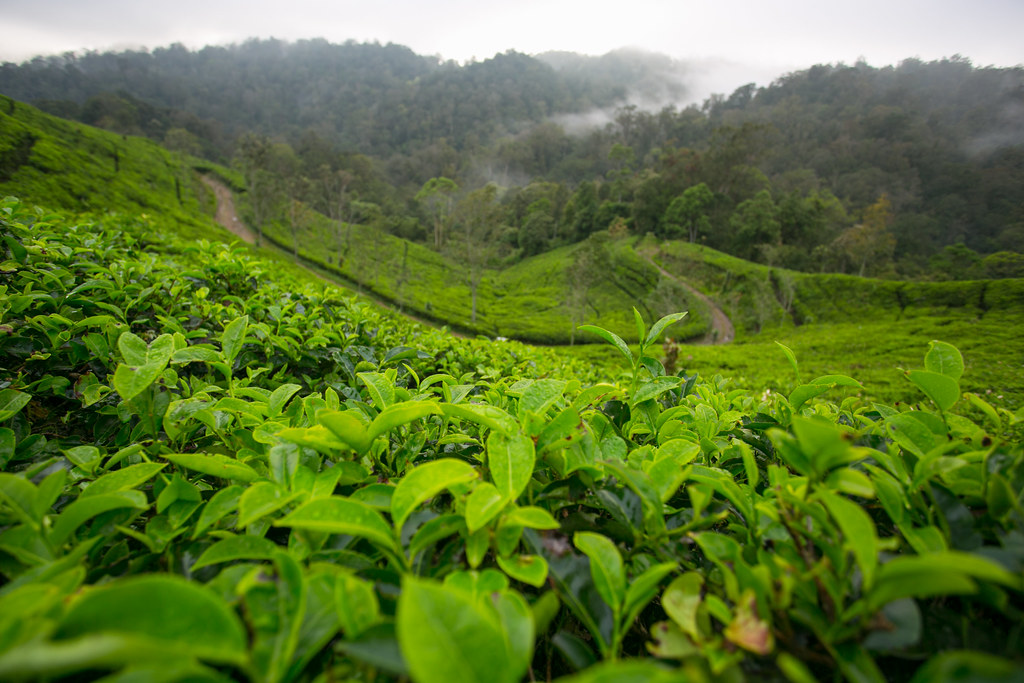
Context: Union Minister of Commerce & Industry, Shri Piyush Goyal, reviewed the functioning of the Plantation Boards under the Department of Commerce – Spices Board, Tea Board, Rubber Board, Coffee Board and Turmeric Board.
Emphasized the need to expand export opportunities through market diversification, promotion of value-added products, maintenance of quality standards, and optimum utilization of the benefits available to India under various Free Trade Agreements (FTAs).
He stressed on the promotion of brand ‘India’ by the Boards in collaboration with the India Brand Equity Foundation (IBEF), with each contributing equally.
Existing Plantation/Commodity Boards in India
-
Tea Board of India – for tea sector.
-
Coffee Board of India – for coffee sector.
-
Rubber Board of India – for natural rubber.
-
Spices Board of India – for spices (export promotion, quality control).
-
Tobacco Board of India – for Virginia tobacco (production, regulation, exports).
-
Coconut Development Board (CDB) – for coconut and coconut-based products.
-
Arecanut and Spices Development Board (ASDB) – for arecanut and also supports minor spices.
-
Turmeric Board of India – newly announced in Sept 2023 (for turmeric and value-added products).
| Board | Established (Year & Act) | HQ | Statutory Status | Ministry |
|---|---|---|---|---|
| Coffee Board of India | 1942 (Coffee Act, 1942) | Bengaluru | Statutory | Commerce & Industry |
| Rubber Board of India | 1947 (Rubber Act, 1947) | Kottayam, Kerala | Statutory | Commerce & Industry |
| Tea Board of India | 1953 (Tea Act, 1953) | Kolkata | Statutory | Commerce & Industry |
| Tobacco Board of India | 1976 (Tobacco Board Act, 1975) | Guntur, Andhra Pradesh | Statutory | Commerce & Industry |
| Spices Board of India | 1987 (Spices Board Act, 1986 – merger of Cardamom Board & Spices Export Promotion Council) | Kochi, Kerala | Statutory | Commerce & Industry |
| Coconut Development Board (CDB) | 1981 (Coconut Development Board Act, 1979; est. Jan 12, 1981) | Kochi, Kerala | Statutory | Agriculture & Farmers Welfare |
| Directorate of Arecanut and Spices Development (DASD) | 1966 (Govt. resolution; under Agriculture) | Calicut, Kerala | Resolution | Agriculture & Farmers Welfare |
Turmeric Board of India |
2023 (Govt. notification; yet to have its own Act) inaugurated in Jan 2025 |
Nizamabad, Telangana |
Not yet statutory | Commerce & Industry |
Note: There isn't a single, separate Statutory Sugarcane Board in India, but rather regulatory functions are managed through the Sugarcane (Control) Order, Essential Commodities Act 1955, and the Directorate of Sugarcane Development.
India does not have a single, unified national "Cashew Board," but rather operates with a combination of agencies for cashew development and promotion: the Directorate of Cashewnut & Cocoa Development (DCCD) under the Ministry of Agriculture & Farmers Welfare, responsible for production and productivity, and
the Cashew Export Promotion Council of India (CEPC) under the Department of Commerce, which focuses on export promotion and liaison between the industry and foreign markets.
The State with the highest cashew cultivation in India is Odisha, followed by Andhra Pradesh in the second position and Maharashtra in the third position. Kerala is currently in the fifth position.