
ULLAS – Understanding of Lifelong Learning for All in Society
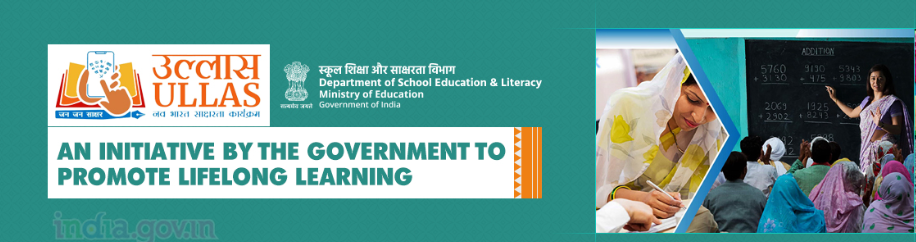
Introduction
Centrally Sponsored Scheme (CSS) for the period FY 2022–2027.
It aims to promote Education for All, replacing the earlier term Adult Education, and aligning with the National Education Policy (NEP) 2020.
The scheme embodies the vision of Viksit Bharat@2047 by empowering citizens through lifelong learning opportunities.
The programme turns schools into samajik chetana kendras deploys mobile app with primers in 26 languages and uses digital platform for remote reach
The UN SDG 4.6 mandtaes that by 2030 all youth and substantial adults achieve literacy and numeracy.
Objective
To provide lifelong learning opportunities for all citizens aged 15 years and above, covering both Foundational Literacy and Numeracy (FLN) and 21st-century life skills.
Core Components
Foundational Literacy and Numeracy (FLN) – basic reading, writing, and arithmetic.
Critical Life Skills – financial literacy, digital literacy, commercial awareness, health care, family welfare, child care, and education.
Vocational Skills Development – to enhance local employment opportunities.
Basic Education – preparatory, middle, and secondary equivalency.
Continuing Education – adult education in arts, science, technology, culture, sports, and other locally relevant areas.
Key Features
Feature | Details |
Target Group | Citizens aged 15 years and above who missed formal schooling. |
Time Period | FY 2022–2027 |
Implementation Approach | Volunteer-driven, leveraging technology and community participation. |
Mode | Primarily online; volunteer training and orientation in face-to-face mode. |
Digital Learning Tools | TV, radio, mobile apps, open-source portals, and online modules. |
Tagline | “Jan Jan Saakshar” — Literacy for every person. |
Technology Backbone | Online Teaching, Learning and Assessment System (OTLAS) developed in collaboration with NIC, NCERT, and NIOS. |
Total Financial Outlay | ₹1037.90 crore (Central Share: ₹700 crore; State Share: ₹337.90 crore). |
Target | 5 crore learners by 2027 (1 crore per year). |
Institutional Framework
Nodal Ministries/Agencies:
Ministry of Education (MoE)
NIC, NCERT, NIOS (for content development and digital integration)
Implementation Partners:
State Governments, UTs, NGOs, and community-based organisations.
Volunteers registered via mobile apps and online platforms.
Innovative Aspects
Volunteerism-Based Model – Community participation forms the core of implementation.
Digital Inclusion – Use of open-source apps, mobile learning, and free access resources.
Credit Linkage – Students may earn academic credits for contributing to literacy efforts under the NEP 2020 credit architecture.
Holistic Learning – Beyond literacy to lifelong learning, wellbeing, and self-reliance.
Play-Based Learning – Inclusion of folk language, sports, and work-related activities to make learning enjoyable and relevant.
Philosophical Foundation
Rooted in Kartavyabodh (Sense of Duty) – collective responsibility towards a literate and empowered society.
Embodies Sabka Prayas and Jan Bhagidari — participatory governance for inclusive education.
Education seen as the foundation of Viksit Bharat (Developed India).
Expected Outcomes
Achieving 100% literacy across all States/UTs by 2027.
Bridging the learning gap for adult non-literates.
Improving employability through vocational and digital skills.
Fostering lifelong learning culture in line with NEP 2020.
Empowering communities through participation and volunteerism.
Challenges
Digital divide and lack of connectivity in remote areas.
Volunteer retention and quality of teaching.
Coordination among multiple implementing agencies.
Measuring learning outcomes effectively for adult learners.
Significance
Contributes directly to SDG 4: Quality Education — Ensure inclusive and equitable quality education and promote lifelong learning opportunities for all.
Supports NEP 2020’s vision of an inclusive, flexible, and multidisciplinary education system.
Strengthens social cohesion, economic productivity, and citizenship awareness.