
U.S. Losing Out on China Soybean Sales as Brazil Fills In
Background
-
Issue: U.S. soybean exporters risk losing billions in sales to China due to ongoing trade tensions and tariffs.
-
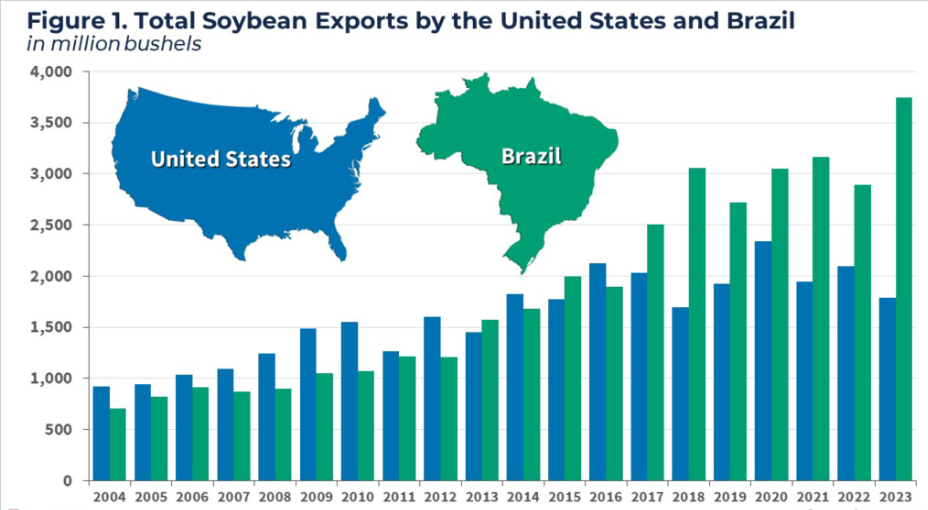
Main Competitor: Brazil is capturing the Chinese market during the key U.S. marketing season.
-
China: Top global importer of soybeans (~105 million metric tons in 2024).
Market Pattern
-
Normal seasonality:
-
Sep–Jan: U.S. soybeans dominate Chinese imports.
-
Post-February: Brazil’s harvest takes over supply.
-
-
Change in 2024: Brazil is supplying even during the U.S. peak window.
Reasons for China’s Shift
-
Trade tensions & tariffs – introduced during Trump presidency; still unresolved.
-
Supply security – heavy Q3 purchases from Brazil to build inventories ahead of possible Q4 risks.
-
Policy shift – reduced dependence on U.S. agriculture since start of trade war.
Impact
-
Potential loss for U.S.: Billions of dollars in missed sales.
-
Pressure on Chicago soybean futures – already near five-year lows.
-
Brazil strengthens market position (world’s largest exporter, >53 million metric tons/year)
Key Figures
Global Scenario (2024–25 estimates – Source: Exportimportdata.in)
-
Brazil – Largest producer; over 160 million metric tons.
-
United States – About 120 million metric tons.
-
Argentina – Around 50 million metric tons.
-
China – ~20 million metric tons; major importer due to high domestic demand.
-
India – ~13 million metric tons; showing a growing trend.
India – State-wise Production
-
Madhya Pradesh – Largest producer, called the “Soybean State”.
-
Maharashtra – 2nd largest producer.
-
Rajasthan – Significant producer.