
Traditional Sarees of India
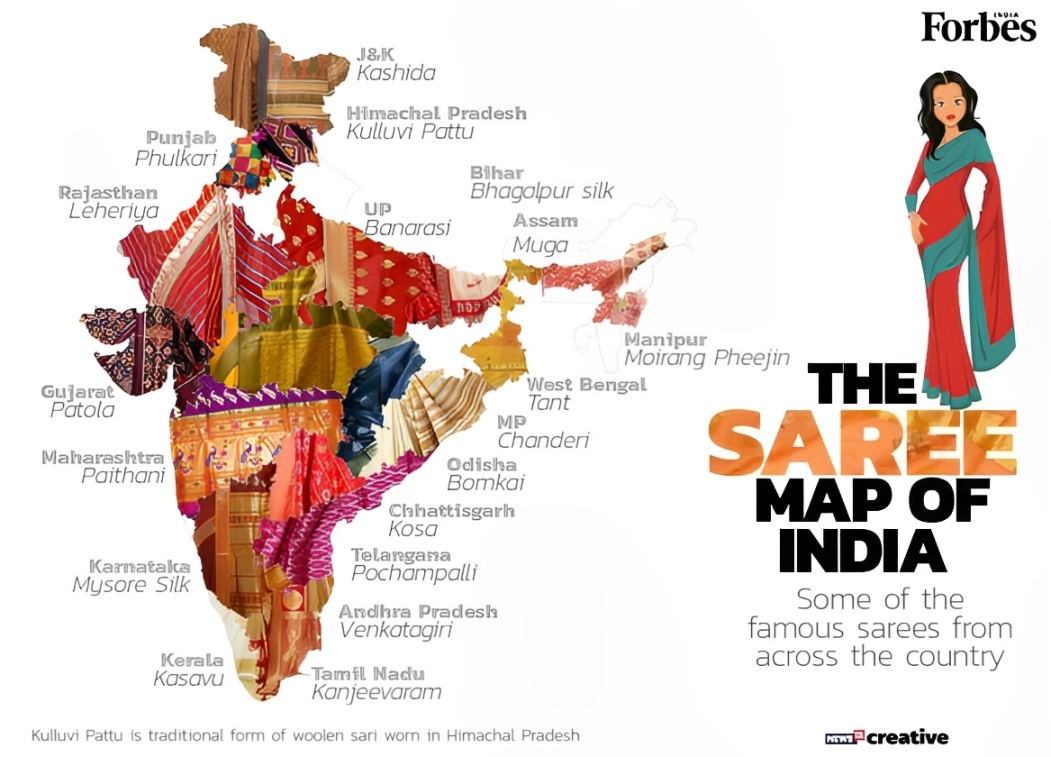
Context : In his Mann ki baat address PM mentioned about Traditional sarees
1. Tamil Nadu – Kanjeevaram Sarees
-
Rich silk sarees known for durability and luster.
-
Intricate zari (gold thread) work.
-
Typically feature temple borders, checks, stripes, and floral motifs.
2. Uttar Pradesh – Banarasi Sarees
-
Fine silk with Mughal-inspired designs.
-
Known for gold and silver brocade (zari).
-
Often include motifs of flowers, kalga, bel, and jhallar.
3. Maharashtra – Paithani Sarees
-
Made with fine silk; vibrant in color.
-
Borders decorated with peacock, lotus, and floral motifs.
-
Woven with real gold/silver threads in traditional times.
4. Gujarat – Patola Sarees
-
Renowned for double ikat technique.
-
Symmetrical geometric and floral designs.
-
Time-intensive and highly skilled craftsmanship.
5. Assam – Muga Silk Sarees
-
Made from Muga silk, known for natural golden-yellow sheen.
-
Durable and long-lasting.
-
Reflects Assamese culture and is usually worn during festivals and weddings.
6. Odisha – Sambalpuri Sarees
-
Features ikat weaving with traditional motifs like shell, wheel, and flowers.
-
Bright, contrasting colors.
-
Symbolic of Odisha’s textile identity.
7. Telangana – Pochampally Sarees
-
Known for geometric designs and sharp ikat patterns.
-
Blend of silk and cotton.
-
Design registered under GI (Geographical Indication).
8. Madhya Pradesh – Chanderi Sarees
-
Lightweight with a sheer texture.
-
Silk or cotton base with zari work.
-
Delicate motifs like peacocks, coins, and lotus.
9. Rajasthan – Bandhani Sarees
-
Tie-dye technique using vibrant colors.
-
Patterns include dots, waves, and stripes.
-
Often worn during auspicious occasions and festivals.
10. West Bengal – Baluchari Sarees
-
Made from silk, feature woven mythological narratives (e.g., Ramayana, Mahabharata).
-
Rich pallu designs.
-
Known for cultural storytelling through weaving.
11. Kerala – Kasavu Sarees
-
Elegant cream (off-white) color with gold borders.
-
Traditionally worn during Onam and weddings.
-
Represents simplicity and grace.
12. Bihar – Bhagalpuri Silk Sarees
-
Also called Tussar silk sarees.
-
Natural sheen and coarse texture.
-
Eco-friendly dyeing methods are often used.