
Tomatoes: From Foreign Fruit to Nutritional Powerhouse
Introduction:
-
Tomato: Not native to India; brought by Portuguese traders in the 15th century.
-
Adopted and cultivated widely by British colonisers in the 16th century.
-
Initially viewed with suspicion — called "poison apples", associated with illness and superstition.
Historical Background:
-
Europe & U.S. suspicion: Tomatoes reacted with lead in copper utensils, causing illness.
-
Turning point in the U.S.: Farmers in Salem, New Jersey used appropriate vessels, reducing health concerns.
-
Indian public hesitant: Despite cultivation, people were wary of its consumption.
-
1938 efforts: Dr. Tara Chitale and colleagues promoted its use for common cold, scurvy, and iron deficiency — lukewarm response.
Changing Public Perception:
-
Gradual acceptance due to:
-
Traveller recommendations.
-
Advocacy by National Institute of Nutrition, India.
-
Emphasis on vitamins and minerals in tomatoes.
-
Health Benefits of Tomatoes:
-
Classified as a fruit (botanically).
-
Rich in antioxidants — supports heart and brain health.
-
Reduces heart disease risk.
-
Controls high blood pressure — especially useful for senior citizens.
-
High cellulose fibre — prevents constipation.
-
Lycopene pigment — may protect against Alzheimer’s disease in elderly.
-
Hygiene caution: Must be washed thoroughly to remove dust-borne germs.
Cultivation & Research:
-
Tomato farmlands: 5,000–10,000 plants per acre in India.
-
Production:
-
India (2022–23): 210 lakh tonnes (2nd in world).
-
China: 680 lakh tonnes (1st in world).
-
-
Research centers:
-
Indian Institute of Horticultural Research, Bengaluru:
-
‘Arka Rakshak’: disease-resistant hybrid.
-
‘Arka Shreshta’: long shelf-life for easy transport.
-
-
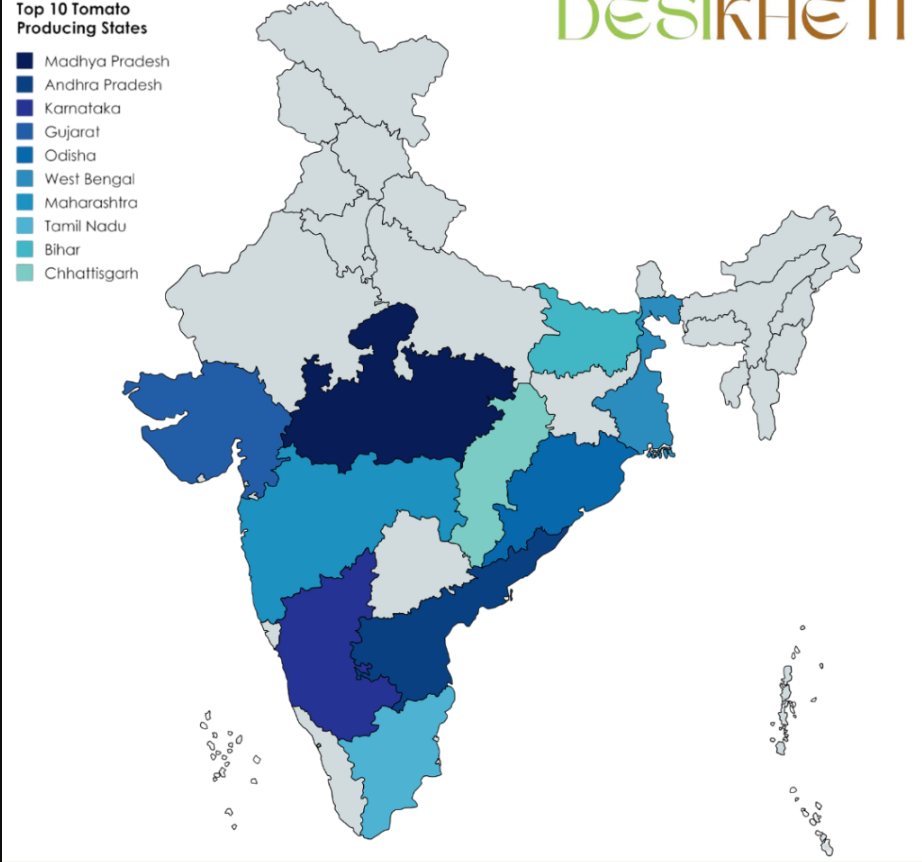
Top Tomato Producing States:
-
Madhya Pradesh

Andhra Pradesh

-
Karnataka
Gujarat
-
Odisha
-
WestBengal
-
Maharastra
-
Average wholesale price: ₹1,700 per quintal.