
Tiny Gold Particles for Early Detection of Parkinson’s Disease
Context
-
Parkinson’s Disease (PD):
-
Fastest-growing neurological disorder worldwide.
-
In India, cases expected to rise due to aging population and higher life expectancy.
-
Challenge: Diagnosis often occurs after irreversible brain damage.
-
-
Need: Early detection to enable timely treatment, reduce healthcare burden.

Research Breakthrough
-
Institute: Institute of Nano Science and Technology (INST), Mohali (Autonomous under DST).
-
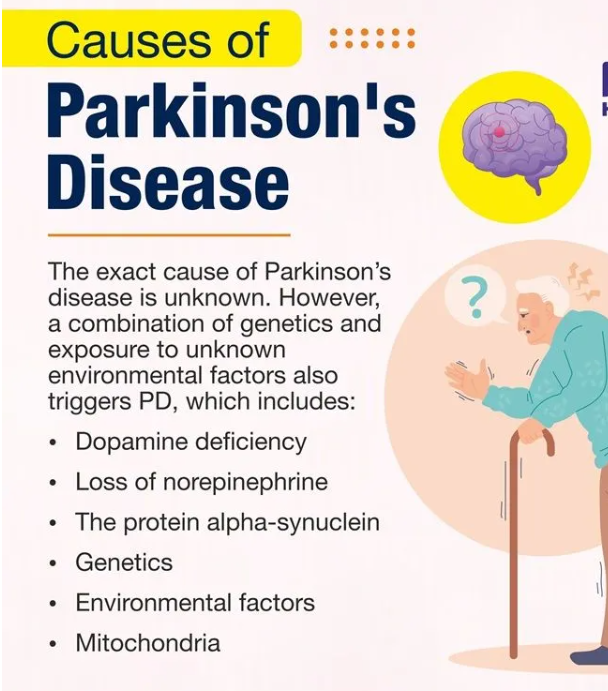
Key Discovery: Gold nanoclusters (AuNCs) can distinguish between normal and toxic forms of the protein α-synuclein, which is linked to PD.
How it works
-
α-synuclein protein:
-
Normal = harmless.
-
Aggregated (amyloid) form = toxic, damages brain cells.
-
-
Gold nanoclusters (AuNCs):
-
Extremely small, glowing particles.
-
Coated with amino acids to give selective binding (“stickiness”).
-
Proline-coated AuNCs → detect normal protein.
-
Histidine-coated AuNCs → detect toxic aggregates.
-
-
Result: Biosensor can identify early toxic changes before symptoms appear.

Methodology
1. Protein engineering and purification (normal + mutant α-synuclein):
Scientists make two versions of a protein called α-synuclein — one normal and one with changes (mutant). They then purify these proteins so they can be studied without contamination.
2. Synthesis of amino acid–capped AuNCs:
They make very tiny clusters of gold atoms (gold nanoclusters, AuNCs). These are coated with amino acids (the building blocks of proteins) to make them stable and useful for experiments.
3. Characterisation (checking their properties):
Spectroscopy (UV-Vis, fluorescence, XPS): Uses light to study how the gold nanoclusters and proteins behave (what wavelengths they absorb, emit, and what elements are present).
Microscopy (TEM): A very powerful microscope (Transmission Electron Microscope) is used to actually see the shape and size of the gold nanoclusters.
Electrochemical methods (cyclic voltammetry, impedance spectroscopy): These test how well the proteins and nanoclusters conduct electricity and interact with surfaces.
4. Validation in human-derived neuroblastoma cells (SH-SY5Y):
Finally, they test the effect of the normal and mutant proteins with gold nanoclusters inside special brain-like human cells grown in the lab (SH-SY5Y). This helps to check if the findings are relevant for human disease.
Significance
-
Health Impact:
-
Enables early detection → earlier treatment, improved quality of life, reduced costs.
-
-
Wider Application:
-
Platform adaptable for other protein-misfolding diseases (e.g., Alzheimer’s).
-
-
Policy Relevance:
-
Supports India’s National Health Policy (focus on NCDs).
-
Advances Make in India in biotech & nanotech diagnostics.
-
-
Global Contribution:
-
Low-cost, label-free, clinically adaptable → potential for point-of-care testing worldwide.
-