
The Legacy of Savitribai Phule
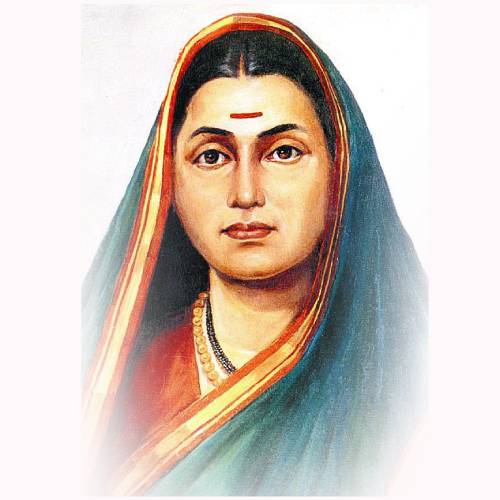
Life & Contributions
-
Savitribai Phule (1831–1897): India’s first female teacher and social reformer.
-
Founded first girls’ schools in Pune (1848) with husband Mahatma Jyotiba Phule.
-
Designed curricula, wrote poetry, used teaching as a tool of empowerment for women.
-
Defied caste & gender prejudices; faced hostility (mud & stones thrown at her) but persisted.
-
Believed education of girls was essential for India’s future.
Became India’s first trained female teacher & headmistress.
Collaborated with Fatima Sheikh, first Muslim woman teacher of India
Social Reform Work
-
1851: Founded Mahila Seva Mandal → promoted women’s rights, anti-caste, equality.
-
1853: Founded Balhatya Pratibandhak Griha (infanticide prevention centre for widows).
-
Campaigned against child marriage, for widow remarriage.
-
Shelter homes for widows, victims of violence, pregnant women.
-
Encouraged women’s gatherings without caste distinctions (all sat on same mat).
-
Advocated for inter-caste equality, women’s dignity, education as liberation.
Literary Contributions
-
Kavya Phule (1854) – poetry collection on social issues.
-
Bavan Kashi Subodh Ratnakar (1892) – prose & reflections.
-
Poem “Go, Get Education” – urged oppressed to fight injustice through education.
-
Writings highlight feminist consciousness & caste critique.

The Legacy of Reformers & Call of Equality
-
Savitribai’s efforts part of broader 19th-century reformist movement:
-
Raja Ram Mohan Roy – against sati, child marriage, for women’s education.
-
Ishwar Chandra Vidyasagar – widow remarriage, women’s education.
-
Mahatma Gandhi – stressed empowerment of women.
-
-
Reformers viewed women’s education as key to social change.
-
Savitribai emphasized education as liberation and equality.
Women & Education: The Progress
-
Post-Independence achievements:
-
Literacy rate of women has risen from 8.9% (1951) to 70.3% (2021 ).
-
Gender parity index improving across levels of schooling.
-
Gross Enrolment Ratio (GER) of girls at elementary level now higher than boys.(UDISE+)
-
-
Government schemes contributing:
-
Beti Bachao Beti Padhao (2015): Shifted social attitudes, improved sex ratio.
-
Poshan Abhiyan, Mission Shakti, SAMARTHA: Nutrition, safety, opportunity framework.
-
Current Scenario (as per UDISE+ 2024–25 data)
-
Female teachers constitute 54.2% of total teachers (up from 46.9% in 2014–15).
-
Challenges remain:
-
High dropout rates among girls in secondary level due to:
-
Early marriage, safety issues, economic pressures.
-
-
Issues like menstrual hygiene, digital gap persist.
-
-
Govt initiatives: sanitary pads, safe schools, digital literacy.
Importance of Women’s Education
-
UNESCO finding: Every additional year of schooling for a girl → increases future earnings by 10–20%.
-
Women’s education = multiplier effect:
-
Better healthcare & nutrition.
-
Lower infant mortality.
-
Higher family income.
-
Stronger communities.
-
Towards Viksit Bharat 2047
-
Education is key driver of growth in developed India.
-
PM’s vision: Women’s empowerment as central pillar of nation-building.
-
Women’s education critical for achieving Viksit Bharat 2047 goals.
A Collective Resolve
-
Teacher’s Day honours not just educators but also reformers like Savitribai Phule.
-
Her legacy = education as liberation, equality, and empowerment.
-
Call for renewed commitment to:
-
Access, equity, quality education for girls.
-
Continued societal and governmental effort.
-