
Tamil Nadu’s Tidal Nursery System for Mangrove Survival : Iqbal Method
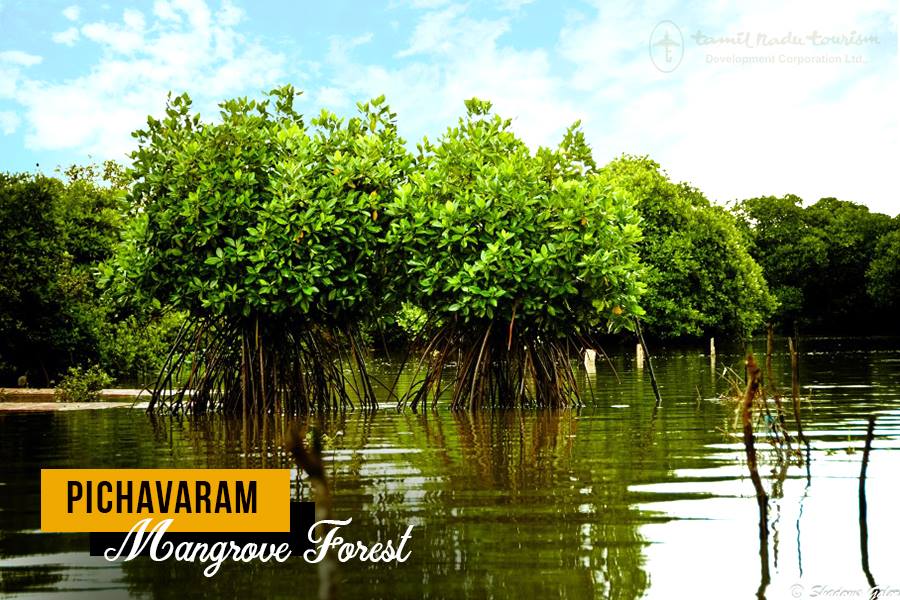
Context:
Tamil Nadu Forest Department has developed a tidal nursery system in Pichavaram (Cuddalore district), led by Forest Range Officer B. Iqbal. It improves survival and resilience of mangrove seedlings by acclimatising them to coastal conditions before transplantation.
Traditional Method vs New Innovation
Conventional Nursery:
Seedlings grown in polybags with 2–3 months freshwater treatment.
Problem: High mortality after transplantation due to sudden exposure to salinity, tidal fluctuations, and winds.
Tidal Nursery Innovation (Iqbal’s Method):
Seedlings secured with wooden sticks in tidal waters for 6–8 months.
Exposed to real field conditions: salinity changes, tidal rhythms, temperature variations.
Results:
Thicker stems, stronger roots.
Naturally hardened saplings with much higher survival rates.
Reduced need for extended protection.
Implementation & Outcomes
Launched: 2023–24.
Seedlings Raised:
2023: 4 lakh planted.
2024: 3 lakh hardened seedlings ready for NE monsoon transplantation.
Species covered (out of 12 in Pichavaram):
Avicenia marina
Avicenia officinalis
Rhizophora mucronata
Rhizophora apiculata
Community Involvement
Kalaignar Nagar Village Mangrove Council: tribals actively engaged in seed collection and nursery operations.
Supported by frontline staff (e.g., forester M. Rajesh Kumar, guard J. Sarala).
Enhances local stewardship and livelihood integration.
Wider Significance
Eco-friendly, low-cost, replicable across India’s coasts.
Strengthens climate resilience against:
Coastal erosion
Cyclones & storm surges
Rising sea levels
Protects Pichavaram mangrove ecosystem — one of India’s largest and ecologically rich coastal wetlands.
Pichavaram Mangrove Forest – Tamil Nadu
Location & Geography
Pichavaram, near Parangipettai (Chidambaram), Cuddalore District, Tamil Nadu.
Between Vellar estuary (north) and Coleroon estuary (south).
Forms part of the Vellar-Coleroon estuarine complex → creates the Killai backwater.
Area: ~45 km² (as of 2019).
Distance: ~243 km from Chennai; 15 km from Chidambaram.
Separated from Bay of Bengal by a sand bar.
Vegetation & Ecology
One of the largest mangrove forests in India.
Dominant mangrove genera:
Avicennia (Avicennia marina, Avicennia officinalis)
Rhizophora (Rhizophora mucronata, Rhizophora apiculata)
Ecological richness:
Rare varieties of economically important shells and fishes.
Functions as a bio-shield against cyclones, tsunamis, and coastal erosion.