
Supreme Court on Governor - President Assent Powers (16th Presidential Reference)
Context
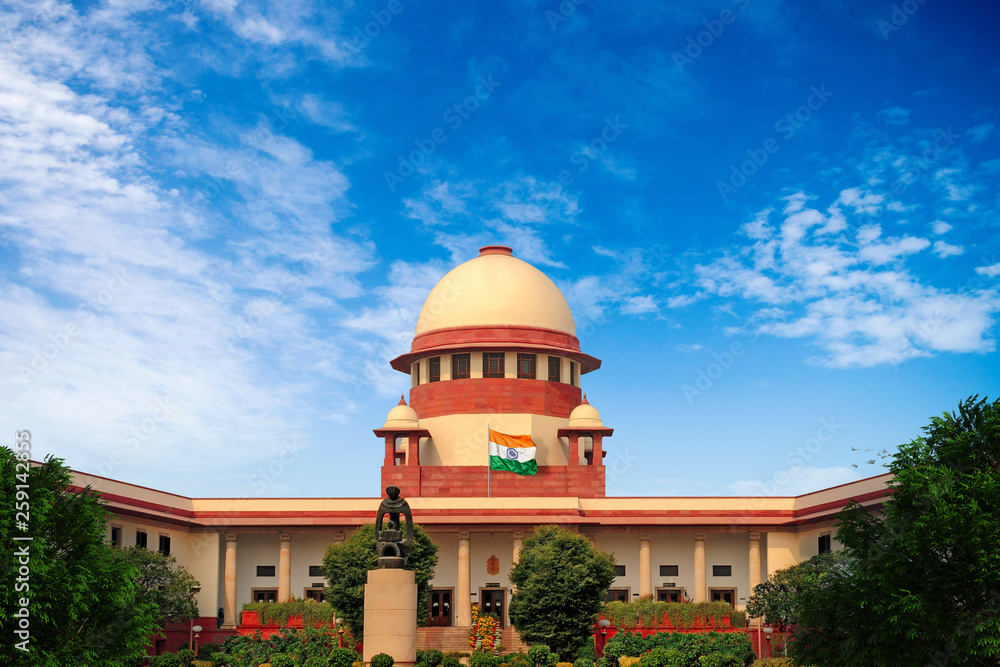
A Five-Judge Bench answered the 16th Presidential Reference under Article 143.
The Reference contained 14 “functional questions”.
Issue: Whether Governors/President can be bound by judicially-fixed timelines for disposing of State Bills.
Key Rulings of the Bench
No “One-Size-Fits-All” Timelines
Courts cannot impose uniform deadlines on Governors or President for assenting to Bills.
Doing so would:
Usurp constitutional functions of Governor/President.
Violate the Doctrine of Separation of Powers (a Basic Structure principle).
But No “Evasive Inaction” Either
Governors/President cannot sit endlessly on Bills.
Prolonged, unexplained, indefinite delay is unconstitutional.
Court Can Issue a “Limited Mandamus”
If Governor’s inaction is:
Prolonged
Unexplained
Indefinite
Then the Supreme Court can order him to act within a reasonable time.
But NOT:
Courts cannot review the merits of Governor’s decisions under Article 200.
Courts cannot personally subject Governor/President to proceedings (protected by Article 361).

Three Options of Governor under Article 200
Governor must choose one of the following:
Grant Assent
Return the Bill (with reasons) for reconsideration (only for non-Money Bills)
Reserve it for President’s consideration
Not Allowed:
Governor cannot simply “withhold” a Bill indefinitely without returning it.
Allowing that would violate:
Federalism
Powers of State Legislature
Required dialogic process between Governor and Assembly
April 2024 Judgment (TN Governor Case) Partially Overruled
Previous judgment (April 8, 2024) had:
Fixed 3-month timeline for Governors to act.
The Reference Bench now says:
Courts cannot fix rigid timelines for all Bills.
Bills differ in complexity and impact, so timelines must vary.
President Need Not Always Seek Supreme Court’s Opinion
When Governors reserve Bills under Article 201, it is NOT mandatory for the President to consult the Supreme Court.
Such consultation under Article 143 is purely discretionary.
This contradicts the April 8 judgment.
Courts Cannot Review or Comment on Contents of Bills
Courts cannot examine a Bill before it becomes law.
The legislative will becomes final only after assent.
Judicial review applies only to laws, not Bills.
Prelims Practice MCQ
Q. Consider the following statements regarding the Supreme Court’s opinion in the 16th Presidential Reference:
The Supreme Court held that imposing a uniform time-limit on Governors for disposal of Bills violates the doctrine of separation of powers.
The Court ruled that Governors may indefinitely withhold assent without giving reasons.
Courts may issue a limited mandamus directing Governors to decide on Bills where delay is prolonged and unexplained.
Which of the above statements is/are correct?
(a) 1 and 3 only
(b) 2 and 3 only
(c) 1 and 2 only
(d) 1, 2 and 3
Correct Answer: (a)
Explanation:
The Court rejected judicially imposed fixed timelines → Statement 1 correct.
It explicitly stated Governors cannot resort to prolonged or evasive inaction → Statement 2 incorrect.
Limited mandamus is allowed in cases of extreme delay → Statement 3 correct.
Q. Consider the following statements:
The Supreme Court held that the merits of the Governor’s decision under Article 200 are subject to judicial review.
The Governor enjoys personal immunity from court proceedings under Article 361.
Courts cannot examine the contents of a Bill before it becomes law.
Which of the statements given above is/are correct?
(a) 2 only
(b) 1 and 2 only
(c) 2 and 3 only
(d) 1, 2 and 3
Correct Answer: (c)
Explanation:
Courts cannot review the merits of the Governor’s decision → Statement 1 incorrect.
Article 361 immunity remains intact → 2 correct.
Courts cannot examine Bills before assent → 3 correct.