
Sulawesi island
Geographical Overview:
-
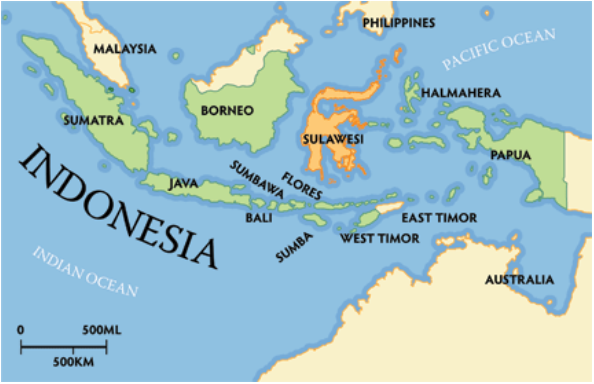
Location: Located east of Borneo and west of the Maluku Islands, Sulawesi lies in the Wallacea biogeographical zone.
-
Shape: The island is known for its bizarre shape — four distinct peninsulas connected by a mountainous core, creating isolated ecological niches.
-
Provinces: Sulawesi is divided into six Indonesian provinces — North Sulawesi, Central Sulawesi, South Sulawesi, Southeast Sulawesi, West Sulawesi, and Gorontalo.
| Line | Proposed By | Location | Significance | Faunal Zone Boundary |
|---|---|---|---|---|
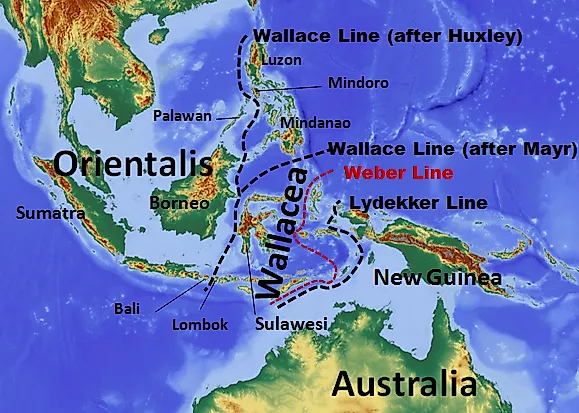
| Wallace Line | Alfred Russel Wallace (1859) | Between Bali and Lombok, and between Borneo and Sulawesi | Divides Asian fauna (west) from mixed species zone (east); marks a sharp contrast in species | Western edge of the transitional zone (Wallacea) |
| Weber Line | Max Carl Wilhelm Weber (1904) | Runs east of Wallace Line, passing through Halmahera and Timor | Suggests a central transition zone of mixed fauna; lies midway between Asia and Australia | Middle of Wallacea (transition region) |
| Lydekker Line | Richard Lydekker (1896) | Along the eastern edge of the Wallacea, near New Guinea and Australia | Marks boundary between Australian fauna and transitional fauna | Western boundary of the Australian region |
Geological Significance:
-
Tectonic Setting: Sulawesi lies at the confluence of several tectonic plates — Eurasian, Pacific, and Indo-Australian — making it seismically active.
-
Natural Disasters: It is prone to earthquakes and tsunamis, like the devastating Palu earthquake and tsunami (2018).
-
Volcanism: The island has several active volcanoes, especially in the north.
Biodiversity and Ecology:
-
Wallace Line: Sulawesi falls in the transitional zone between Asian and Australian fauna, known as Wallacea, proposed by Alfred Russel Wallace.
-
Endemic Species: Due to its isolation and ecological diversity, Sulawesi hosts numerous endemic species like:
-
Anoa (dwarf buffalo)
-
Maleo bird
-
Tarsiers (small primates)
-
-
Marine Biodiversity: The surrounding waters are part of the Coral Triangle, a global hotspot for marine biodiversity.
Environmental Challenges:
-
Deforestation: Driven by palm oil plantations, mining, and illegal logging.
-
Habitat Fragmentation: Infrastructure development and population pressure affect wildlife corridors.
-
Climate Change: Rising sea levels and increased storm intensity threaten coastal ecosystems and communities.
Socio-Cultural Landscape:
-
Ethnic Diversity: Home to several ethnic groups like Bugis, Makassarese, Toraja, and Minahasa.
-
Toraja Culture: Known for elaborate funeral rituals, unique architecture (Tongkonan), and indigenous beliefs.
-
Languages: Over 100 languages are spoken, reflecting deep cultural fragmentation.
Economic Importance:
-
Natural Resources: Rich in nickel, gold, and other minerals. Nickel mining is particularly significant for global electric vehicle battery supply chains.
-
Agriculture: Major crops include rice, coffee, and spices.
-
Fisheries: Coastal and inland fisheries support local livelihoods.
Geopolitical and Strategic Relevance:
-
Maritime Routes: Sulawesi lies along critical sea lanes in the Makassar Strait, important for global trade.
-
Security Concerns: Past separatist movements and terrorism (e.g., Poso region insurgency) highlight internal security issues.
-
Regional Cooperation: Indonesia’s management of Sulawesi ties into larger ASEAN cooperation on maritime security and environmental conservation.