
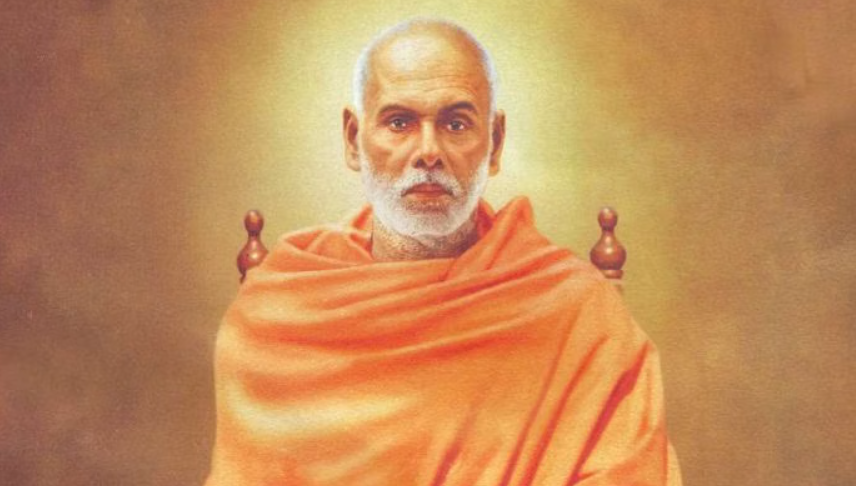
Sree Narayana Guru (1856–1928)
Context
Shashi tharoor’s book The Sage Who Reimagined Hinduism attempts to document Guru’s life and enduring lessons.
Basic profile
Sree Narayana Guru
Born: 20 August 1856, Chempazhanthy (Travancore)
Died: 20 September 1928, Varkala (Travancore)
Philosopher, spiritual leader, and social reformer
Central figure in the Kerala reformation movement
Philosophy
Interpreted Advaita Vedanta in a socially transformative manner
Famous dictum: “One caste, one religion, one God for humankind”
Author of Daiva Dasakam (widely used community prayer in Kerala)
Emphasised ethics, compassion, and spiritual equality over ritualism
Described by Romain Rolland as “Jnani of Karma”
Fight against casteism
Kerala society in the 19th–early 20th century was marked by severe untouchability
Oppressed communities included Ezhavas, Pulayars, Paraiyars, Adivasis
Aruvippuram consecration (1888):
Guru consecrated a Shiva idol himself, challenging Brahmanical monopoly
Marked the beginning of his public social reform movement
Consecrated 45 temples across Kerala and Tamil Nadu
Non-conventional consecrations included:
A mirror
Ethical inscriptions (“Truth, Ethics, Compassion, Love”)
Vegetarian Shiva
Promoted religious tolerance; praised figures like Krishna, Buddha, Adi Shankara, Jesus Christ in Anukampadasakam
Interaction with Mahatma Gandhi
Mahatma Gandhi met Narayana Guru on 12 March 1925 at Sivagiri Ashram during Vaikom Satyagraha
Guru stressed:
Education and economic empowerment over symbolic social reforms
Logical dismantling of caste hierarchy
Impact on Gandhi:
Influenced his intensified focus on eradication of untouchability
Inspired renaming of Young India to Harijan
Integrated caste reform into the national freedom struggle
Role in labour movement
Under Guru’s guidance, Travancore Labour Association was formed on 31 March 1922
First organised labour union in Kerala
Originated among exploited coir workers
Key ideas:
Unity, organisation, and collective bargaining
Preceded communist politics in Kerala
Guru’s prophetic statement:
“The age of the workers is coming”
Economic and educational vision
Organised First All India Industrial and Agricultural Exhibition (1905) at Kollam
Vision encapsulated in slogan:
“Become enlightened through education, strong through organisation, prosperous through industry”
Emphasised:
Industrialisation
Agriculture
Trade and technical training
Vaikom Satyagraha
Vaikom Satyagraha
Protest against denial of access to roads surrounding Vaikom Temple
Linked to Guru’s own humiliation on temple roads
Key disciples involved:
Kumaran Asan
T. K. Madhavan
Supported nationally by Gandhi
Outcomes:
Opening of temple roads to all castes
Influenced Temple Entry Proclamation, 1936
Sivagiri pilgrimage
Concept approved by Guru in 1928
Core objectives:
Education
Cleanliness
Organisation
Industry and agriculture
Technical training
First pilgrimage conducted in 1932 after his death
Emphasised practical social transformation
India’s first All Religions Conference
Narayna Guru organized Organised in 1923 at Aluva Advaita Ashram
First such conference in India
Background:
Period of intense communal riots (1922–1927)
Message displayed:
“We meet here not to argue and win, but to know and be known”
Continues annually
Prelims Practice MCQs
Q. With reference to Sree Narayana Guru, consider the following statements:
He reinterpreted Advaita Vedanta to address social inequality.
He opposed temple consecrations as instruments of social reform.
Which of the statements given above is/are correct?
(a) 1 only
(b) 2 only
(c) Both 1 and 2
(d) Neither 1 nor 2
Answer: (a)
Explanation:
Guru actively used temple consecrations as a tool of social reform, making statement 2 incorrect.