
Saudi Arabia–Pakistan Defence Pact:
What happened?
-
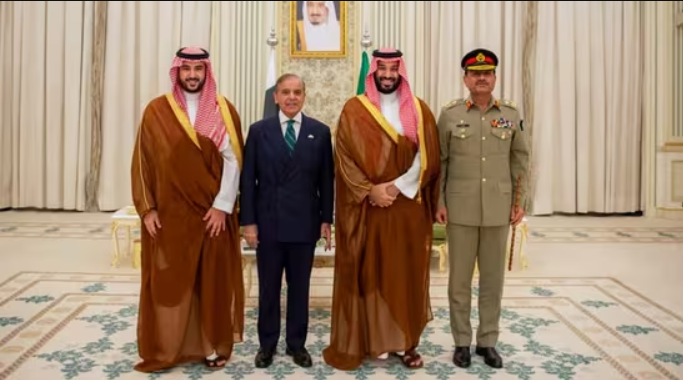
Saudi Arabia and Pakistan signed a mutual defence pact in Riyadh.
-
The agreement says: “An attack on one will be considered an attack on both.”
Why is this important?
-
Signal to Israel:
-
The deal comes right after Israel’s strike on Qatar, and during its wider offensive across West Asia (Iran, Lebanon, Gaza, Syria, Yemen).
-
By aligning with nuclear-armed Pakistan, Saudi Arabia is indirectly warning Israel.
-
-
Nuclear Umbrella Possibility:
-
Saudi Arabia has long been suspected of seeking Pakistan’s “nuclear umbrella.”
-
Pakistan, which developed nuclear weapons partly with Saudi financial help, could extend deterrence to Riyadh.
-
A senior Saudi official hinted the pact could involve “all defensive and military means deemed necessary,” implicitly including nukes.
-
-
Historic Defence Ties:
-
Pakistani troops have defended Saudi Arabia and its holy sites since the late 1960s.
-
Saudi funds reportedly helped Pakistan push through its nuclear programme despite U.S. sanctions.
-
Strategic implications:
-
For Israel: It faces the prospect of Saudi Arabia being shielded by Pakistani deterrence.
-
For Iran: Both Pakistan and Saudi Arabia are Sunni-majority states, traditionally wary of Iran’s Shia-led regime and nuclear ambitions.
-
For the U.S.: Complicates Washington’s Middle East strategy. The U.S. has sanctioned Pakistan before, but Riyadh is a close American partner.
-
For West Asia security: This is the first Gulf Arab mutual defence pact since Israel’s Qatar strike, raising risks of bloc-based escalation.
The pact formalizes decades-old Saudi–Pakistani defence ties, but its timing and nuclear undertones make it a direct geopolitical signal to Israel and Iran, while reshaping Gulf security equations.