
Saltwater Crocodile Population in Sundarbans
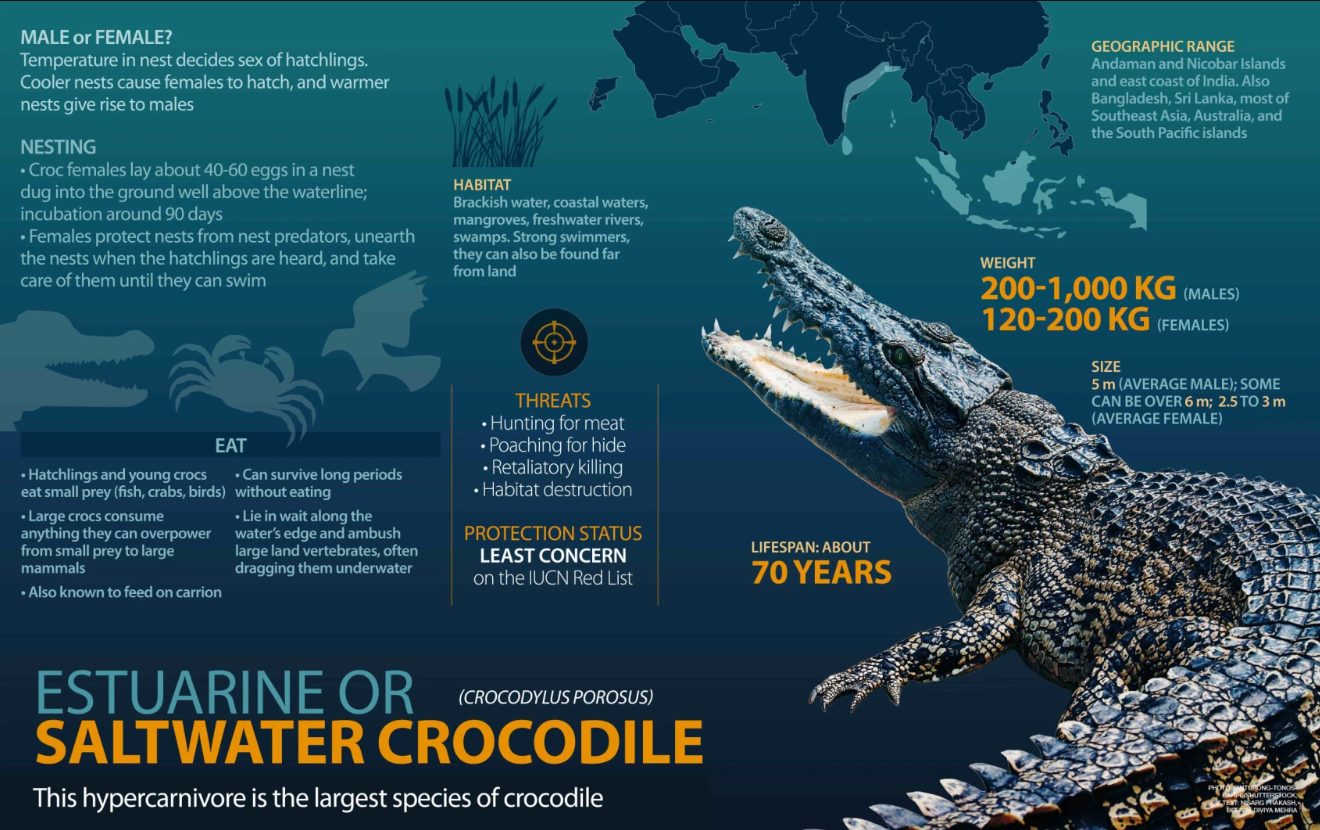
The saltwater crocodile (Crocodylus porosus) is the largest of all crocodilians and the largest reptile in the world. They are “hypercarnivorous apex predators” that keep flowing water ecosystems clean by feeding on carcasses.
In India, saltwater crocodiles are distributed across the swamplands, rivers, mangroves of Odisha and West Bengal and the coastal areas of the Andaman and Nicobar Islands.
Key Findings
-
Population Increase
-
2025 estimate: 220–242 individuals (213 direct sightings).
-
2024 estimate: 204–234 individuals.
-
-
Encounter Rate: ~1 crocodile per 5.5 km (0.18/km).
Ecological Importance
-
Species: Crocodylus porosus (largest living reptile, apex predator).
-
Role:
-
“Hypercarnivorous apex predator” – regulates prey populations.
-
Scavenging – keeps water ecosystems clean by feeding on carcasses.
-
-
Distribution in India:
-
Mangroves, swamplands, rivers of Odisha, West Bengal, and Andaman & Nicobar Islands.

Conservation Efforts in West Bengal
-
Bhagabatpur Crocodile Project (1976) – breeding and conservation facility in South 24 Parganas.
-
Long-term State-led monitoring, surveys, GPS mapping, and habitat characterisation.
-
Sundarban Biosphere Reserve (SBR) declared a priority habitat for crocodile conservation.
Challenges
-
Habitat degradation due to climate change, erosion, and salinity changes in mangroves.
-
Human-animal conflict – crocodile attacks in fishing villages.
-
Poaching & illegal trade (historically significant, though reduced today).
Broader Context
-
IUCN Status: Least Concern globally, but Indian sub-populations are under pressure.
-
Crocodile conservation in India – part of the “Crocodile Conservation Project” (1975) launched by Govt. of India with FAO/UNDP support, covering Mugger, Gharial, and Saltwater crocodiles.
-
Sundarbans: a UNESCO World Heritage Site and Ramsar Wetland, making crocodile conservation a globally significant effort.
Significance of 2025 Findings
-
Increase in hatchling numbers shows successful breeding and recruitment into population.
-
Indicates improved habitat conditions in SBR mangroves.
-
Strengthens case for continued funding and eco-tourism models linked with crocodile conservation.
-
Adds to India’s conservation success stories along with projects like Project Tiger and Project Elephant