
Rosewood (Dalbergia latifolia) decline in Tamil Nadu
Key Highlights of the Study
Conducted by: Institute of Wood Science and Technology (IWST), Bengaluru (under ICFRE)
Period: 2019–2025, across 12 States
1. Distribution & Habitat
-
Native to Nilgiris, Anamalai, and Parambikulam ranges in Tamil Nadu.
-
Only 17.2% of India’s suitable habitat lies within protected areas.
-
Six high-suitability districts in Tamil Nadu:
-
Nilgiris, Coimbatore, Erode, Tiruppur, Dindigul, Theni.
-
2. Population Density (trees per 0.1 ha)
-
Tamil Nadu: 2.85 (lowest in South India).
-
Karnataka: 6.19.
-
Kerala: 5.38.
3. Ecological & Economic Role
-
Known as “ivory of the forests” for its premium timber value.
-
Uses: Furniture, handicrafts, long-lasting timber.
-
Ecological importance:
-
Improves soil fertility via nitrogen fixation.
-
Acts as a long-term carbon sink.
-
Keystone species in forest ecosystems.
-
Legal & Policy
-
Tamil Nadu Rosewood Trees (Conservation) Act, 1995:
-
Prohibited cutting without government permission.
-
Prevented industrial-scale exploitation.
-
Extended in 2010 for 15 years → lapsed in Feb 2025 without renewal.
-
-
Consequence: Privately owned trees, esp. in Nilgiris tea plantations, are now vulnerable to felling.
Emerging Concerns
-
Sharp Decline: IWST field data confirms drastic fall in population in Tamil Nadu compared to neighbouring States.
-
Protection Gap: Majority of rosewood habitat lies outside protected areas, exposed to felling & land-use change.
-
Climate Threat: Models predict shrinkage of suitable habitat in coming decades due to climate change.
-
Illegal Harvest Risk: With lapse of Act, distinction between plantation-grown and wild timber is difficult → black-market exploitation likely.
Expert Recommendations
-
Reinstate Legal Protections: Revive or frame a new Rosewood Conservation Act.
-
Tagging & Certification System: Differentiate legal plantation timber from illegal wild timber.
-
Habitat-based Approach: Expand protection to unprotected but high-suitability areas.
-
Climate Adaptation: Incorporate rosewood in afforestation and assisted natural regeneration programmes.
Dalbergia latifolia (Indian Rosewood / East Indian Rosewood)
Scientific Classification
-
Family: Fabaceae (Leguminosae)
-
Genus: Dalbergia
-
Species: Dalbergia latifolia Roxb.
-
Common names: Indian rosewood, East Indian rosewood, Bombay blackwood, Palisandre;
-
In Indian languages: Eetti (Tamil), Irugudu (Telugu), Beete / Satisal (Kannada/Hindi).
-
Distribution & Habitat
-
Native to tropical monsoon forests of South and Southeast India (low elevations).
-
Also grown in Java (Indonesia) as plantations.
-
Found in evergreen and deciduous forests, drought hardy, adaptable to varying rainfall.
Botanical Features
-
Height: Up to 40 m.
-
Leaves: Pinnately compound.
-
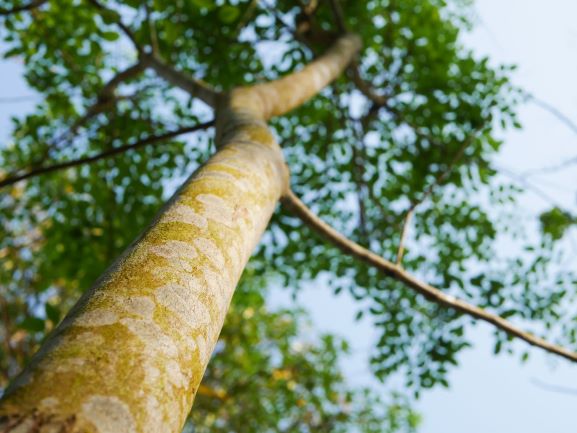
Bark: Grey, peels in long fibres.
-
Evergreen, but may turn deciduous in drier habitats
Conservation
-
IUCN Status: Vulnerable.
-
Germplasm conservation at Kerala Forest Research Institute, Thrissur.
-
Protection: Export of wild-harvested wood banned under Indian Forest Act, 1927.
Uses
-
Wood Characteristics:
-
Hard, dense, durable, resistant to insects and rot.
-
Long, straight bore → highly valued.
-
-
Applications:
-
Premium furniture, cabinetry, carvings.
-
Musical instruments (guitar bodies and fretboards).
-
Boats, skis, veneers, reforestation.
-
-
Plantation wood used in India and Java; slow-growing, hence limited expansion.
-
Substituted by Dalbergia sissoo and engineered rosewood in small-scale industries.
Dalbergia sissoo is native to the foothills of the Himalayas ranging from Afghanistan in the west to Bihar, India, in the east. It also occurs naturally in Iran. It is primarily found growing along river banks above 200 m (700 ft) elevation, but can range naturally up to 1,400 m (4,600 ft).
The temperature in its native range is typically 10 to 40 °C (50 to 104 °F), but varies from just below freezing to nearly 50 °C (122 °F). It can withstand average annual rainfall up to 2,000 millimetres (79 in) and droughts of three to four months. Soils range from pure sand and gravel to rich alluvium of river banks; shisham can grow in slightly saline soils. Seedlings are intolerant of shade.
Ecology
Dalbergia sissoo is the larval food plant of the black rajah butterfly
It is the best known economic timber species of the rosewood genus sold internationally, but it is also used as fuel wood and for shade and shelter. After teak, it is the most important cultivated timber tree of Bihar, which is the largest producer of shisham timber in India.