
Precision Biotherapeutics in India
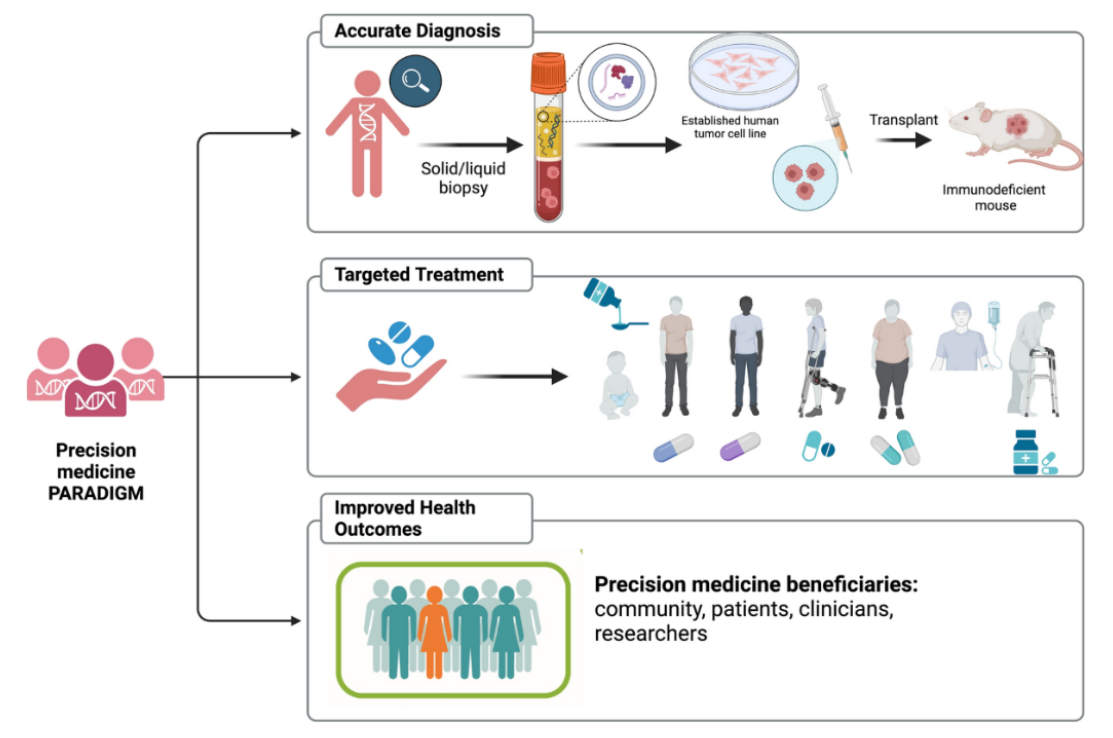
Concept
Precision biotherapeutics = medical interventions tailored to a patient’s unique genetic, molecular, or cellular profile.
These therapies aim to correct the root cause of disease rather than only manage symptoms.
Technologies involved
Genomic & proteomic analysis
Decoding genetic and protein signatures.
Used to identify mutations/dysfunctions.
Gene-editing therapies
Example: CRISPR for blood disorders.
Direct modification of faulty genes.
mRNA & nucleic acid therapeutics
Use RNA to produce specific proteins or silence harmful ones.
Monoclonal antibodies and biologics
Engineered molecules targeting precise disease markers (cancer cells, viral proteins).
AI-driven drug discovery
Big data + machine learning to predict molecular interactions and speed up drug development.
Why India needs precision biotherapeutics
Burden of disease
Non-communicable diseases (NCDs) cause ~65% of deaths in India.
Current treatments often adapted from foreign-tested products may be less effective due to India’s genetic diversity.
Advantages for India
Strong genomic research initiatives:
IndiGen programme
GenomeIndia project
Precision biotherapeutics support a shift towards predictive, preventive, personalised healthcare.
India’s current position
Institutional support
DBT has identified precision biotherapeutics as a priority under Biotechnology for Economy, Environment, and Employment policy.
Leading research institutions:
Institute of Genomics and Integrative Biology (IGIB)
National Institute of Biomedical Genomics (NIBMG)
Translational Health Science and Technology Institute (THSTI)
Private-sector initiatives
Biocon Biologics, Dr. Reddy’s: biosimilars, monoclonal antibodies.
Immuneel Therapeutics: immuno-oncology.
Bugworks Research: novel antibiotics.
Akrivia Biosciences: precision cancer diagnostics.
miBiome Therapeutics: patient-centric solutions.
4baseCare: precision oncology with AI.
ImmunoACT: brought CAR-T therapy to India.
Challenges
Regulatory gaps
No clear framework for gene and cell therapies.
Guidelines restrict use of emerging technologies but do not define “therapy”.
Manufacturing limitations
Insufficient local production of biologics & advanced therapies.
High cost
Precision medicines remain unaffordable for most; limited to wealthy urban patients.
Ethical & privacy issues
Genetic data requires strong consent and protection.
Risk of misuse without robust frameworks.
Opportunities for India
Global precision medicine market expected to exceed $22 billion by 2027.
India has advantages:
Skilled workforce.
Strong data analytics ecosystem.
Lower production costs → potential for affordable precision therapies.
Can emerge as a global hub if regulatory, manufacturing, and ethical challenges are addressed.
Prelims Practice MCQs
Q. Precision biotherapeutics primarily differs from conventional therapeutics in that it:
A. Uses only plant-derived molecules for treatment
B. Focuses on symptom management rather than root causes
C. Tailors interventions based on a patient’s molecular and genetic profile
D. Avoids the use of AI and data analytics
Correct answer: C
Explanation: Precision biotherapeutics customises treatment based on genetic, molecular, cellular data, unlike conventional approaches focused on symptomatic management.
Q. Which of the following technologies is/are essential components of precision biotherapeutics?
Proteomic analysis
Gene-editing tools like CRISPR
Monoclonal antibodies
AI-driven drug discovery
A. 1 and 4 only
B. 1, 2 and 3 only
C. 2, 3 and 4 only
D. 1, 2, 3 and 4
Correct answer: D
Explanation: All listed technologies (proteomics, gene editing, monoclonal antibodies, AI-based platforms) contribute to precision biotherapeutics.