
Pilia malenadu – New Spider Species Discovery
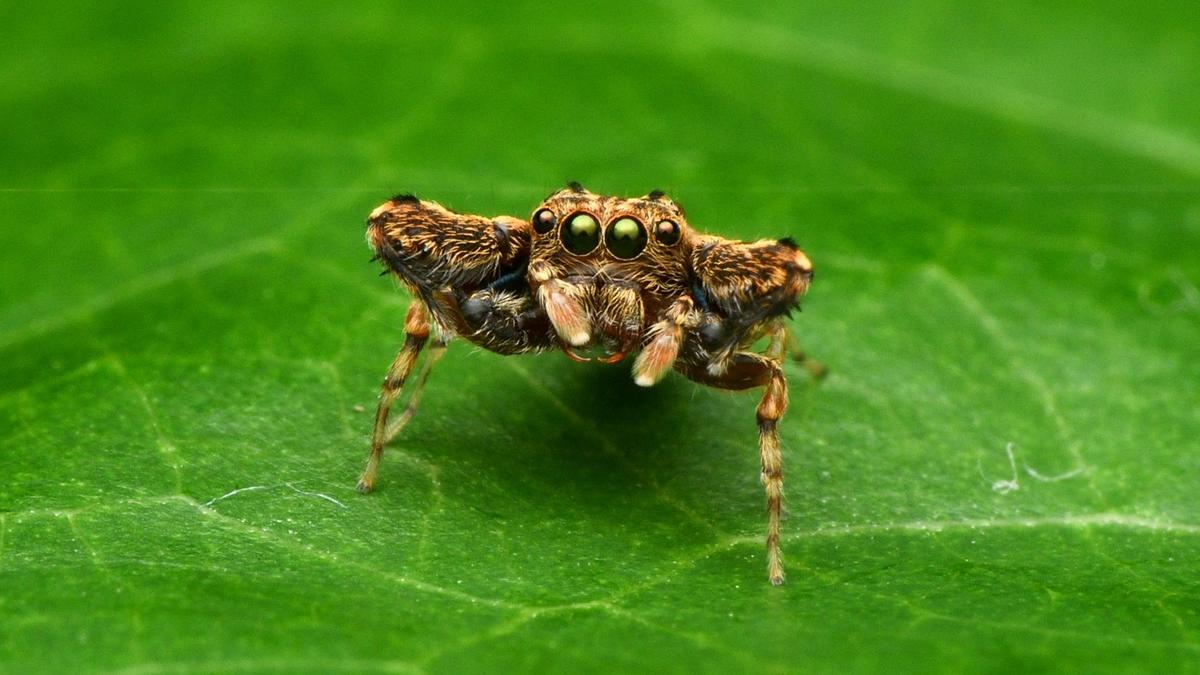
Basic Facts
Species: Pilia malenadu
Genus: Pilia (Jumping spider genus ,family Salticidae)
Discovered at: Madhugundi village, Mudigere taluk, Chikkamagaluru district, Karnataka
Region: Foothills of the Western Ghats
Discovered by: Ajit Padiyar (Naturalist)
Published in: Zootaxa (International taxonomy journal)
Year: 2025
Significance
First Pilia genus spider discovered after 123 years (previous in 1902, Kerala).
Both male and female spiders identified for the first time in this genus in India.
Indicates a healthy and undisturbed ecosystem.
Highlights Western Ghats’ biodiversity richness and taxonomic gaps in Indian arachnology.
Description
Total individuals found: 24
17 males, 3 females, 4 juveniles
Belongs to Salticidae (jumping spiders) — known for good eyesight and jumping predation.
Shows sexual dimorphism (physical differences between male and female).
Habitat
Found only on two host plants:
Memecylon umbellatum
Memecylon malabaricum
Habitat-specific species → highly dependent on these plants.
Found in moist evergreen forest foothills of Western Ghats.
Ecological Importance
Bioindicator species: Presence indicates a healthy micro-ecosystem.
Associated discovery: Saffron reedtail (rare damselfly) in same area → supports ecological richness.
Discovery stresses the need to protect microhabitats.
Habitat destruction could lead to extinction due to narrow ecological niche.
Sexual Dimorphism
Definition
Sexual dimorphism refers to differences in physical appearance between males and females of the same species, apart from reproductive organs.
These differences can occur in size, coloration, shape, ornamentation, or behavior.
It is a result of genetic inheritance influenced by evolutionary pressures like sexual selection, natural selection, and resource partitioning.
Examples of Sexual Dimorphism
Birds
Peacocks: Males have bright, elaborate feathers; females (peahens) are dull-colored for camouflage.
Birds of Paradise: Males exhibit ornate plumage and display dances to attract females.
Mammals
Deer: Males possess antlers for fighting rivals.
Elephant seals: Males are up to 10 times larger than females — used for dominance in harems.
Lions: Males have manes, possibly for protection and display.
Spiders
Females are often larger than males; advantageous for egg production and offspring protection.
Example: In some orb-weaver spiders, females can be many times the size of males.
Insects
In certain species (e.g., Orygia recens moths), females are wingless while males have wings, aiding in mate search.
In some beetles, males have large mandibles used in fights.
Prelims Practice MCQ
Q. Consider the following species recently reported from the Western Ghats:
Pilia malenadu – Spider
Saffron reedtail – Damselfly
Raorchestes chalazodes – Shrub frog
Which of the above are endemic to the Western Ghats?
A. 1 only
B. 1 and 2 only
C. 2 and 3 only
D. 1, 2 and 3
✅ Answer: D. 1, 2 and 3
Explanation: All three species are endemic to the Western Ghats, showing the region’s exceptional biodiversity.
Q. Which of the following best describes the ecological implication of discovering Pilia malenadu in the Western Ghats?
A. It reflects the presence of invasive plant species.
B. It indicates a healthy and stable micro-ecosystem.
C. It shows deforestation pressure in the Ghats.
D. It proves the extinction of older Pilia species.
✅ Answer: B. It indicates a healthy and stable micro-ecosystem.
Explanation: The discovery of habitat-specific arthropods signals an undisturbed, ecologically balanced environment.
Q. With reference to Pilia malenadu, recently in the news, consider the following statements:
It belongs to the family Salticidae.
It was found in the foothills of the Eastern Ghats.
It is a habitat-specific species dependent on Memecylon plants.
Which of the statements given above are correct?
A. 1 only
B. 1 and 3 only
C. 2 and 3 only
D. 1, 2 and 3
✅ Answer: B. 1 and 3 only
Explanation: Pilia malenadu belongs to Salticidae (jumping spiders) and was found in the Western Ghats, not the Eastern Ghats. It is restricted to Memecylon plants.