
Pax Silica initiative and its relevance for India
Changing global economic context
Persistent North–South divide in income and resource use continues.
However, semiconductors, Artificial Intelligence (AI), and critical minerals are emerging as decisive drivers of the global economy.
These technologies are now central to:
Economic competitiveness
National security
Everyday life (digital services, mobility, defence, healthcare)
What is Pax Silica?
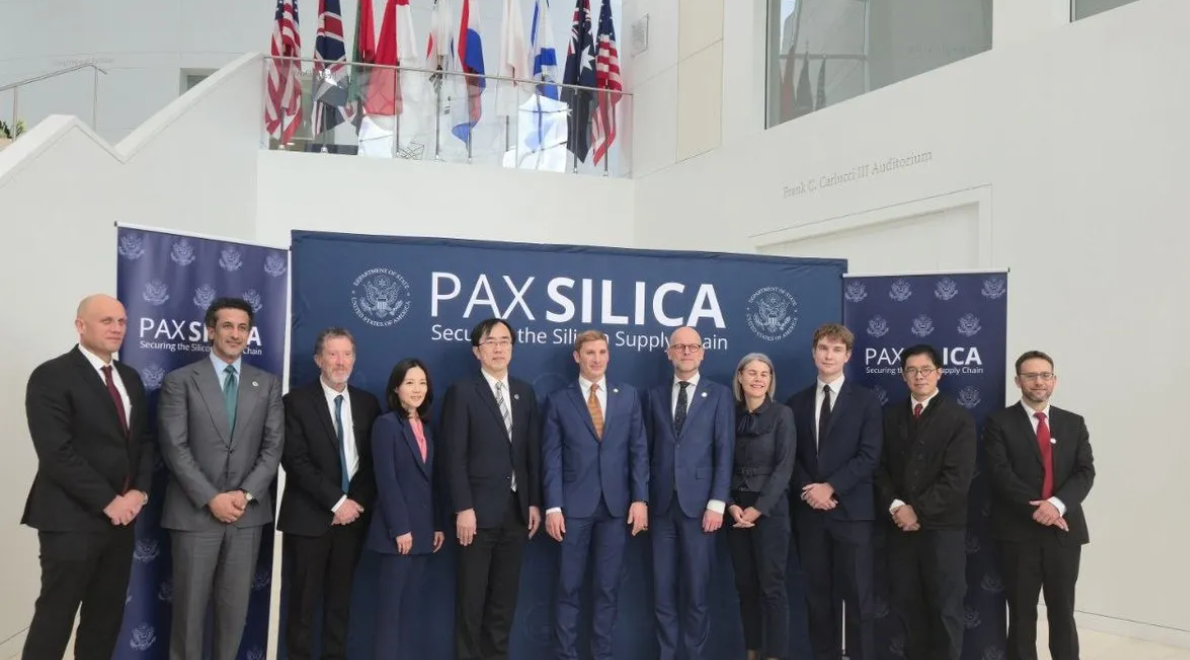
Inaugural Pax Silica Summit convened by the U.S. on December 12, 2025.
Meaning:
Pax (Latin): Peace
Silica: Core input in semiconductor manufacturing
Core objectives (as per Pax Silica Declaration):
Reduce coercive dependencies in critical technologies
Secure global tech and AI supply chains
Build trusted digital infrastructure
Focus areas:
Rare Earth Elements (REEs)
Semiconductors
AI
Advanced manufacturing and logistics

Major participants and their strategic roles
United States: Technology leadership, AI, chip design
Japan: Advanced manufacturing, materials
Australia: Leading lithium exporter, rich REE reserves
Netherlands: Home to ASML, crucial for advanced chip lithography
South Korea: Global leader in memory chip manufacturing
Singapore: Long-standing semiconductor manufacturing hub
Israel: Strength in AI software, defence tech, cybersecurity
United Kingdom: Third-largest AI market, strong innovation ecosystem
Qatar and UAE: Large sovereign investment funds, AI ecosystem development
Observers (potential future members):
Canada
European Union
OECD
Taiwan
Strategic logic: countering China
China dominates:
REE mining
Processing
Downstream manufacturing
Use of REEs as geopolitical leverage:
Export suspensions in response to U.S. tariff actions under Donald Trump
Impact on India:
Disruption in rare-earth magnet imports
Adverse effects on automobile and electronics industries
Restoration only after compliance with strict Chinese licensing and end-use conditions
COVID-19 pandemic further exposed risks of single-country supply chain dependence.
India’s prior supply chain initiatives
Supply Chain Resilience Initiative (2021):
India, Australia, Japan
Quad Critical Minerals Initiative (2025) under the Quadrilateral Security Dialogue
Despite participation in similar frameworks:
India was not invited initially to Pax Silica
On January 12, U.S. Ambassador Sergio Gor indicated India would soon be invited
What India brings to Pax Silica
Strong digital public infrastructure
Rapidly expanding AI market
Long-standing India–U.S. technology collaboration
Government initiatives:
AI Mission
Semiconductor Mission (with substantial financial outlays)
Industry participation:
Tata group investments in semiconductors
U.S. firm Micron’s investments in India
Growing AI start-up ecosystem
Human capital advantage:
Large number of Indian students in U.S. STEM programmes
Potential return migration due to restrictive U.S. visa policies
Creation of a highly skilled domestic talent pool
Key challenges for India
Status asymmetry
First developing country in Pax Silica
First non-ally (strategic partner) of the U.S. in the grouping
Expectation gap
Differences in threat perception and security responses
India’s nuanced positions may differ from U.S. allies
Strategic autonomy
India wary of policy constraints imposed by alliance structures
Domestic policy space
India likely to:
Protect nascent AI and semiconductor ecosystems
Use subsidies, government procurement, and calibrated imports
Potential friction with Pax Silica members, especially the U.S.
The road ahead
China continues to:
Tighten export controls on REEs
Show limited sensitivity to needs of emerging economies
Likely future scenario:
Two parallel REE supply chains:
China-led
Pax Silica-led
Given historical IT collaboration with Western economies:
India may gravitate towards Pax Silica
However:
Strained India–U.S. economic relations
Need for deeper consultations before formal alignment
Prelims Practice MCQs
Q. The Pax Silica initiative primarily aims to:
A. Promote free global trade in agricultural goods
B. Build and secure global technology, AI, and semiconductor supply chains
C. Create a shared military alliance
D. Reduce carbon emissions through climate finance
Correct answer: B
Explanation:
Pax Silica is focused on securing supply chains for silicon, semiconductors, AI infrastructure, and related critical technologies.