
Palm Oil Sector – Challenges and Outlook
Context
-
Major palm oil exporters like Malaysia and Indonesia are facing a potential supply crisis.
-
Key causes: Ageing oil palm trees, reluctance to replant, and ageing smallholder farmers.
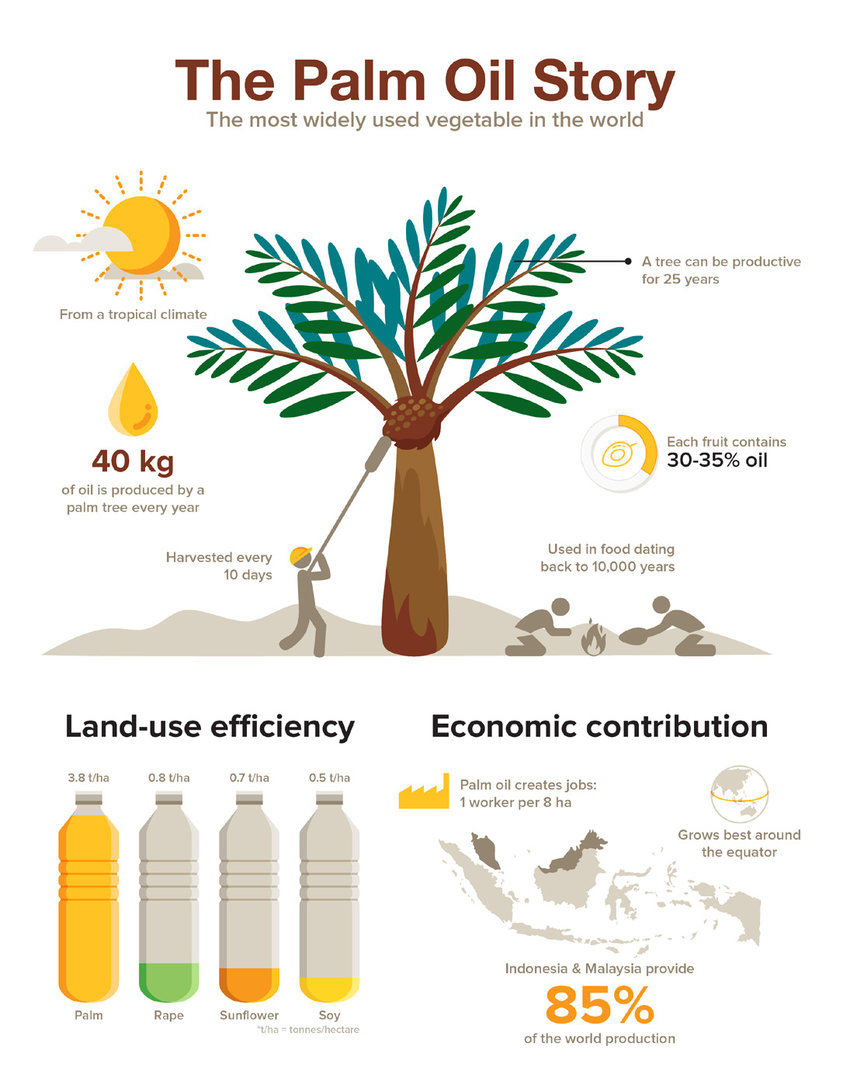
- Palm oil is an African tree in the palm family (Arecaceae), cultivated as a source of oil.
- Distribution: It is grown extensively in its native West and Central Africa, and Malaysia and Indonesia. Due to its high demand, plantations are spreading across Asia, Africa and Latin America.
Key Data Points
-
Palm oil accounts for over 50% of global vegetable oil supply.
-
85% of crude palm oil is produced by Malaysia and Indonesia.
-
Smallholders contribute 40% of total production in both countries.
-
Combined exports may decline by 20% by 2030 over 2024 levels.
Reasons for Decline in Production
1. Ageing Trees
-
Palm trees over 20 years old are past peak production.
-
Malaysia: Govt data – 37% smallholder plantations past peak; Experts estimate – >50%.
-
Indonesia: Targeted replanting of 2.5 million ha by 2025; only 10% achieved by Oct 2024.
2. Ageing Farmers
-
Farmers hesitant to replant due to:
-
3–5 years waiting period for new trees to yield.
-
Reduced replanting subsidies.
-
Need for continuous income to support families.
-
3. Policy Shifts
-
Indonesia’s biodiesel mandates: Increased domestic consumption.
-
Efforts to divert palm oil into biofuel production reduce exportable surplus.
Impact on Global Market
-
Global prices of palm oil (used in food, cosmetics, cleaning products) may rise.
-
Financial markets already pricing in slowdown, but extent underestimated due to underreported field realities.
Implications
-
Food security concerns in importing countries like India, China, EU.
-
Sustainability challenges: Slow replanting affects long-term supply.
-
Necessity for policy innovation to support rejuvenation of plantations and incentivise younger farmers.
Way Forward
-
Enhance subsidies and incentives for replanting.
-
Launch targeted schemes for smallholders and promote youth participation in palm cultivation.
-
Increase transparency in data on plantation health and replanting status.
National Mission on Edible Oils – Oil Palm (NMEO-OP)
Launch Year: 2021–22
Type: Centrally Sponsored Scheme
Implementing Agency: Ministry of Agriculture & Farmers Welfare
Objective
-
To enhance domestic production of edible oils by increasing area under oil palm cultivation and improving productivity.
Aim
-
Reduce India’s heavy import dependence on edible oils, especially palm oil (India imports ~60% of its edible oil demand).
Funding Pattern
-
80% share by Government of India
-
20% share by State Governments
Special Focus Regions
-
North-Eastern States
-
Andaman & Nicobar Islands
15 states covered under the scheme including:
-
Arunachal Pradesh
-
Assam
-
Manipur
-
Mizoram
-
Nagaland
-
Tripura
Salient Features
-
Planting Material Support
-
Financial assistance for quality planting material to boost initial productivity.
-
-
Intercropping Support
-
Inputs for intercropping (alternative crops grown between oil palm rows) during the gestation period of 4 years.
-
-
Maintenance Support
-
Support for maintenance of plantations until maturity.
-
-
Price Assurance Mechanism
-
Ensures farmers get Minimum Support Price–like security through a Viability Price Formula.
-
-
Viability Gap Funding (VGF)
-
Central support to cover the gap between actual cost and market viability to make projects economically feasible.
-
Significance
-
Helps tackle:
-
Food security concerns
-
Rising edible oil prices
-
Supply shocks due to import dependency (like during Ukraine War or Indonesia’s export bans)
-
-
Aligned with Atmanirbhar Bharat and Doubling Farmers’ Income targets.