
Naegleria fowleri & Primary Amoebic Meningoencephalitis (PAM)
Context:
- A 3-month-old child under treatment for Primary Amoebic Meningoencephalitis (PAM) at Kozhikode Medical College Hospital for 2+ weeks.
-
A 9-year-old girl from Thamarassery recently died of PAM.
-
Cause: Naegleria fowleri amoeba detected in the well water at the child’s residence.
-
Testing: Water samples from homes of the other two patients also sent for analysis.
-
Precautionary measures: Girl’s brother with fever kept under observation, but no PAM symptoms detected.
About Naegleria fowleri
-
Commonly known as the “brain-eating amoeba.”
-
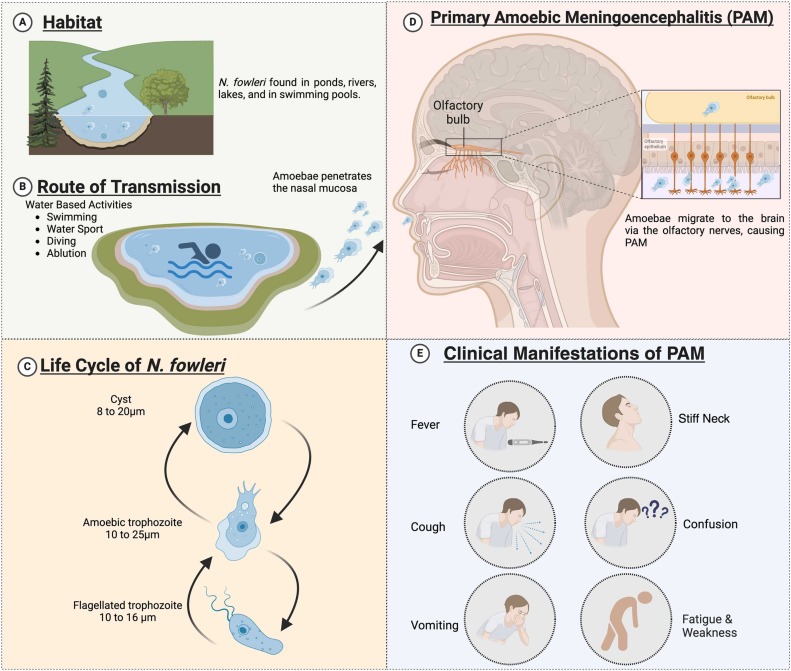
Habitat: Found in warm freshwater (lakes, ponds, rivers, wells, poorly maintained swimming pools).
-
Infection route: Enters through the nose (when contaminated water is inhaled); travels via olfactory nerves to the brain.
-
Does not spread person-to-person.
About Primary Amoebic Meningoencephalitis (PAM)
-
Nature: Rare but almost always fatal brain infection.
-
Symptoms (appear within 1–9 days): Fever, headache, nausea, vomiting, stiff neck, seizures, altered mental status, coma.
-
Fatality rate: >95%.
-
Treatment: Limited success with drugs like amphotericin B, miltefosine; early detection critical.
Relevance for India
-
Kerala has reported sporadic PAM cases in recent years (Thiruvananthapuram, Alappuzha, Malappuram earlier).
-
Public health concern: unsafe water sources, unchlorinated wells, rising temperatures (favors amoeba growth).
Preventive Measures
-
Avoid contaminated water exposure – don’t allow untreated water into nose during bathing/swimming.
-
Ensure chlorination of wells, tanks, pools.
-
Public health monitoring – testing of water sources in suspected areas.
-
Early diagnosis awareness – doctors and public health workers need high suspicion in cases of meningoencephalitis with recent freshwater exposure.