
Kurinji Blooms in Gudalur, Tamil Nadu: Ecological and Cultural Significance
Context
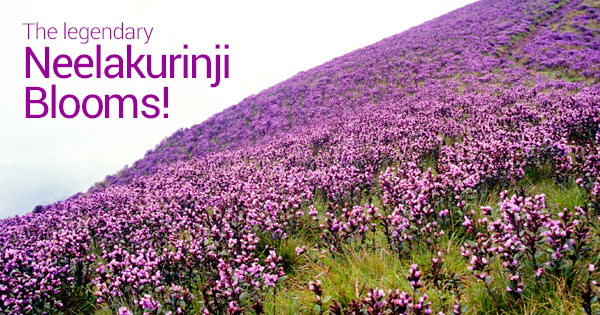
The rare kurinji (Strobilanthes sessilis) flowers have bloomed in Gudalur, Nilgiris after eight years, marking a significant ecological event in Tamil Nadu’s newly notified reserve forest area.
This bloom is both a symbol of ecological restoration and an indicator of climate health in the Western Ghats.
About Kurinji
Genus: Strobilanthes
Endemic to: Western Ghats
Periodic Blooming: Ranges from annual to once in 12 years, depending on species.
Notable Species:
Strobilanthes kunthiana (Neelakurinji): Blooms once every 12 years, found above 1,300 m altitude.
Strobilanthes sessilis: Blooms once every 8 years, found in lower altitudes.
Strobilanthes homotropa: Blooms every 10 years, seen in Doddabetta, Nilgiris.
Key Ecological Insights
Indicator of Grassland Health:
Mass flowering = healthy grasslands.
Patchy flowering = disturbance or degradation.
Pollination and Wildlife Impact:
Flowers produce abundant nectar, attracting honeybees, butterflies, and birds (notably hornbills).
Acts as a temporary ecological feast for pollinators and wildlife.
Dependence on Microclimate:
Sensitive to temperature, rainfall, and soil conditions.
Thus, serves as a natural barometer for climate change in high-altitude grasslands.
Tamil Nadu Government’s Green Mission
Over 90 new forests notified under the Tamil Nadu Forest Act in the past 4.5 years.
Aim: To increase green cover, restore grasslands, and create legacy conservation zones like Gudalur Gene Pool.
Encourages participation of indigenous communities, for whom kurinji has cultural and ecological significance.
Biodiversity of Gudalur Gene Pool
Spread across 600 acres.
Home to over 100 endemic tree species, elephants, tigers, hornbills, and butterfly congregations.
Now witnessing Strobilanthes sessilis bloom after eight years.
Threats and Challenges
Climate Change: Alters the microclimate required for germination and periodic blooming.
Invasive Species:
Black wattle (Acacia mearnsii) from Australia has replaced large tracts of native grasslands in the Nilgiris, Kodaikanal, and Munnar.
Uncontrolled Tourism: Disturbs fragile alpine habitats and accelerates erosion and waste.
Habitat Fragmentation: Leads to loss of continuity needed for species regeneration.
Scientific and Ecological Importance
Kurinji plants flower once in their lifetime and die post-bloom, similar to bamboo species (which flower every 40–60 years).
Post-flowering, seed germination ensures natural regeneration—a key process for grassland ecology.
Each bloom provides data on altitudinal ecology, adaptive evolution, and alpine climatic diversity near the equator.
Cultural and Symbolic Value
For indigenous communities, kurinji bloom cycles signify time, fertility, and renewal.
The flower is central to Tamil Sangam literature, representing beauty, youth, and mountain landscapes (Kurinji Tinai).
Significance for Conservation Policy
Acts as a natural indicator of ecosystem resilience.
Highlights the need for grassland conservation policies, as most conservation focus is traditionally on forests, not grasslands.
Supports eco-tourism potential if managed sustainably.
Prelims Practice MCQ
Q. The Tamil Nadu government’s recent forest notification in Gudalur is significant because:
It reflects the State’s mission to create new forest areas under the Tamil Nadu Forest Act.
It supports indigenous communities by conserving culturally significant landscapes.
It is part of India’s first legally declared Kurinji Conservation Reserve under the Wildlife Protection Act, 1972.
Which of the statements given above are correct?
A) 1 and 2 only
B) 1 and 3 only
C) 2 and 3 only
D) 1, 2 and 3
Answer: A
Explanation: While Tamil Nadu has notified new reserve forests, Gudalur is not declared as a separate Kurinji Conservation Reserve under WPA, 1972.
Q. Which of the following best describes the ecological significance of the Kurinji bloom in the Western Ghats?
A) It supports pollinators such as honeybees and butterflies by providing nectar, and indicates healthy grassland ecosystems.
B) It improves soil nitrogen content through fixation.
C) It prevents soil erosion and acts as a pioneer species in primary succession.
D) It increases groundwater recharge and reduces forest fire risk.
Answer: A
Explanation: The bloom supports pollinators and signals grassland health; it does not fix nitrogen or play a major role in soil binding.