
Invasive beetle-fungus alliance
 Click to view full image
Context: Rubber plantations in Kerala are under severe threat due to an invasive beetle-fungus alliance involving the ambrosia beetle (Euplatypus parallelus) and two fungal species: Fusarium ambrosia and Fusarium solani. Identified by the Kerala Forest Research Institute, this is the first time F. solani has been found in association with adult ambrosia beetles.
These beetles don’t feed on wood but cultivate fungi in tunnels (galleries) they bore into trees. The fungi weaken the wood and block the plant's xylem, leading to leaf loss, trunk drying, and reduced latex yield, with long-lasting damage and even tree death. Standard treatments include antifungal use, removal of infected parts, and traps for beetles, but once systemic infection sets in, trees are hard to save.
There is growing concern that these beetles may partner with other highly pathogenic fungi, expanding their host range and threatening crops like coffee, cashew, teak, coconut, and mango. Some Fusarium species also pose health risks to humans and animals, particularly those with compromised immunity.
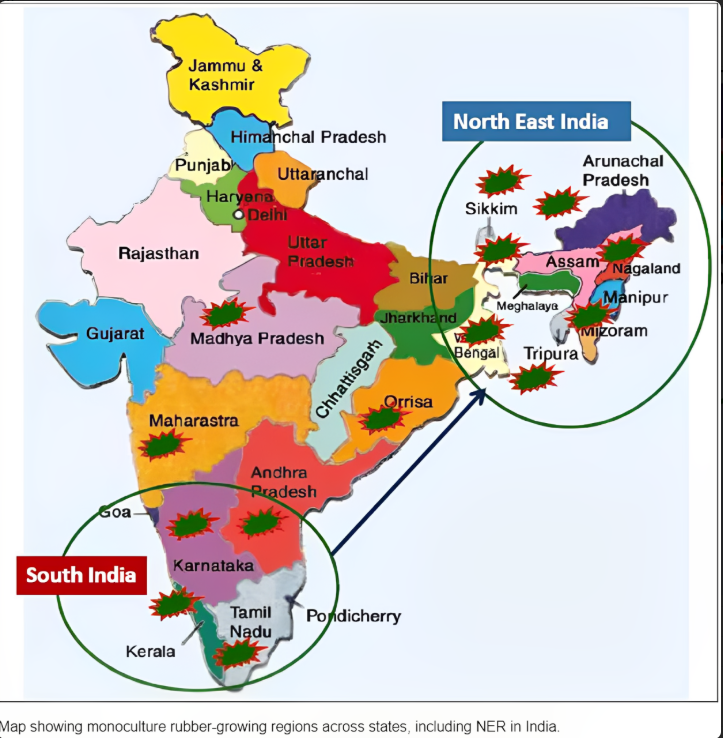
India, the world’s sixth-largest rubber producer, is heavily impacted — Kerala accounts for 90% of India’s rubber production. Experts stress the urgent need for customized management strategies, research collaboration, and sustainable approaches like microbial consortia or antagonistic fungi, especially since global solutions may not suit Kerala’s broad-leaf trees. Rubber farmers have even proposed genetically modified (GM) rubber plants as a potential long-term solution.
Thailand is the largest producer of natural rubber, contributing around 36% of global output. It is followed by Indonesia and Vietnam. Other key producers include India, Malaysia, and China, making them major players in the global rubber industry.