
India’s First Vulture Conservation Portal
Context
-
Launched in Assam by We Foundation India in collaboration with Gauhati University’s Department of Zoology.
-
Reportedly India’s first dedicated portal for vulture conservation.
-
Launch timed ahead of International Vulture Awareness Day (first Saturday of September).
Objectives of the Portal
-
Networking platform: Connecting individuals, NGOs, researchers, academicians, and conservationists working on vulture survival.
-
Information dissemination: Sharing scientific and community-based knowledge in local languages (starting with Assamese).
-
Awareness building: Highlighting the link between vulture survival, human lives, and the local economy.
-
Grassroots engagement: Ensuring rural populations understand vulture importance in ecosystem services.
Partners in The Vulture Network
-
Assam Bird Monitoring Network.
-
LASA Foundation.
-
Suraksha Samitee.
-
Individual conservationists and researchers.
Significance of Vulture Conservation
-
Ecological Role: Vultures are nature’s scavengers — prevent spread of diseases by disposing of animal carcasses.
-
Cultural and economic importance: Their decline has led to increase in stray dogs, rise in rabies, and health costs.
-
Conservation concern: India’s vulture population crashed by ~97% in the 1990s due to veterinary drug diclofenac poisoning.
Species Diversity
-
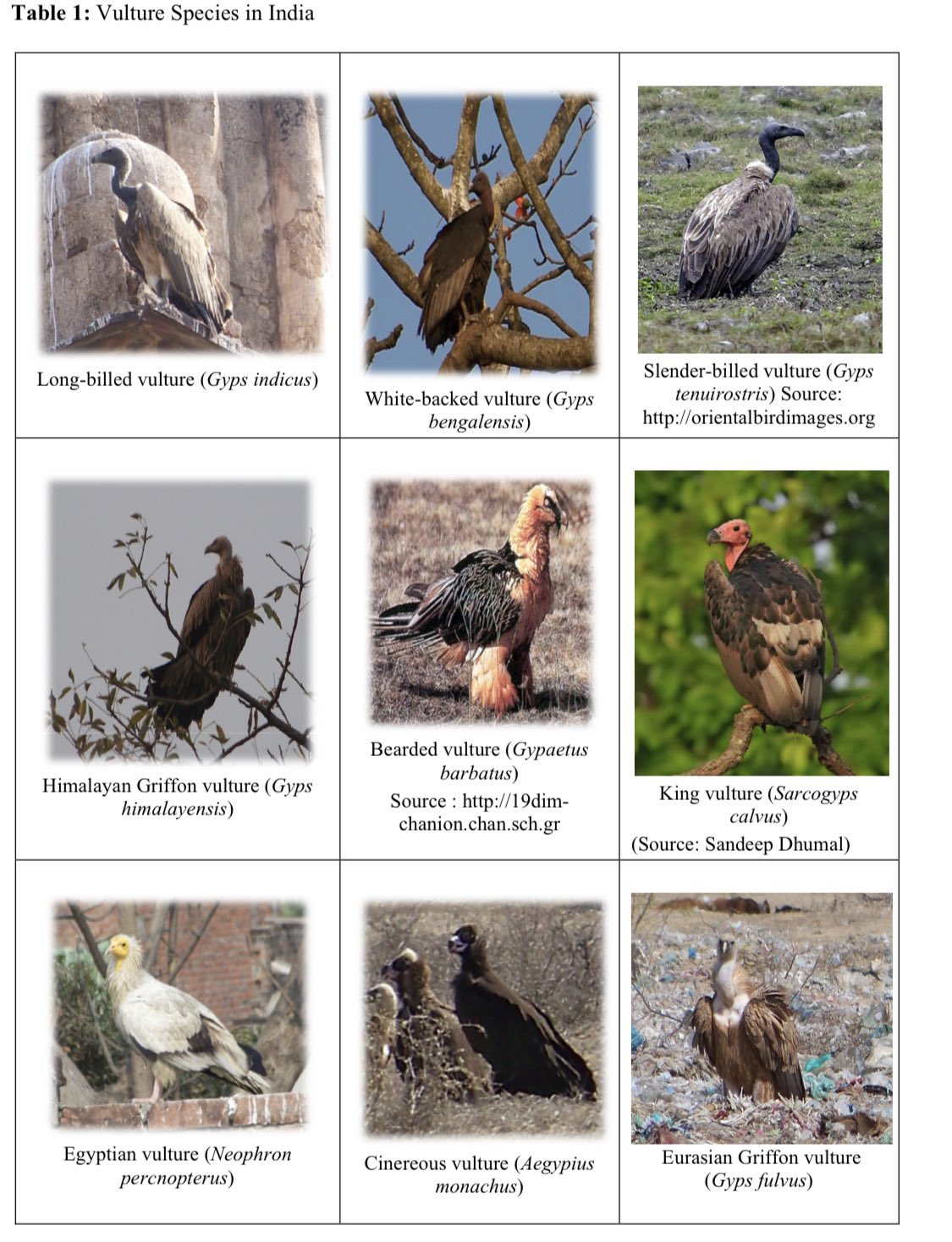
Nine species of vultures recorded in India.
-
Critically Endangered (IUCN): White-backed Vulture, Slender-billed Vulture, Long-billed Vulture.Apart from the three critically endangered Gyps species (Long-billed, White-backed, and Slender-billed), India also records the Himalayan Vulture (Gyps himalayensis) and the Eurasian Griffon (Gyps fulvus).
Current Conservation Measures in India
1. Ban & Regulation of Diclofenac
2006: Ban on manufacture, sale, and veterinary use of diclofenac.
2015: Restricted multi-dose vials to 3 ml (single human dose) to prevent diversion for livestock.
Promotion of safe alternatives – Meloxicam, Tolfenamic Acid.
Awareness programmes + pharmacy surveys to curb illegal sale.
2. Species Recovery Programme
Implemented by MoEFCC + Central Zoo Authority + State Governments.
Establishment of Vulture Breeding & Conservation Centres:
Pinjore (Haryana)
Rajabhatkhawa (West Bengal)
Rani (Assam)
Junagadh (Gujarat)
Bhopal (Madhya Pradesh), etc.
Objective: captive breeding of critically endangered vultures + release into wild.
3. Action Plan for Vulture Conservation (2020–2025)
Target: Create Vulture Safe Zones across India.
Expand vulture breeding centres.
Strengthen monitoring of NSAIDs in veterinary practice.