
India Needs a Unified Mental Health Response
Context: India’s mental health crisis, legal frameworks, and policy gaps.
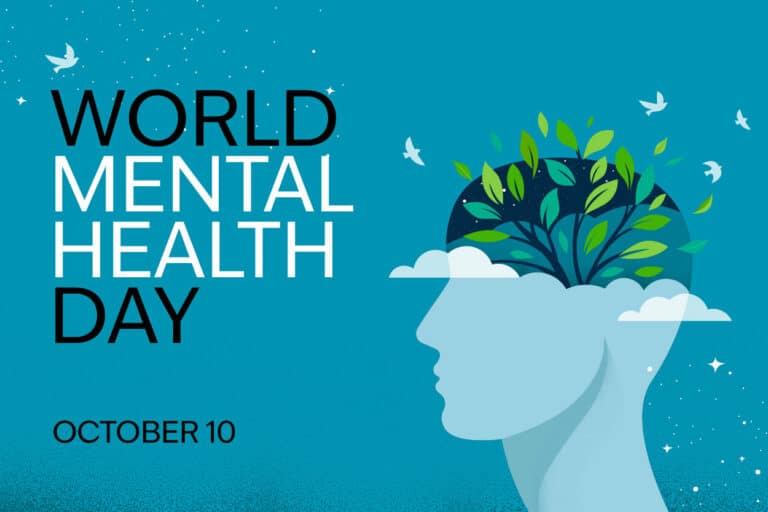
World Mental Health Day (October 10)
Theme: "Access to Services-Mental Health in Catastrophes and Emergencies"
Observed on October 10th each year, World Mental Health Day is dedicated to promoting mental well-being and raising awareness about mental health issues.
It was established by the World Federation for Mental Health in 1992 to serve as a reminder of the importance of mental health and the need for increased education, support, and action.
1. Background and Context
Global Scenario:
Over 1 billion people (13% of the global population) suffer from mental illnesses.
India’s Scenario:
13.7% lifetime prevalence of mental disorders.
Approximately 200 million Indians affected.
2. Legal and Institutional Framework
Mental Healthcare Act, 2017
Guarantees the right to mental health care.
Decriminalises suicide (progressive reform).
Mandates insurance coverage for mental illnesses.
Ensures patient dignity and autonomy.
Legally covers ~200 million citizens.
Judicial Reinforcement
Sukdeb Saha vs State of Andhra Pradesh (2023)
Supreme Court declared mental health as a fundamental right under Article 21.
Binding obligation on the government for accessible, affordable, and quality care.
Government Programmes
District Mental Health Programme (DMHP)
Coverage: ~767 districts.
Services: Counselling, outpatient, suicide prevention.
Aim: Decentralised mental health care.
Tele MANAS (Tele Mental Health Assistance and Networking Across States)
24×7 helpline — over 20,05,000 tele-counselling sessions conducted.
Expanding access to underserved areas.
Manodarpan Initiative (Ministry of Education)
Covers 11 crore students.
Promotes school-based counselling and mental well-being.
3. Persistent Challenges
a. Treatment Gaps
National Mental Health Survey (2015–16):
Treatment gap 70–92% (India).
Depression/anxiety gap: 85%.
Global comparison:
Australia, Canada, UK: 40–55%.
India’s mental health budget: only 1.05% of total health spending.
WHO recommends ≥5%.
b. Workforce Shortage
Psychiatrists: 0.75 per 1,00,000 people (WHO norm: 3).
Psychologists: 0.12 per 1,00,000 people.
Workforce concentrated in urban areas; rural coverage minimal.
c. Weak Infrastructure
DMHP underperformance in many States.
Psychotropic drug shortages at PHCs.
Rehabilitation services meet <15% of national needs.
d. Social Stigma
Over 50% of Indians attribute mental illness to personal weakness or shame.
High stigma reduces help-seeking and policy prioritisation.
e. Economic and Social Cost
Projected economic loss: $1 trillion by 2030 (mental health–related productivity loss).
4. Comparative Global Insights
Parameter | Advanced Nations (Australia, UK, Canada) | India |
Treatment gap | 40–55% | 70–92% |
Health budget share for mental health | 8–10% | 1.05% |
Insurance coverage | 80%+ | <15% |
Workforce model | Mid-level counsellors (50% of services) | Urban specialists |
Diagnostic framework | Includes ICD-11 (PTSD, grief, gaming disorder) | Absent |
School/digital reach | 20–30% population | Tele MANAS: 53 centres |
Data monitoring | Real-time surveillance | Fragmented |
5. Structural and Governance Problems
Low research funding → limited evidence-based policy.
Fragmented ministerial coordination between Health, Education, Labour, and Social Justice.
Urban bias in workforce and facility distribution.
Resistance to mid-level mental health providers due to doctor-centric model.
6. Way Forward / Policy Recommendations
a. Financial Reforms
Increase mental health allocation to 5% of total health spending.
Ensure dedicated State budgets linked to measurable outcomes.
b. Workforce Expansion
Train and deploy mid-level mental health providers (counsellors, nurses, social workers).
Incentivise rural service through fellowship or teleconsultation hubs.
c. Integration and Coverage
Integrate mental health into primary health care and universal insurance.
Include ICD-11 disorders (complex PTSD, prolonged grief, gaming disorder).
d. Data and Accountability
Establish cascade-based monitoring systems at district/state levels.
Track treatment dropouts and ensure resource-linked evaluation.
e. Public Awareness
Launch anti-stigma campaigns in schools, colleges, workplaces.
Achieve 60% mental health literacy in institutions by 2027.
f. Governance Reforms
Strengthen inter-ministerial coordination for a unified national mental health response.
Foster community-based rehabilitation for social reintegration.