
India enters elite group with successful SFDR missile technology test
Context
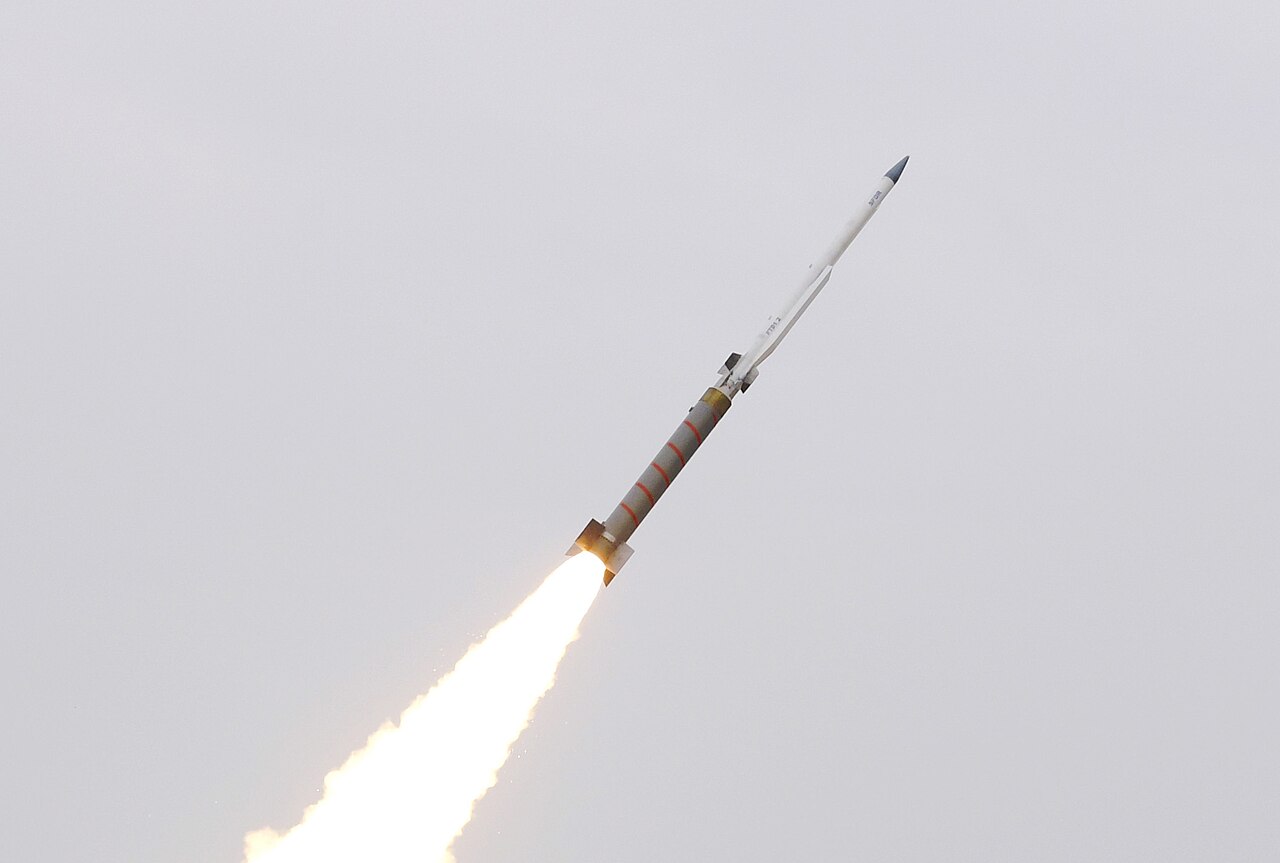
Defence Research and Development Organisation successfully demonstrated Solid Fuel Ducted Ramjet (SFDR) technology.
Flight test conducted on February 3, 2026, at around 10:45 hrs.
Launch site: Integrated Test Range, Chandipur, off the Odisha coast.
With this, India joins an elite group of nations possessing SFDR technology.
What is SFDR technology
SFDR = Solid Fuel Ducted Ramjet
An advanced air-breathing propulsion system.
Combines:
Solid fuel
Ramjet operation
Controlled fuel flow for sustained thrust
How the test was conducted
Missile system initially accelerated by a ground booster to the required Mach number.
After booster separation:
Ramjet ignited
Operated as per design parameters.
Critical subsystems validated:
Nozzle-less booster
Solid fuel ducted ramjet motor
Fuel flow controller
Performance confirmed through real-time flight data collected by multiple tracking instruments over the Bay of Bengal.
Strategic and military significance
Enables development of long-range air-to-air missiles (AAMs).
Key advantages:
Sustained supersonic speed
Extended engagement envelope
Higher end-game energy compared to conventional rocket motors
Especially effective in Beyond Visual Range (BVR) air combat.
Enhances combat effectiveness and provides a decisive tactical edge against adversaries.
Why this matters for India
Reduces dependence on foreign propulsion technologies.
Strengthens indigenous missile development ecosystem.
Aligns with Atmanirbhar Bharat in defence.
Expected to accelerate induction of next-generation air-to-air missiles.
Prelims practice MCQs
Q. With reference to Solid Fuel Ducted Ramjet (SFDR) technology, consider the following statements:
It is an air-breathing propulsion system.
It is primarily used for short-range surface-to-surface missiles.
It allows sustained supersonic flight during missile engagement.
Which of the statements given above are correct?
(a) 1 and 3 only
(b) 1 and 2 only
(c) 2 and 3 only
(d) 1, 2 and 3
Correct answer: (a)
Explanation:
Statements 1 and 3 are correct.
Statement 2 is incorrect; SFDR is used in long-range air-to-air missiles, not short-range surface missiles.
Q. The successful demonstration of SFDR technology places India among a select group of nations primarily because it:
(a) enables hypersonic glide vehicles
(b) allows sustained high-speed performance in air-to-air missiles
(c) replaces ballistic missile propulsion systems
(d) is used exclusively in submarine-launched missiles
Correct answer: (b)
Explanation:
SFDR enables sustained high-speed flight and extended engagement ranges in air-to-air missiles.