
India builds first autonomous maritime shipbuilding centre in Andhra Pradesh
Context
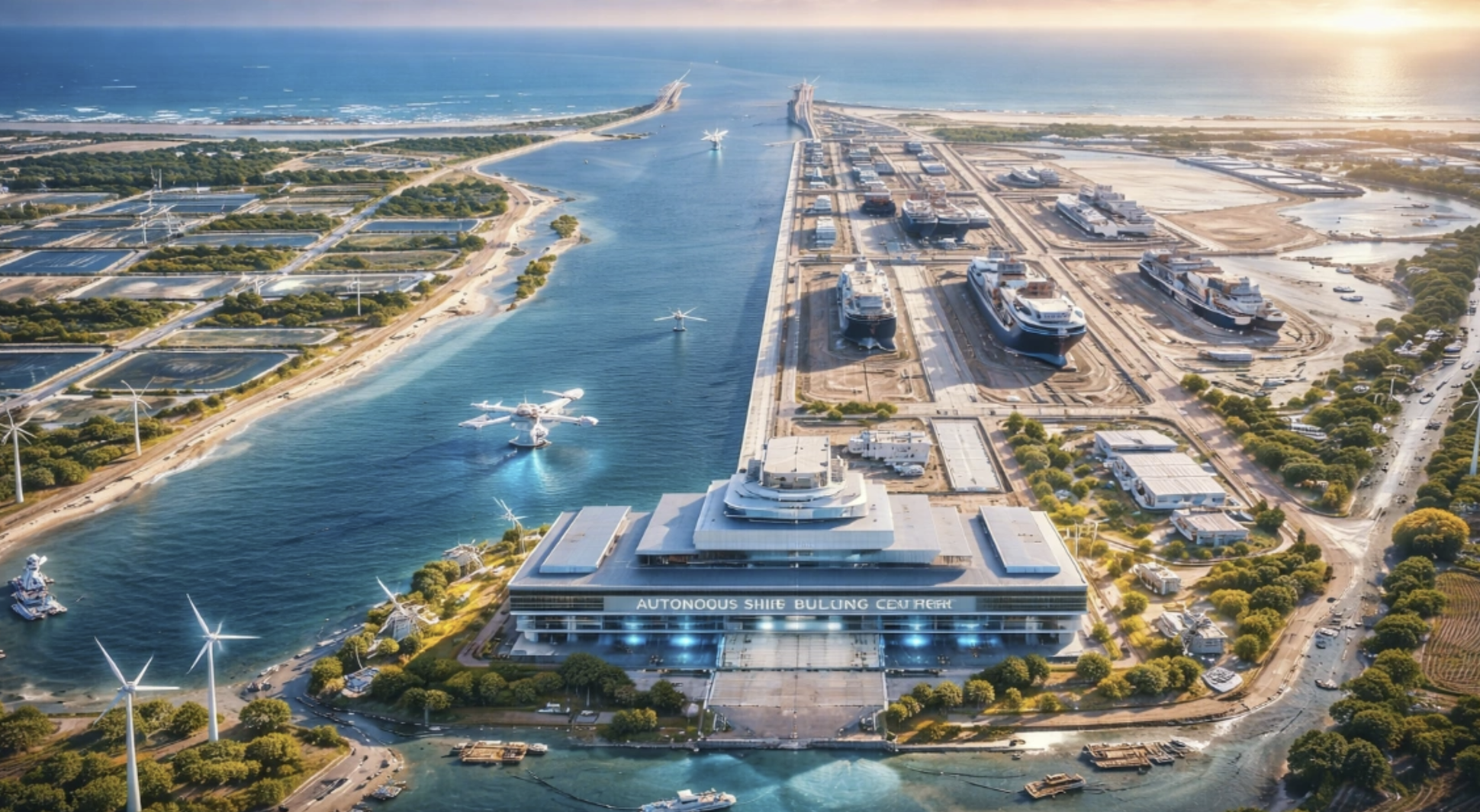
India is establishing the world’s first Autonomous Maritime Shipbuilding and Systems Centre at Juvvaladinne fishing harbour in Nellore district, Andhra Pradesh.
Developed by Sagar Defence Engineering (Mumbai).
29.58 acres of land allocated by the Andhra Pradesh government.
The site provides direct sea access, allowing construction, testing, launching, and deployment of vessels from the same facility.
This initiative aims to strengthen India’s indigenous maritime technology and defence manufacturing capabilities.
Key technologies to be developed
Autonomous maritime systems
The centre will focus on developing:
1. Unmanned Surface Vessels (USVs)
Operate on water without onboard human crew
Used for patrolling, surveillance, mine detection, and reconnaissance
2. Autonomous Underwater Vehicles (AUVs)
Robotic underwater systems
Used for ocean exploration, seabed mapping, and underwater surveillance
3. Intelligent navigation systems
AI-based navigation and control technologies
4. Maritime sensors and communication networks
Secure systems for real-time maritime monitoring
5. Command and control platforms
Systems that allow vessels to operate with minimal human intervention
Advanced technologies used in the centre
Digital twin technology
Creation of virtual replicas of ships and shipyard infrastructure.
Enables simulation, testing, performance evaluation, and design optimisation before real-world deployment.
Smart manufacturing
The facility will use advanced automated shipbuilding technologies such as:
Robotic fabrication systems for welding, cutting, and painting
Automated Guided Vehicles (AGVs) for material transport
Additive manufacturing (3D printing) for rapid production of components
These technologies will improve efficiency, precision, and production speed.
Benefits for maritime security and economy
Maritime security
Development of next-generation unmanned maritime platforms
Better coastal surveillance and defence capability
Reduced risk to human personnel during maritime operations
Smart fishing ecosystem
The centre will support technology-driven fishing fleets, including:
Satellite-based fish location maps
Real-time weather alerts
Fleet coordination platforms
Detection of illegal fishing activities
This can significantly improve fishermen safety, productivity, and maritime governance.
Prelims Practice MCQs
Q. Consider the following statements regarding the Autonomous Maritime Shipbuilding and Systems Centre:
It is being developed in Andhra Pradesh.
It focuses on technologies such as unmanned surface vessels and autonomous underwater vehicles.
The project is being developed by the Indian Navy.
Which of the statements given above are correct?
A. 1 and 2 only
B. 2 and 3 only
C. 1 and 3 only
D. 1, 2 and 3
Answer: A
Explanation:
Statements 1 and 2 are correct. The project is being developed by Sagar Defence Engineering, not the Indian Navy.
Q. Which of the following best describes Digital Twin technology?
A. A satellite-based maritime monitoring system
B. A virtual replica of a physical system used for simulation and testing
C. A high-speed communication system used by naval vessels
D. A navigation system used in autonomous underwater vehicles
Answer: B
Explanation:
Digital twin technology creates virtual models of real-world systems, allowing engineers to simulate performance and test upgrades before actual deployment.