
Govt. appoints Urjit Patel as IMF Executive Director
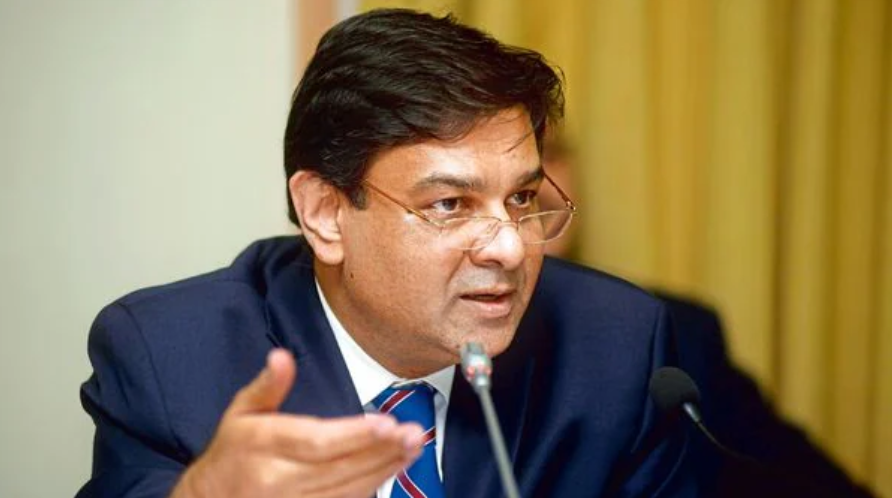
The Government of India has approved the appointment of Urjit Patel (former RBI Governor) as Executive Director (ED) at the International Monetary Fund (IMF) for a three-year term.
-
He will replace K.V. Subramanian, whose services were terminated six months before completion of his tenure (termination effective from April 30, 2025).
-
India belongs to a four-country constituency at the IMF, along with Bangladesh, Sri Lanka, and Bhutan.
IMF Executive Directors (EDs): Election and Functions
Composition and Election
-
The IMF Executive Board has 25 Executive Directors (EDs).
-
They are elected every two years by member countries or groups of countries (constituencies).
-
The voting power of each ED reflects the quota and shareholding of the countries in their constituency.
Representation:
-
All 190+ member countries are represented on the Board, either directly (for major economies) or through a constituency system (small/medium countries grouped together).
-
India belongs to a joint constituency (India, Bangladesh, Sri Lanka, Bhutan).
-
-
Selection Process:
-
Each constituency elects or appoints one ED.
-
Large shareholders like the US, Japan, China, Germany, France, UK appoint their EDs directly.
-
In multi-country constituencies, member countries agree on rotation or consensus to nominate their ED.
-
Functions
-
Policy-making and oversight:
EDs are responsible for conducting the day-to-day business of the IMF, unlike the Board of Governors, which meets only annually. -
Lending and surveillance:
Approve IMF loans, monitor macroeconomic policies of member countries, and conduct surveillance of global economic trends. -
Representation:
Each ED represents the interests of their constituency at the IMF. -
Decision-making:
EDs vote on IMF decisions, with the weight of their vote linked to the financial quota of their constituency. -
Advisory role:
Provide policy inputs to manage crises, design structural adjustment programs, and shape reforms in the international monetary system.