
GIFT City and IFSCA
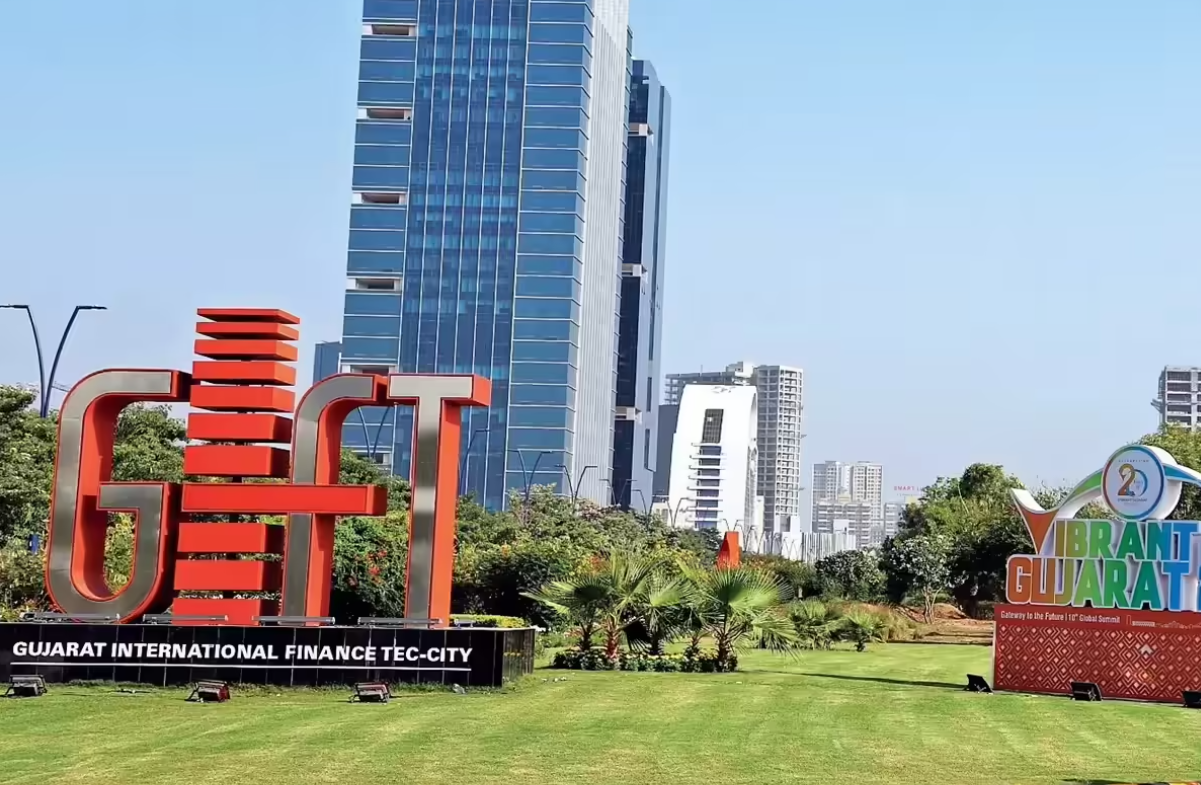
Role of IFSCA
The International Financial Services Centres Authority (IFSCA) is a unified financial regulator under the Ministry of Finance.
It acts as a single regulatory window for all financial services conducted within Gujarat International Finance Tec-City (GIFT City).
Provides regulatory clarity and reduces compliance fragmentation for global-facing financial entities.
Why GIFT City Is Being Compared to Cayman Islands
According to IFSCA chairman K. Rajaraman, Indian firms no longer need to rely on low-tax offshore jurisdictions like Cayman Islands.
GIFT City now offers comparable tax benefits and global-aligned regulations, making it a viable onshore alternative.
Taxation and Financial Incentives
Corporate tax holiday for 10 consecutive years out of 15 years.
No GST on services:
received by units in GIFT IFSC
or provided by one GIFT IFSC unit to another
Units operating in GIFT City are considered non-residents, enabling them to conduct business in foreign currencies instead of the rupee.
Facilitates onshore aircraft leasing, ship leasing and dollar borrowing previously done in Dublin, Dubai, Singapore.
Emerging Global Leasing Hub
Earlier:
aircraft leasing → Dublin
ship leasing → Dubai
dollar borrowing → Singapore
Now: these activities can take place within India through GIFT City, reducing dependency on foreign financial hubs.
Growing Ecosystem
GIFT City currently hosts 34 registered ship lessors, including major global players (Great Eastern Shipping, MOL, Transworld Group, Propel Shipping, PanBulk, Ripley Group).
Of the $61 billion in external commercial borrowings (ECBs) by Indian companies, $19 billion now comes from GIFT City.
Significance
GIFT City positions India as a global financial services hub while retaining high-value transactions onshore.
Reduces capital flight to offshore centres, strengthens financial sovereignty and deepens domestic financial markets.
Enhances India’s competitiveness in aircraft and ship leasing, fund management, derivatives trading and ECB sourcing.
International Financial Services Centres Authority (IFSCA)
Introduction
IFSCA is a unified regulator for all financial products, services and institutions in International Financial Services Centres (IFSCs) in India.
Established under the IFSCA Act, 2019, and operates under the Ministry of Finance.
Headquarters: GIFT City, Gandhinagar (Gujarat).
Why IFSCA Was Created
Before IFSCA, regulation in IFSCs was fragmented across:
RBI
SEBI
IRDAI
PFRDA
This created compliance complexity and slowed the development of India’s offshore financial ecosystem.
IFSCA was created to provide a single-window regulatory framework, enabling India to compete with global hubs like Singapore, Dubai and Cayman.
Functions of IFSCA
Core Responsibilities
Regulates financial institutions operating in IFSCs.
Licenses banks, insurance firms, brokerages, asset managers, fintechs and exchanges within GIFT IFSC.
Frames regulations for:
banking
capital markets
insurance
alternative investment funds
aircraft and ship leasing
bullion exchanges
fintech sandbox operations
Developmental Role
Promotes GIFT City as a global financial centre.
Creates enabling regulations for cross-border transactions.
Encourages innovation and competitiveness in financial services.
Prelims Practice MCQs
Q. Consider the following statements regarding the International Financial Services Centres Authority (IFSCA):
It functions as a unified regulator for all financial services in GIFT City.
It is an autonomous body under NITI Aayog.
It provides a single-window regulatory framework for companies operating in GIFT IFSC.
Which of the above statements is/are correct?
A. 1 only
B. 1 and 3 only
C. 2 and 3 only
D. 1, 2 and 3
Answer: B
Explanation:
Statement 1 is correct: it is a unified regulator.
Statement 2 is incorrect: IFSCA is under the Ministry of Finance.
Statement 3 is correct: it offers single-window regulation for IFSC operations.
Q. With reference to incentives offered in GIFT City, consider the following statements:
Units in GIFT City are designated as non-residents for financial transactions.
All business in GIFT IFSC must be conducted exclusively in Indian rupees.
Units receive a corporate tax holiday for 10 out of 15 years of operation.
Which of the above statements is/are correct?
A. 1 and 3 only
B. 2 and 3 only
C. 1 only
D. 1, 2 and 3
Answer: A
Explanation:
Statement 1 is correct: units operate as non-residents.
Statement 2 is incorrect: business is conducted in foreign currencies.
Statement 3 is correct: GIFT City provides a 10-year corporate tax holiday.
Q. With reference to taxation in GIFT City, consider the following statements:
No GST is applicable on services received by units in GIFT IFSC.
No GST is applicable on services provided between two units within GIFT IFSC.
GST is applicable on all outward services provided by GIFT IFSC units to foreign entities.
Which of the statements is/are correct?
A. 1 and 2 only
B. 2 and 3 only
C. 1 and 3 only
D. 1, 2 and 3
Answer: A
Explanation:
Statement 1 is correct.
Statement 2 is correct.
Statement 3 is incorrect: outward services are also GST-exempt.