
GI Tag Push Reshapes Bodoland Poll Narrative
Context
-
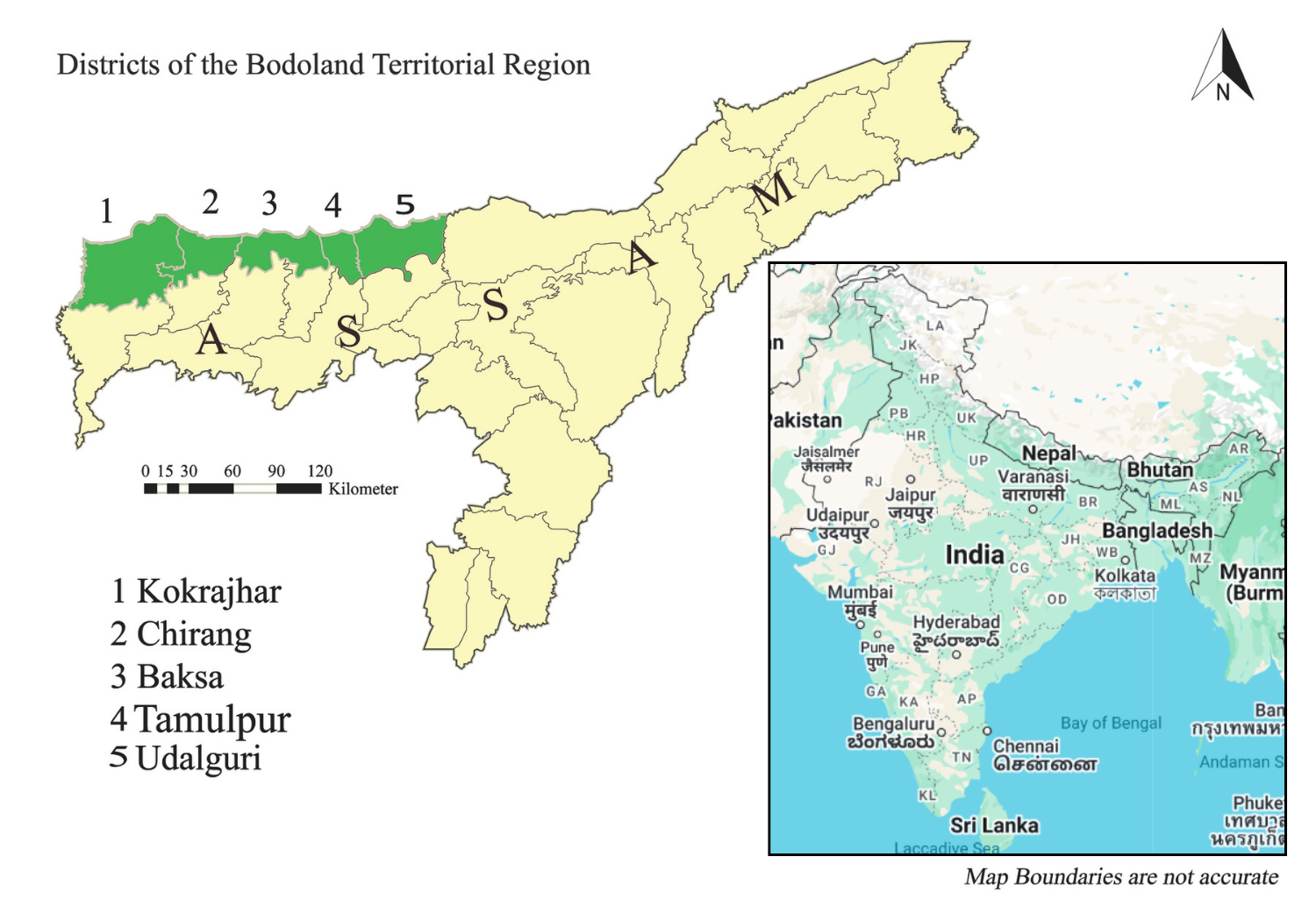
Bodoland Territorial Region (BTR), Assam – 8,970 sq. km, governed by the Bodoland Territorial Council (BTC), elections due September 22.
-
Political Link: GI tagging has become an electoral theme, alongside traditional issues of identity, development, and autonomy.
Benefits of GI Tags
-
Economic: Higher market value, export potential.
-
Legal: Protection against misuse/imitation.
-
Cultural: Preservation of heritage, community pride.
-
Consumer: Assurance of quality and authenticity.
-
Social: Rural development via GI villages – artisan/farmer clusters with training, infrastructure, and market linkages.
GI-Tagged Items (BTR)
-
Textiles: Aronai, Dokhona, Zwmgra (motif-rich Bodo fabrics).
-
Musical Instruments: Kham, Serza, Siphung.
-
Traditional Beverages: Maibra Zwu Bidwi, Zwu Gisi.
-
Cuisine: Gwkha Gwkhwi, Napham.
-
Medicinal Plants: Gongar Dundia, Khera Daphini.

Significance
-
Cultural Identity: Assertion of indigenous pride amidst electoral politics.
-
Economic Growth: GI villages → employment, entrepreneurship, tourism.
-
Political Strategy: Heritage protection tied to peace accord commitments.
-
Inclusive Development: 26 diverse communities benefit, reducing alienation.
Bodoland Territorial Region (BTR), Assam
-
Location: Autonomous division in Assam, Northeast India.
It is made up of five districts ,Situated on the north bank of the Brahmaputra River, below the foothills of Bhutan and Arunachal Pradesh..
-
Demography: Predominantly inhabited by the Bodo people along with other tribal and ethnic communities of Assam.
Administrative Setup
-
Administered by the Bodoland Territorial Council (BTC), an elected autonomous body.
-
Formation:
-
Came into existence under the Bodo Peace Agreement (February 2003).
-
Autonomy further extended under the Bodo Peace Accord (January 2020).
-