
Fisheries & Aquaculture in India
Importance of the Sector
One of India’s fastest-growing food-producing sectors.
Critical for livelihoods, nutrition, exports and domestic food security.
Faces issues: Overfishing, habitat degradation, water pollution, climate change, poor access to finance, weak traceability, post-harvest losses.
India’s Production Achievements
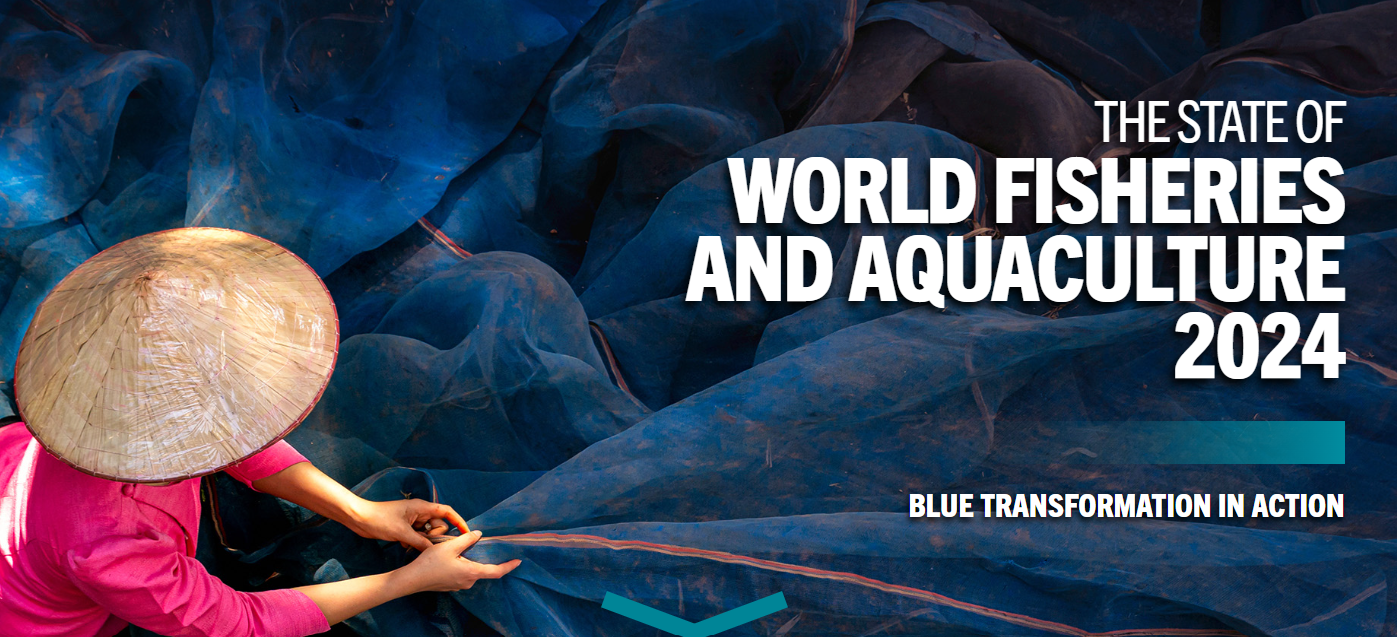
As per FAO SOFIA 2024 (State of World Fisheries and Aquaculture)
Published biennially
Global capture fisheries: 92.3 million tonnes (2022).
Global aquaculture: 130.9 million tonnes; value USD 313 billion.
India’s total aquatic production (2022–23): 17.54 million tonnes.
India’s contribution: 10.23 million tonnes, making it second-largest aquaculture producer globally.
Production grew from 2.44 million tonnes (1980s) → 17.54 million tonnes.
Drivers of Growth
Institutional Support
ICAR Fisheries Institutes
Marine Products Export Development Authority (MPEDA)
National Fisheries Development Board (NFDB)
Coastal Aquaculture Authority (environmental regulation)
Policy Interventions
Blue Revolution Scheme
Pradhan Mantri Matsya Sampada Yojana (PMMSY): Safety, infrastructure, digital inclusion, vessel trackers, KCC coverage.
Draft National Fisheries Policy 2020.
Climate-Resilient Coastal Fishermen Villages Programme.
FAO’s Partnership with India
Historic Engagement
Bay of Bengal Programme (BOBP): small-scale fisheries support, sea safety, post-harvest improvements.
BOBLME Project:
Promoted Ecosystem Approach to Fisheries Management (EAFM).
Supported National Plans of Action against IUU fishing.
Aided in conservation of endangered species.
Current Projects
GEF-funded project in Andhra Pradesh:
Focus: Sustainable aquaculture, climate resilience.
Based on Guidelines for Sustainable Aquaculture (GSA) and Ecosystem Approach to Aquaculture (EAA).
Technical Cooperation Programme (TCP) for strengthening fishing ports:
Pilot ports: Vanakbara (Dadra & Nagar Haveli and Diu), Jakhau (Gujarat).
Enhances environmental, social, economic capabilities of ports.
Government of India’s 2025 Theme
“India’s Blue Transformation: Strengthening Value Addition in Seafood Exports”
Focus on value addition, traceability, infrastructure, global competitiveness.
Sustainability Priorities
Science-based stock assessment to manage fishing pressure.
Co-managed Monitoring, Control and Surveillance (MCS) to curb IUU fishing.
Adoption of ecosystem-based approaches in fisheries and aquaculture.
Emphasis on certification, digital traceability systems, inclusive value chains.
Improvement of post-harvest infrastructure and cold chains.
BOBLME – Bay of Bengal Large Marine Ecosystem
The BOBLME (Bay of Bengal Large Marine Ecosystem) project is a regional initiative involving eight Indian Ocean countries, including India, to address issues like overfishing, habitat degradation, and pollution in the Bay of Bengal

Significance of Bay of Bengal
Produces >7% of global marine fisheries catch.
Current fisheries value: USD 4 billion.
Projected value in 25 years: USD 72 billion (fisheries + aquaculture + tourism).
One of the world’s major Large Marine Ecosystems (LMEs).
Total area: 2.6 million sq. km; 66% within EEZs of 8 countries.

Countries Involved
Bangladesh
India
Indonesia
Malaysia
Maldives
Myanmar
Sri Lanka
Thailand
Ecological & Socio-economic Importance
Rich biodiversity: mangroves, coral reefs, seagrass, coastal habitats.
Supports food security, employment, nutrition, exports.
Fisheries and aquaculture are critical for regional livelihoods.
BOBLME Phase I (2009–2015)
Funded by: GEF, NORAD, SIDA, FAO, NOAA + national governments.
Budget: USD 31 million.
Major outputs:
Transboundary Diagnostic Analysis (TDA)
Strategic Action Programme (SAP)
Introduced:
Ecosystem Approach to Fisheries Management (EAFM)
Regional cooperation for habitat conservation
Actions against Illegal, Unreported, Unregulated (IUU) fishing
BOBLME Phase II (2023–2028)
Funding & Partners
Funded by: GEF-International Waters + Norad.
Implementing agencies:
FAO Regional Office for Asia-Pacific (FAORAP)
SEAFDEC
BOBP-IGO
Objectives
Sustainable management of fisheries and habitats.
Reduce marine pollution.
Enhance climate resilience.
Promote regional cooperation and shared governance.
Prelims Practice MCQ
Q. Consider the following statements regarding the Bay of Bengal Large Marine Ecosystem (BOBLME):
BOBLME covers more than half of the Bay of Bengal’s area within the Exclusive Economic Zones (EEZs) of participating countries.
India is one of the implementing partners of BOBLME Phase II.
The primary transboundary concerns identified in BOBLME Phase I include overexploitation of marine resources, loss of critical habitats, and pollution.
How many of the above statements are correct?
A. Only one
B. Only two
C. All three
D. None
Answer: C
Q. With reference to BOBLME Phase II (2023–2028), consider the following:
The project is funded solely by the Global Environment Facility (GEF).
The FAO and SEAFDEC are among the implementing agencies.
The project covers all the eight Bay of Bengal rim countries.
Which of the statements given above is/are correct?
A. 1 only
B. 2 only
C. 2 and 3 only
D. 1 and 3 only
Answer: B
(Phase II covers 7 countries, and funding is from GEF + Norad.)
Q. Consider the following statements regarding India’s fisheries sector:
India is the world’s second-largest aquaculture producer.
India’s total aquatic food production has increased almost seven-fold since the 1980s.
Inland aquaculture contributes more to India’s production growth than capture fisheries.
How many of the statements given above are correct?
A. Only one
B. Only two
C. All three
D. None
Answer: C