
First Time in Space: Butterfly completes metamorphosis 400 km above Earth
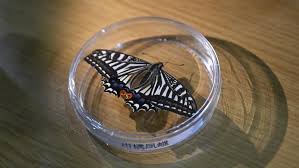
A butterfly has successfully completed metamorphosis about 400 km above Earth, emerging from its chrysalis aboard China’s Tiangong space station. The experiment, developed by researchers from Chongqing University, represents one of the first full animal life-cycle transformations conducted in a sealed microgravity environment.
What happened in orbit?
The chrysalis was housed inside a sealed biological capsule.
The capsule orbited Earth aboard Tiangong.
The butterfly emerged in microgravity conditions.
No astronauts directly intervened during the transformation.
Remote sensors monitored temperature, humidity, and pressure.
This confirms that complex hormonal and cellular processes involved in metamorphosis can proceed normally even without gravity.
The space biology experiment
The experiment was launched in December aboard a Kuaizhou-11 rocket.
Structure of the sealed ecosystem:
Plants → produced oxygen.
Microorganisms → recycled waste.
Chrysalis → underwent metamorphosis.
Fully automated environmental control.
No human interference after deployment.
The habitat simulated Earth-like conditions in a closed loop system.
Why butterflies in space?
Butterflies undergo complete metamorphosis (egg → larva → pupa → adult), involving:
Massive hormonal regulation.
Tissue breakdown and reorganization.
Sensitive developmental stages.
Microgravity affects:
Fluid distribution in organisms.
Cellular signaling.
Orientation and structural growth.
Scientists were uncertain whether metamorphosis would complete successfully in such conditions. The success demonstrates biological resilience in space.
Significance for future space missions
1. Closed ecological life-support systems (CELSS)
Long-duration missions — to the Moon, Mars, or deep space — require:
Air recycling
Water purification
Nutrient cycling
Self-sustaining biological systems
Most experiments so far have focused on plants. Complete animal life cycles in sealed space ecosystems are rare.
2. Understanding development in microgravity
The experiment expands knowledge of:
Developmental biology in space.
Radiation effects on organisms.
Multi-species ecological balance.
Prelims Practice MCQs
Q. With reference to the recent butterfly metamorphosis experiment aboard the Tiangong space station, consider the following statements:
The experiment demonstrated completion of a full animal life-cycle transformation in microgravity.
The biological capsule required continuous astronaut intervention.
The ecosystem inside the capsule included plants and microorganisms.
Which of the statements given above is/are correct?
A) 1 only
B) 1 and 3 only
C) 2 and 3 only
D) 1, 2 and 3
Answer: B
Explanation:
Statement 1 is correct — the butterfly completed metamorphosis in microgravity.
Statement 2 is incorrect — the capsule functioned autonomously without astronaut interference.
Statement 3 is correct — plants produced oxygen and microorganisms recycled waste.
Q.Which of the following is the primary objective of developing closed ecological life-support systems (CELSS) in space missions?
A) To enhance satellite communication
B) To recycle air, water and nutrients for long-duration missions
C) To increase rocket launch efficiency
D) To prevent cosmic radiation
Answer: B
Explanation:
Closed ecological systems are designed to create self-sustaining habitats by recycling oxygen, water, and nutrients — essential for deep-space and long-duration missions.