
DNA Damage Response: Key Cellular Mechanism Uncovered
Why in news :
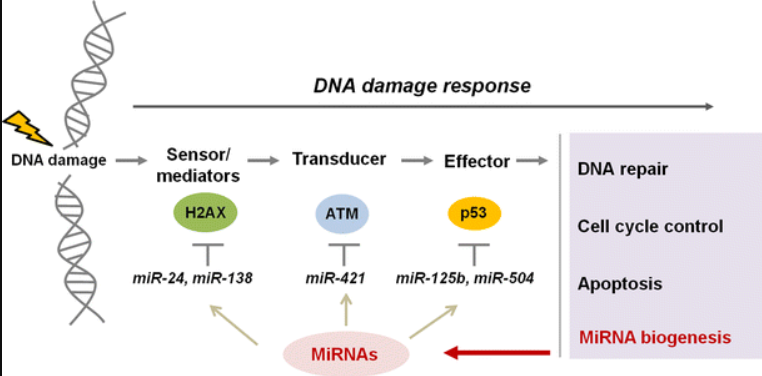
A recent Indo-French study (Indian Institute of Science and Institut Curie, Paris) published in EMBO Reports has uncovered a new layer of regulation in cellular DNA damage response, relevant for understanding cellular stress adaptation, cancer biology, and neurodegenerative disease mechanisms.
Key Points :
1. DNA Damage and Cellular Response:
-
DNA damage can occur due to UV radiation, chemicals, or copying errors.
-
Cells activate repair mechanisms by producing specific repair proteins.
2. New Finding – Regulating Repair Protein Levels:
-
The study shows that cells temporarily suppress mRNA translation for certain repair genes to avoid overproduction.
-
This ensures optimal repair and prevents harmful over-repair or error-prone repair.
3. Key Proteins Identified:
-
Scd6 in yeast and LSM14A in human cells.
-
These proteins form RNA granules during stress (e.g., hydroxyurea treatment).
-
These granules temporarily trap mRNA, such as that for the DNA-repair enzyme Srs2, thus slowing protein synthesis.
4. Scientific Significance:
-
RNA granules act as reversible storage — not degradation sites.
-
This mechanism is evolutionarily conserved and contributes to cell survival during genotoxic stress.
5. Applications:
-
Cancer Therapy: Targeting RNA granule dynamics could disrupt stress adaptation in cancer cells, making them more vulnerable to chemotherapy.
-
Neurodegeneration: Insights could help understand protein misregulation and stress adaptation in diseases like ALS or Alzheimer’s.