
Dhole / Asiatic wild dog (Cuon alpinus)
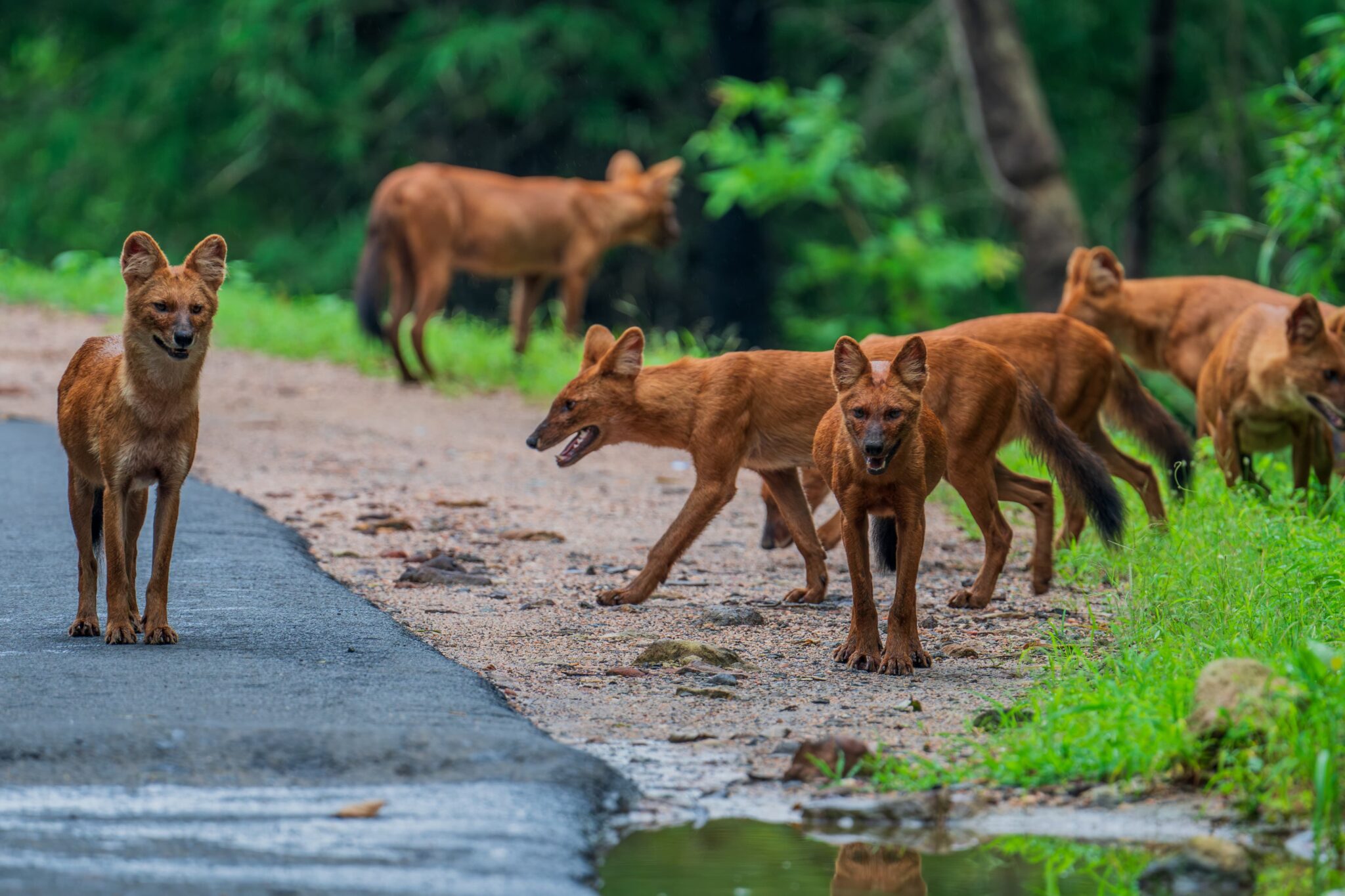
Context: Dhole Spotted Again in Assam’s Kaziranga
A recent study by the Wildlife Institute of India (WII), published in the Journal of Threatened Taxa, confirms the reappearance of the dhole (Asiatic wild dog) in the Kaziranga-Karbi Anglong Landscape (KKAL) in Assam.
The species, believed to have been locally extinct, was photo-captured six times in the Amguri corridor, close to National Highway 37 and a human settlement. This reappearance highlights the ecological value of the corridor, which supports other threatened species like tigers, leopards, and elephants.
About Dhole (Cuon alpinus)
Common Name: Asiatic Wild Dog
Scientific Name: Cuon alpinus
Family: Canidae
CITES Status: Appendix II
Schedule: Schedule II of the Wildlife Protection Act, 1972 (India)
IUCN Status: Endangered
Threats: Populations are declining due to habitat loss, prey depletion, disease, and human conflict.
Common Name: Asiatic Wild Dog
Scientific Name: Cuon alpinus
Family: Canidae
CITES Status: Appendix II
Schedule: Schedule II of the Wildlife Protection Act, 1972 (India)
IUCN Status: Endangered
Threats: Populations are declining due to habitat loss, prey depletion, disease, and human conflict.
Distribution & Habitat
Historically Widespread:
Central, South, and Southeast Asia
Currently Restricted to Fragmented Populations In:
India
Nepal
Bhutan
Bangladesh
Southeast Asia (Thailand, Myanmar, Malaysia)
Dhole Habitat in India
Found in: Dense forests, grasslands, and hilly regions
Major Protected Areas:
Western Ghats:
Bandipur National Park (Karnataka)
Nagarhole National Park (Karnataka)
Mudumalai Tiger Reserve (Tamil Nadu)
Periyar Tiger Reserve (Kerala)
Central India:
Kanha Tiger Reserve (Madhya Pradesh)
Pench National Park (Madhya Pradesh/Maharashtra)
Eastern India & Northeast:
Similipal Tiger Reserve (Odisha)
Pakke and Namdapha Tiger Reserves (Arunachal Pradesh)
Kaziranga National Park and KKAL (Assam) — now confirmed.
Habitat and Distribution
Preferred Habitat: Dense forests, scrub jungles, and grasslands
Geographical Range:
India, Nepal, Bhutan, Bangladesh
Southeast Asia (Thailand, Myanmar, Malaysia)
Current Distribution: Patchy and fragmented across central and southeast Asia
Preferred Habitat: Dense forests, scrub jungles, and grasslands
Geographical Range:
India, Nepal, Bhutan, Bangladesh
Southeast Asia (Thailand, Myanmar, Malaysia)
Current Distribution: Patchy and fragmented across central and southeast Asia
Ecological Role & Threats
Role: Apex predator; hunts in packs; Acts as an indicator species
Threats:
Habitat loss and fragmentation
Prey depletion
Disease transmission from domestic dogs
Human-wildlife conflict and low public attention
Role: Apex predator; hunts in packs; Acts as an indicator species
Threats:
Habitat loss and fragmentation
Prey depletion
Disease transmission from domestic dogs
Human-wildlife conflict and low public attention
Hunting Behavior
Perform pre-hunt rituals: nuzzling, body rubbing, mounting
Primarily diurnal hunters, active early morning; rarely hunt at night unless moonlit
Chase prey for hours; take turns chasing while others follow behind
Most chases short (about 500 m), speed up to 50 km/h (30 mph)
Often drive prey into water to slow them down
Attack method:
One grabs nose, others pull prey down by flanks and hindquarters
Do not kill with a throat bite
Sometimes attack eyes to blind prey
Perform pre-hunt rituals: nuzzling, body rubbing, mounting
Primarily diurnal hunters, active early morning; rarely hunt at night unless moonlit
Chase prey for hours; take turns chasing while others follow behind
Most chases short (about 500 m), speed up to 50 km/h (30 mph)
Often drive prey into water to slow them down
Attack method:
One grabs nose, others pull prey down by flanks and hindquarters
Do not kill with a throat bite
Sometimes attack eyes to blind prey
Feeding Ecology
Main prey in India: Chital, sambar deer, wild boar, gaur, nilgai, etc.
Occasionally bring down Indian elephant calves
Also hunt snow sheep, reindeer, musk deer, tapirs, and more in different regions
Rarely attack humans
Eat insects, lizards, fruits, and vegetation more than other canids
In captivity, eat grasses and herbs for enjoyment
Main prey in India: Chital, sambar deer, wild boar, gaur, nilgai, etc.
Occasionally bring down Indian elephant calves
Also hunt snow sheep, reindeer, musk deer, tapirs, and more in different regions
Rarely attack humans
Eat insects, lizards, fruits, and vegetation more than other canids
In captivity, eat grasses and herbs for enjoyment
Enemies and Competition
Share habitat with tigers, leopards, wolves, bears
Tigers: Dangerous predators of dholes; can kill them with one paw strike
High tiger density leads to smaller dhole clans due to predation and kleptoparasitism (tigers stealing kills)
Dholes may steal leopard kills; leopards may kill lone or paired dholes
Share habitat with tigers, leopards, wolves, bears
Tigers: Dangerous predators of dholes; can kill them with one paw strike
High tiger density leads to smaller dhole clans due to predation and kleptoparasitism (tigers stealing kills)
Dholes may steal leopard kills; leopards may kill lone or paired dholes
Reproduction and Development
Breeding season in India: October to January
In captivity (Moscow Zoo): mostly in February
Clans may have multiple breeding females
During mating: Female assumes crouched position; no copulatory tie
Gestation: 60–63 days
Average litter size: 4–6 pups
Pups grow faster than wolf pups, similar to coyotes
Breeding season in India: October to January
In captivity (Moscow Zoo): mostly in February
Clans may have multiple breeding females
During mating: Female assumes crouched position; no copulatory tie
Gestation: 60–63 days
Average litter size: 4–6 pups
Pups grow faster than wolf pups, similar to coyotes
Denning Behavior
Four types of dens:
Simple earth dens (often former hyena or porcupine dens)
Complex multi-entrance earth dens
Simple rock dens
Complex interconnected rock dens
Four types of dens:
Simple earth dens (often former hyena or porcupine dens)
Complex multi-entrance earth dens
Simple rock dens
Complex interconnected rock dens
Social and Territorial Behavior
More social than gray wolves, with less dominance hierarchy
Live in clans, not packs — clans often split into small groups (3–5 members) for hunting, especially during spring
Dominant individuals are hard to identify; others show submissive behavior
Rarely fight within the group
More social than gray wolves, with less dominance hierarchy
Live in clans, not packs — clans often split into small groups (3–5 members) for hunting, especially during spring
Dominant individuals are hard to identify; others show submissive behavior
Rarely fight within the group
Vocalizations
Make whistling sounds (similar to red foxes), called "coo-coo", to coordinate in thick vegetation
Emit screaming “KaKaKaKAA” sounds when attacking prey
Make whistling sounds (similar to red foxes), called "coo-coo", to coordinate in thick vegetation
Emit screaming “KaKaKaKAA” sounds when attacking prey