
Congress to digitise archives of party records, manifestos, session reports dating back to 1885
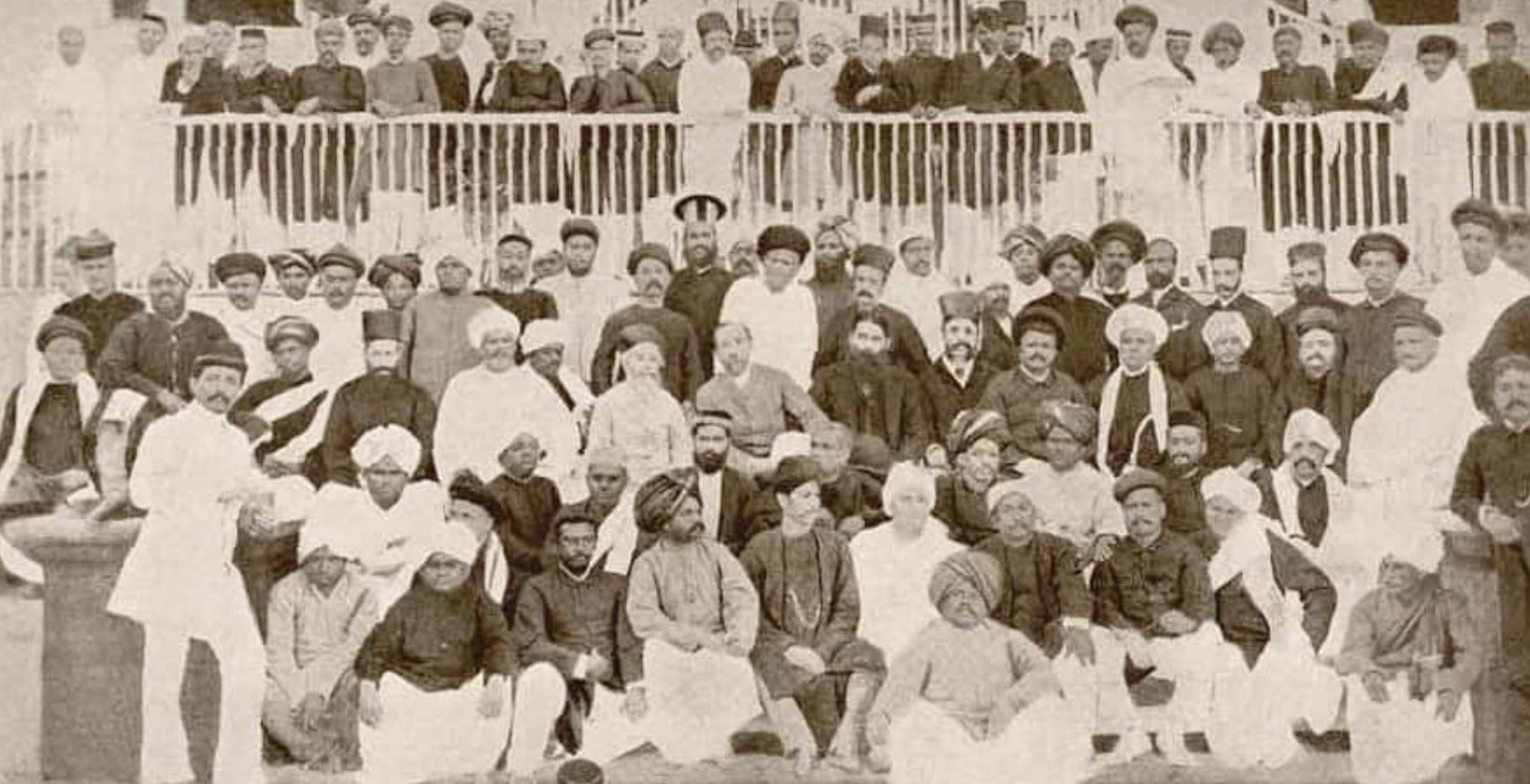
Congress to digitise archives of party records, manifestos, session reports dating back to 1885
Digitisation of:
AICC session reports (1885–1993).
Speeches of Congress presidents (1885 onwards).
Congress manifestos (from the first General Election, 1952).
Resolutions of the Congress Working Committee (since formation).
Special reports:
1922 Civil Disobedience Enquiry Committee report.
Resolutions on foreign policy (1947–1966).
Resolutions on States reorganisation (1920–1956).
Journals: Socialist India (weekly, 1970–77, after Congress split).
Library Collection
Houses around 1,200 books.
Contains works by key leaders:
Mahatma Gandhi, Jawaharlal Nehru, Sardar Vallabhbhai Patel, Vithalbhai Patel.
Rammanohar Lohia, Acharya Narendra Dev.
G.B. Pant, N.V. Gadgil, Motilal Nehru, B.R. Ambedkar.
Literary works
Mahatma Gandhi
Hind Swaraj or Indian Home Rule (1909) – his seminal political text.
The Story of My Experiments with Truth – autobiography.
Satyagraha in South Africa (1928).
Constructive Programme: Its Meaning and Place (1941).
Journals: Young India (1919–31), Harijan (1933–48), Navajivan.
Jawaharlal Nehru
An Autobiography (1936).
Glimpses of World History (1934).
Discovery of India (1946).
Letters from a Father to His Daughter (1929).
Sardar Vallabhbhai Patel
Did not author independent books.
Works available: Collected Speeches and Writings of Sardar Patel (posthumous compilation).
Historic role visible in Constituent Assembly Debates and correspondence.
Vithalbhai Patel
Known for speeches and rulings as President of Central Legislative Assembly (1925–30).
No independent books; writings limited to letters and political communications.
Rammanohar Lohia
Marx, Gandhi and Socialism (1963).
The Caste System (1964).
Guilty Men of India’s Partition (1960).
Wheel of History.
Acharya Narendra Dev
Socialism and the National Revolution.
Essays on socialism, Buddhism, and nationalism (collected works published later).
No autobiography; remembered as theoretical socialist thinker.
Govind Ballabh Pant
No major books.
Speeches, writings, and reports compiled in: Selected Speeches of Govind Ballabh Pant.
Key contributions through legislative reforms (e.g., tenancy reforms in UP).
N.V. Gadgil (Narhar Vishnu Gadgil)
Government from Inside (1956).
My Political Memoirs (1968, posthumous).
The Press in India (1951).
Motilal Nehru
Nehru Report (1928) – principal authored work (committee draft but under his leadership).
Legal writings, letters, and debates are compiled posthumously.
B.R. Ambedkar
Annihilation of Caste (1936).
Who Were the Shudras? (1946).
The Untouchables: Who Were They and Why They Became Untouchables? (1948).
Buddha and His Dhamma (1957, posthumous).
States and Minorities (1947).
Thoughts on Linguistic States (1955).
Journals: Mooknayak (1920), Bahishkrit Bharat (1927).
The Problem of the Rupee: Its Origin and Its Solution (1923).
Civil Disobedience Enquiry Committee (1922)
Background
Formed by the All India Congress Committee to assess the political situation and recommend a course of action following Mahatma Gandhi's arrest and the subsequent withdrawal of the Non-Cooperation Movement.
After the Non-Cooperation Movement (1920–22) was abruptly withdrawn by Mahatma Gandhi (following the Chauri Chaura incident, February 1922), there was widespread dissatisfaction within the Congress ranks.
At the All-Congress Committee meeting in Lucknow (1922), many members pressed to resume civil disobedience.
Reports of harsh repression by the colonial government across India, despite suspension of revolutionary activity, strengthened this demand.
Committee Formation
A resolution was passed to send a Civil Disobedience Enquiry Committee to study conditions on the ground.
The committee’s task: tour the country, examine repression, and report back.
Members of the Committee
Hakim Ajmal Khan – Acting President of Congress; Ex-officio Chairman.
Pandit Motilal Nehru.
Shrijut V. J. Patel.
M.A. Ansari.
C. Rajagopalachari.
S. Kasturiranga Iyengar.
Findings & Significance
The committee concluded that the Government had adopted unfair and repressive policies even though the Congress had suspended mass activity.
It advised that India should be prepared to resort to civil disobedience again, given the unjust repression.
This report was one of the precursors to the renewed phase of mass struggle in the late 1920s, feeding into the debates leading up to the Civil Disobedience Movement (1930).
S. A. Dange
Pamphlet: Gandhi vs. Lenin (1921)
Comparative study of Gandhi’s and Lenin’s methods; Lenin emerged superior.
Turning point in his ideological life; caught the attention of M. N. Roy and Ranchoddas Lotvala.
Led to Dange’s deep study of Marxism.
Journal: The Socialist (1922)
Launched with Lotvala’s help; considered the first Indian Marxist journal in English.
His writings impressed Lenin (according to Mohit Sen).