
Centre suspends rice fortification scheme
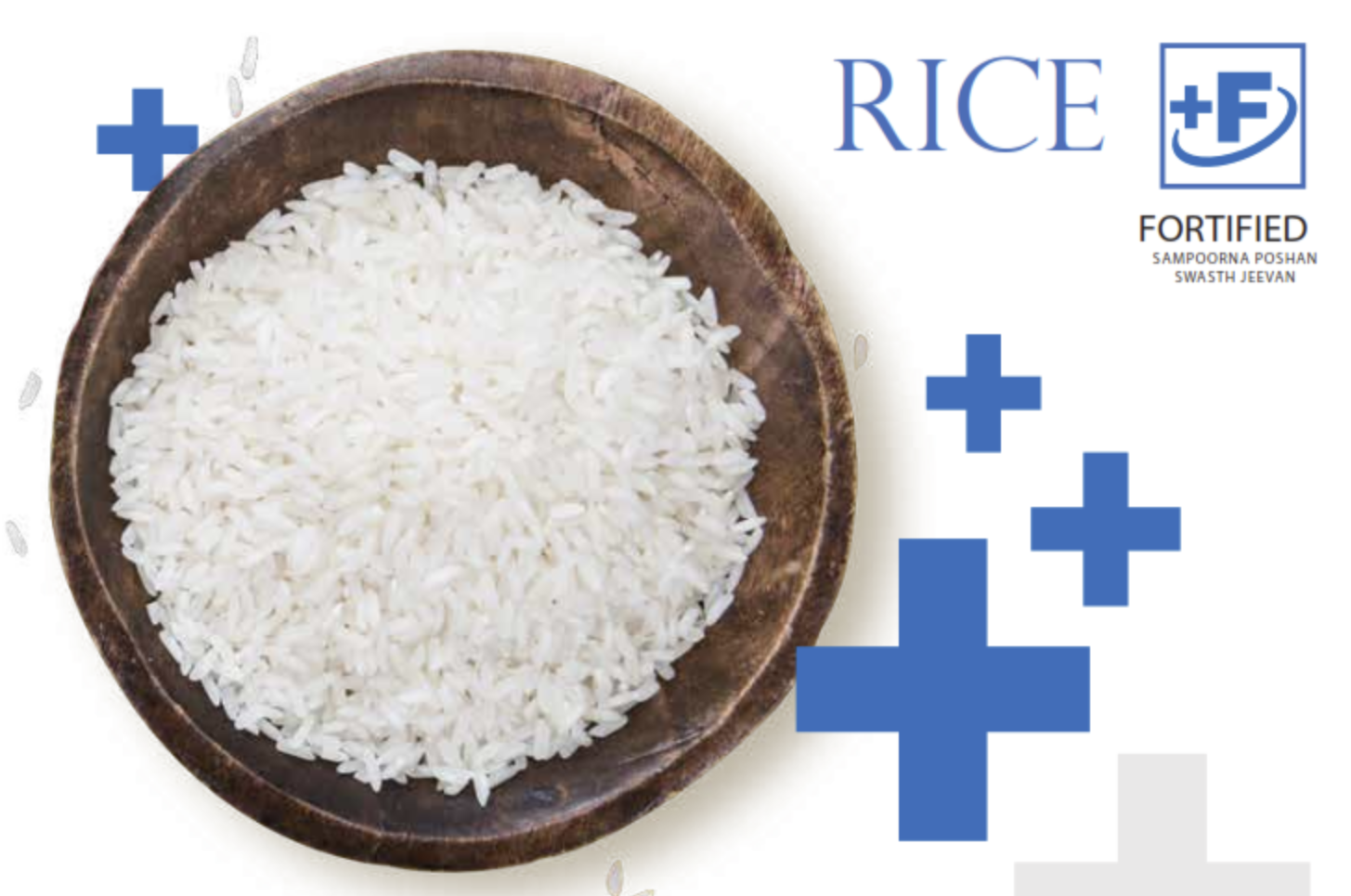
Background
Rice fortification was introduced to address micronutrient deficiencies, particularly iron-deficiency anaemia.
Implemented under:
Pradhan Mantri Garib Kalyan Anna Yojana (PMGKAY)
Public Distribution System (PDS)
Other welfare schemes.
Strategy: Blending Fortified Rice Kernels (FRKs) with regular rice (usually 1:100 ratio).
What is rice fortification?
FRKs are manufactured using extrusion technology.
Nutrients added:
Iron
Folic Acid
Vitamin B12
Objective: Reduce prevalence of anaemia among vulnerable populations.
Reason for suspension
The Union Food Ministry temporarily discontinued rice fortification due to:
Findings from an IIT Kharagpur study assessing shelf life under real storage conditions.
Key issues identified:
Moisture content affects stability.
High temperature and relative humidity reduce micronutrient retention.
Packaging material influences nutrient degradation.
Routine handling leads to micronutrient reduction.
Result: Effective shelf life shorter than expected → limited nutritional outcomes.
Important clarification:
No reduction in foodgrain entitlements under PDS.
Decision is temporary, pending identification of better nutrient delivery mechanisms.
Criticism of rice fortification
Activists and public health experts raised the following concerns:
Anaemia is multifactorial
Not all anaemia is caused by iron deficiency.
Causes include:
Vitamin B12 deficiency
Folate deficiency
Chronic infections
Genetic disorders
Universal approach vs targeted intervention
Fortification applies uniformly.
May not suit individuals with adequate iron levels.
Risk of excess iron intake in certain populations.
Structural issues ignored
Poor dietary diversity.
Lack of access to protein and micronutrient-rich foods.
Sanitation and parasitic infections.
Cost concerns
Expensive large-scale intervention.
Questions on cost-effectiveness compared to diet diversification and supplementation.
Prelims Practice MCQs
Q. The Rice Fortification Programme in India was primarily implemented under which of the following schemes?
Pradhan Mantri Garib Kalyan Anna Yojana (PMGKAY)
Integrated Child Development Services (ICDS)
Mid-Day Meal Scheme
Select the correct answer:
(a) 1 only
(b) 1 and 2 only
(c) 1, 2 and 3
(d) 2 and 3 only
Answer: (a) 1 only
Explanation:
The recent suspension specifically concerns rice fortification under PMGKAY and allied foodgrain distribution schemes.
While ICDS and Mid-Day Meal Scheme address nutritional outcomes, the large-scale rice fortification initiative discussed here was primarily linked to the Public Distribution System (PDS) and PMGKAY.
Therefore, only Statement 1 is correct.
Q. With reference to rice fortification in India, consider the following statements:
It involves coating rice grains with iron and vitamins.
It aims to address iron-deficiency anaemia among vulnerable populations.
The recent review found that storage conditions affect micronutrient stability.
Which of the statements given above is/are correct?
(a) 2 only
(b) 1 and 2 only
(c) 2 and 3 only
(d) 1, 2 and 3
Answer: (c) 2 and 3 only
Explanation:
Statement 1: Incorrect. Fortification does not merely coat rice grains. It involves blending fortified rice kernels (FRKs)—manufactured by extrusion technology—with regular rice.
Statement 2: Correct. The programme was aimed at reducing iron-deficiency anaemia and micronutrient deficiencies.
Statement 3: Correct. The IIT Kharagpur study highlighted that moisture, temperature, relative humidity, and packaging significantly influence micronutrient stability and shelf life.
Q. Which of the following concerns have been raised by critics regarding universal rice fortification?
Not all anaemia is caused by iron deficiency.
Fortification may not address structural causes such as poor diet diversity.
Fortified rice eliminates the need for targeted nutritional interventions.
Select the correct answer:
(a) 1 and 2 only
(b) 2 and 3 only
(c) 1 and 3 only
(d) 1, 2 and 3
Answer: (a) 1 and 2 only
Explanation:
Statement 1: Correct. Anaemia can result from multiple causes—iron deficiency, Vitamin B12 deficiency, folate deficiency, chronic disease, etc.
Statement 2: Correct. Critics argue that diet diversification, public health interventions, and sanitation are more sustainable solutions.
Statement 3: Incorrect. Fortification does not eliminate the need for targeted interventions; at best, it supplements them.