
ASI allows excavations at Keeladi and seven other sites in Tamil Nadu
Why in news
The Archaeological Survey of India (ASI) has granted permission to the Tamil Nadu State Department of Archaeology (TNSDA) to conduct excavations at eight archaeological sites, including the 11th phase of excavations at Keeladi.
Legal basis
The approval was granted under the Ancient Monuments and Archaeological Sites and Remains Rules, 1959 after the recommendation of an expert committee.
Sites approved for excavation
The following eight sites in Tamil Nadu have received approval:
Keeladi and its cluster sites – Sivaganga district
Pattinamarudhur – Thoothukudi district
Karivalamvanthanallur – Tenkasi district
Manikollai – Cuddalore district
Adichanur – Villupuram district
Vellalore – Coimbatore district
Telunganur–Mangadu – Salem district
Nagapattinam
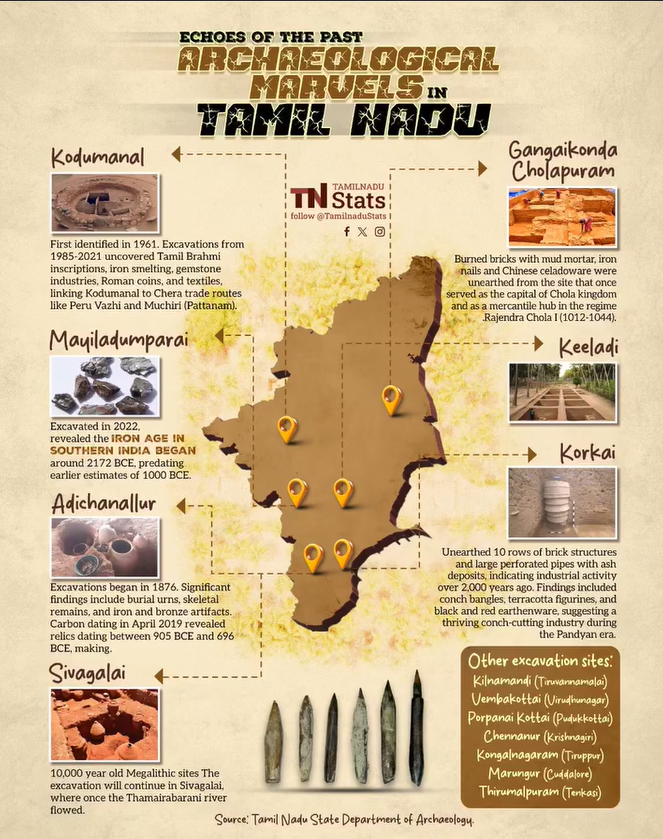
About Keeladi
Located near Madurai in Sivaganga district, Tamil Nadu.
Excavations began in 2015.
It is a Sangam-age urban settlement along the Vaigai River valley.
Findings include:
Brick structures and drainage systems
Tamil-Brahmi inscriptions
Pottery, beads, and industrial artefacts
Evidence of urbanization and literacy in early historic South India (around 6th century BCE onward).
Reason for urgency
Excavation season in Tamil Nadu usually runs January–July.
Monsoon rains after July can disrupt archaeological fieldwork, so the state government requested quick approval.
Prelims Practice MCQs
Q. The archaeological site Keeladi, often seen in the news, is located on the banks of which river?
A. Tamiraparani
B. Vaigai
C. Kaveri
D. Palar
Answer: B
Explanation: Keeladi lies in the Vaigai river valley, and excavations there indicate a Sangam-age urban settlement.
Q. Excavations at archaeological sites in India are regulated under which of the following legislations?
A. Antiquities and Art Treasures Act, 1972
B. Ancient Monuments and Archaeological Sites and Remains Act, 1958
C. Wildlife Protection Act, 1972
D. National Heritage Conservation Act, 1995
Answer: B
Explanation: Archaeological excavations require permission under the Ancient Monuments and Archaeological Sites and Remains Act, 1958 and its Rules, 1959.
Q.Which of the following features have been discovered at the Keeladi excavation site?
Brick structures and drainage systems
Tamil-Brahmi inscriptions
Evidence of industrial craft activity
Select the correct answer:
A. 1 only
B. 1 and 2 only
C. 2 and 3 only
D. 1, 2 and 3
Answer: D
Explanation: Excavations revealed urban planning (brick structures and drainage), Tamil-Brahmi inscriptions, pottery, beads, and craft production, indicating a developed settlement.