
2,000-year-old Megalithic rock-cut chamber discovered in Kasaragod
Context
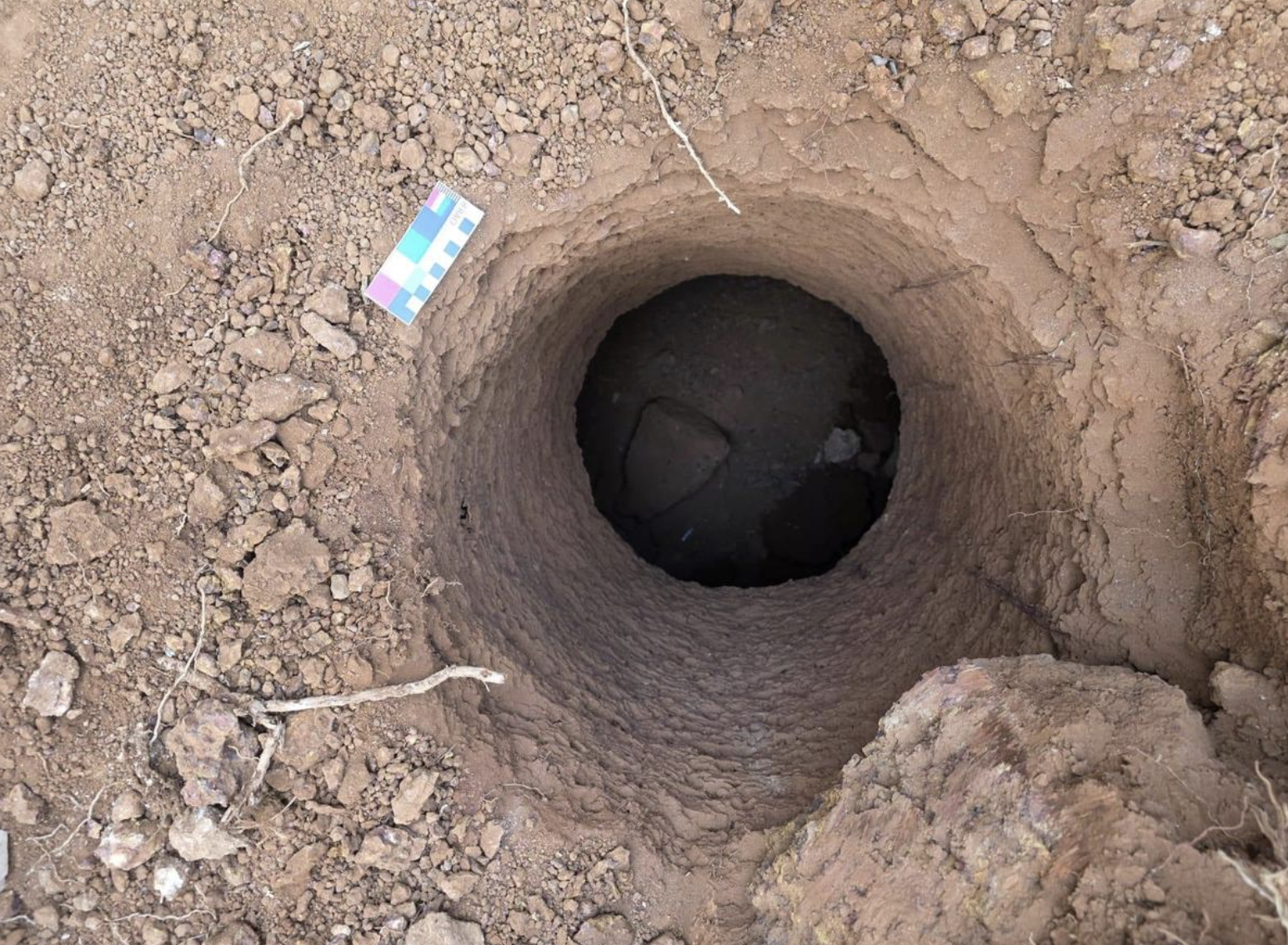
A laterite rock-cut burial chamber, believed to be about 2,000 years old, was discovered at Panayal in Kasaragod district of Kerala during excavation for a compound wall on private land.
The structure belongs to the Megalithic cultural phase of South India.
Key features of the chamber
Material: Carved from laterite rock, common in Kerala’s geological landscape.
Structure:
Circular burial chamber cut into rock.
Entrance originally sealed with a stone slab.
A small circular aperture (~5 cm) at the top allows entry.
A shaft about 3 feet deep leads to the burial chamber.
Interior: Currently filled with soil; artefacts or urns are not yet visible.
Megalithic burial practices
The chamber is linked to Megalithic communities (roughly 1200 BCE – 300 CE in South India).
Typical features:
Burial rituals: Interment of pottery, iron tools, beads, and occasionally human remains.
Monument types:
Rock-cut chambers
Dolmens
Cairn circles
Umbrella stones (Kuda-kallu)
Nearby areas around Kasaragod have already yielded umbrella stone monuments, strengthening the region’s Megalithic archaeological significance.
Local terminology
In Kerala, rock-cut burial chambers are locally called:
Muniyara
Pandava cave
Peeranki cave
Nidhikuzhi
Kalppathayam
These names often arise from local folklore or mythological associations.
Prelims Practice MCQs
Q. Consider the following statements regarding Megalithic culture in South India:
Megalithic burials often included pottery and iron tools.
Umbrella stones (Kuda-kallu) are associated with Megalithic monuments in Kerala.
Megalithic culture in India is generally associated with the Neolithic Age.
Which of the statements given above is/are correct?
A. 1 and 2 only
B. 2 and 3 only
C. 1 only
D. 1, 2 and 3
Answer: A
Explanation:
Megalithic burials commonly contained pottery, iron objects, beads → Statement 1 correct.
Umbrella stones (Kuda-kallu) are typical Megalithic burial markers in Kerala → Statement 2 correct.
Megalithic culture belongs largely to the Iron Age, not the Neolithic → Statement 3 incorrect.
Q. In the context of Indian archaeology, the term “Muniyara” refers to:
A. Buddhist rock-cut meditation chambers
B. Megalithic rock-cut burial chambers in Kerala
C. Gupta-period temple shrines
D. Mauryan cave inscriptions
Answer: B
Explanation:
“Muniyara” is a local term used in Kerala for rock-cut Megalithic burial chambers carved into laterite rock.